Redistricting battles tilt House map toward Republicans before 2026 midterms
Court rulings and new maps could lock in as many as seven Republican House seats, even with Trump at 34% approval and a narrow 217-212 majority.
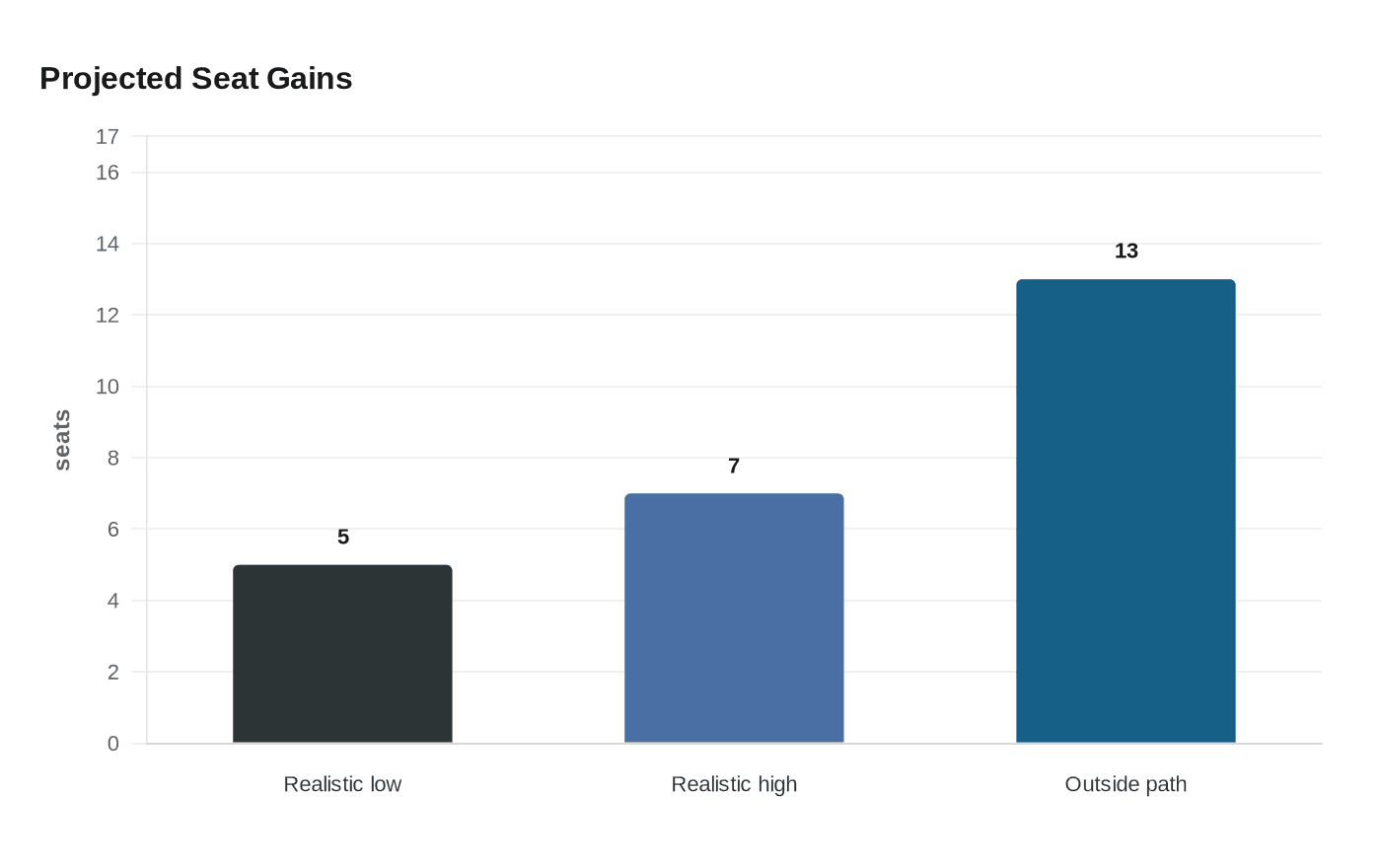
Republicans are gaining a structural edge in the battle for the House, and redistricting alone could cushion them against a weak national political climate. With a 217-212 majority and five vacancies, the GOP does not need a sweeping breakthrough to keep control, and analysts now say map changes could deliver anywhere from five to seven seats in a realistic scenario, with an outside path to as many as 13.
The scramble began after Donald Trump urged Texas Republicans to redraw House districts to help the GOP in the 2026 midterms. That set off a mid-decade fight across the country, and by May 2026 seven states, California, Florida, Missouri, North Carolina, Ohio, Tennessee and Texas, had already passed new congressional maps between the 2024 and 2026 elections. Utah’s map changed because of litigation, while Alabama, Georgia and Louisiana each had maps that could still shift because of ongoing court fights. Virginia had also moved toward voluntary redistricting before its effort collapsed in court.

The latest legal rulings have tilted the landscape further. The U.S. Supreme Court limited the use of race in redistricting in a case tied to Louisiana, opening the door for Republican-led states to revisit majority-Black, Democratic-held districts. Louisiana then suspended its closed-party House primaries scheduled for May 16 and June 27 after the ruling, with state officials saying the races would remain on hold until a new map is drawn. In Florida, Ron DeSantis called lawmakers into special session to consider congressional redistricting, and protesters gathered outside the Capitol as the Legislature began work.
Democrats scored one of their few major counterblows in California. Voters approved Proposition 50 on November 4, 2025, allowing a new congressional map for the 2026 elections and temporarily bypassing the state’s independent commission. In Virginia, voters approved a redistricting amendment on April 21, 2026, that could have helped Democrats gain as many as four House seats, but the Virginia Supreme Court voided the result on May 8, erasing one of the party’s strongest chances to offset Republican gains.
The political backdrop still favors Democrats. Pew Research Center found Trump’s job approval at 34% in an April 20-26 survey of 5,103 adults, his lowest mark of the second term, and NBC News reported that his approval had fallen below 40% as Americans remained unhappy with the economy. That kind of environment would normally threaten a narrow majority, and history shows the danger: in 2018, Democrats netted 40 seats and took the House. Republicans may still be able to blunt that kind of wave, but only because the map itself is being rewritten beneath the campaign.
This article was produced by Prism’s automated news system from verified source data, official records, and press releases, then run through automated quality and moderation checks before publishing. The system is built and supervised by the people who set the standards it runs under. Read our full AI policy.
Did this article answer your question?

