Refinancing student loans could cut payments, but cost federal protections
Refinancing can cut rates to 3.94% to 3.99%, but it also ends federal protections that borrowers on SAVE, PSLF, or income-driven plans may still need.
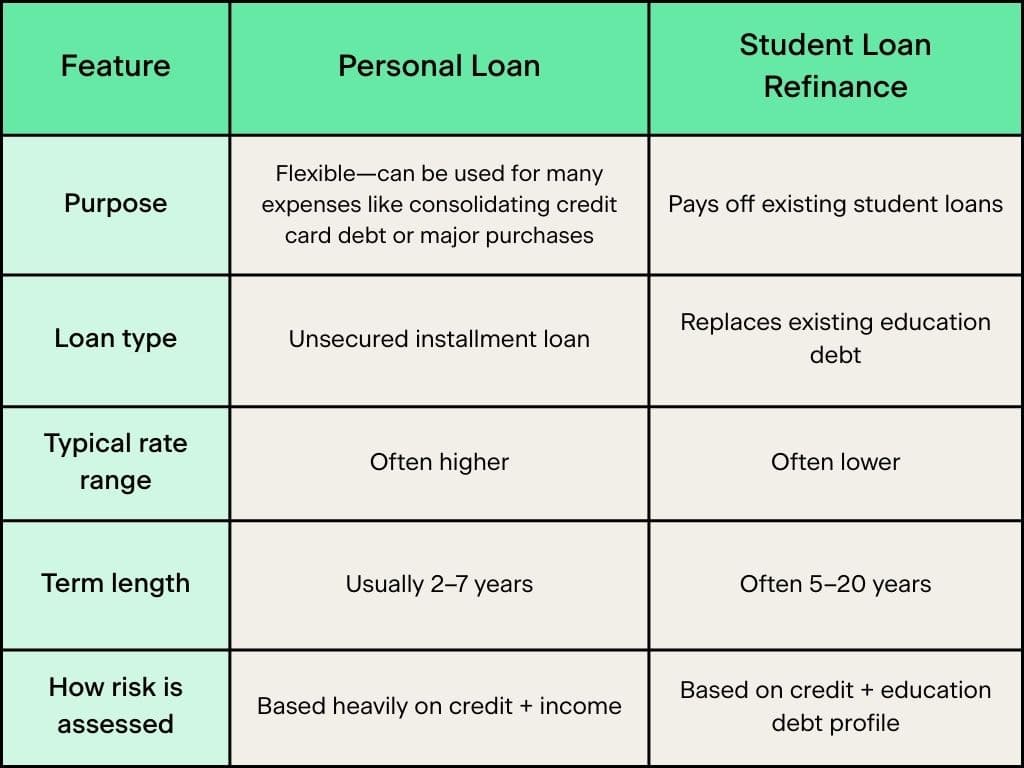
About 7 million borrowers enrolled in the SAVE plan have been told to move into another repayment program after court action ended it. That makes the tradeoff in refinancing sharper: it can shrink a monthly bill, but it can also turn a federal student loan into a private one and strip away the protections that matter most when income is shaky.
Start with three questions
The right refinancing decision starts with a simple test: is your income stable, is your credit strong enough to win a meaningfully lower rate, and do you still need federal repayment help or forgiveness? If all three answers point in the same direction, refinancing can make sense. If even one of them raises doubt, keeping the loan federal may be the safer move.
Refinancing a federal student loan into a private loan can sometimes lower the interest rate, but the private loan will not necessarily include the same protections as a federal loan. Federal loans can offer income-driven repayment, deferment, forbearance, and forgiveness programs that private lenders do not match.
Who may benefit from refinancing now
Borrowers with steady earnings and solid credit are the clearest candidates. Private lenders typically want proof that the loan can be repaid on time, which is why refinance eligibility pages often require a steady income, a solid credit score, and a completed degree. That combination usually fits professionals who have already moved into a stable job and are not depending on federal safety nets.
The rate difference can be real. SoFi’s refinance page advertises fixed rates starting at 3.99% APR, while Earnest advertises APR starting at 3.94%. Those are starting rates, not guarantees, and the final offer depends on credit, income, and other underwriting factors, but they show why refinancers shop the market when their finances have improved.
Refinancing also tends to work better for borrowers who already know they will not need federal forgiveness later. If you have a low balance, a high salary, and little chance of using income-driven repayment, a lower private rate can reduce total interest costs and simplify budgeting.
Who should avoid it
Borrowers who may need Public Service Loan Forgiveness should be especially cautious. PSLF was established in 2007 and can cancel remaining federal student loan debt after 10 years of qualifying public service payments if the program rules are met. Once a federal loan is refinanced into a private loan, that federal track is gone, which can be a permanent loss for teachers, nurses, government workers, and other public servants.
That warning also applies to borrowers who are not financially stable yet. If your income still swings from month to month, or if you may need deferment or forbearance during a job change, refinancing can remove the flexibility that keeps a loan manageable during a setback. A lower interest rate is useful only if the loan still behaves like something you can actually afford in a bad month.
Borrowers on income-driven repayment should be careful too. Federal repayment plans can link monthly bills to earnings, which is often the difference between staying current and falling behind. A private refinance replaces that structure with a standard consumer loan, and the private lender controls the repayment terms.
The federal protections you give up are not replaceable
The biggest mistake is treating refinancing as a simple rate cut. Federal student loans carry protections that private loans generally do not, and the switch is not temporary. Once a federal loan is refinanced privately, the new loan will not necessarily come with the same protections as the old one.
That means you are giving up more than just eligibility for PSLF. You are also giving up access to federal repayment tools that can help if your job disappears, your income falls, or your family budget gets hit by another shock. In practice, the old federal status does not come back after the refinance closes.
How the SAVE change affects timing
The current repayment environment makes timing more important than usual. Anyone who may need a federal payment reduction has a strong reason to pause before moving debt into private hands.
That does not mean refinancing is wrong for everyone. It does mean the bar should be higher for borrowers who are still sorting out their next federal repayment step. If you are already in the middle of a transition from SAVE, or you think you may need another federal option later, locking in a private loan now can close off choices you have not fully used yet.
Where a federal consolidation loan fits
A federal Direct Consolidation Loan is different from private refinancing. It keeps the debt inside the federal system, which matters if you want to preserve federal loan status rather than surrender it to a private lender. That makes consolidation a separate tool for borrowers who want to organize their loans without walking away from federal protections.
Refinancing and consolidation solve different problems. Refinancing is about trying to get a lower private rate and different terms. Consolidation is about federal loan management without giving up the federal safety net.
A practical decision guide
- If your income is stable, your credit profile is strong, and you have no reason to expect a need for PSLF or income-driven repayment, compare private refinance offers carefully.
- If you are still on a federal forgiveness track, especially PSLF, do not refinance lightly. The potential savings from a lower rate can be outweighed by the loss of 10 years of qualifying progress.
- If your finances are still uncertain, the federal system remains the better backstop because it keeps access to repayment flexibility that private lenders do not have to offer.
- If you are shopping rates, treat starting APRs as just that: starting points. SoFi and Earnest advertise rates in the low 3% range, but your actual quote will depend on underwriting.
This article was produced by Prism’s automated news system from verified source data, official records, and press releases, then run through automated quality and moderation checks before publishing. The system is built and supervised by the people who set the standards it runs under. Read our full AI policy.
Did this article answer your question?