Remote work boosts flexibility, but experts warn of loneliness risks
Remote work still offers flexibility, but a 520-worker study linked 31-plus remote hours a week to more stress, less satisfaction and weaker well-being.

Remote work remains a prized benefit for many employees, but the mental-health tradeoffs are becoming harder to ignore. A 2024 study of 520 healthcare workers found that people who worked 31 or more hours remotely each week reported higher stress and lower workplace satisfaction than those in offices, even though they also said they felt more productive.
That tradeoff captures the tension now shaping remote and hybrid work. The same study found that current loneliness, workplace isolation and perceived social support were all associated with lower well-being, reinforcing the idea that the office is more than a place to sit at a desk. For many workers, it is where they pick up informal guidance, social support and a sense of belonging that can be difficult to replace on a screen.
The American Psychological Association has said the shift toward remote work, accelerated by the COVID-19 pandemic, highlighted the importance of workplace relationships. The association has also linked social isolation during the pandemic with a rise in anxiety and depression. In its 2024 Work in America survey, younger workers stood out as especially vulnerable, reporting that they felt stressed, lonely and undervalued.
Psychological safety appears to be one of the clearest levers employers can pull. The association’s 2024 workplace-connection guidance found that workers who experience higher psychological safety are more likely to feel they belong at work, 95% versus 69%, and comfortable being themselves, 95% versus 75%. Those gaps matter in remote settings, where supervision can become more transactional and support can fade into scheduled check-ins that miss the daily cues of strain or exclusion.
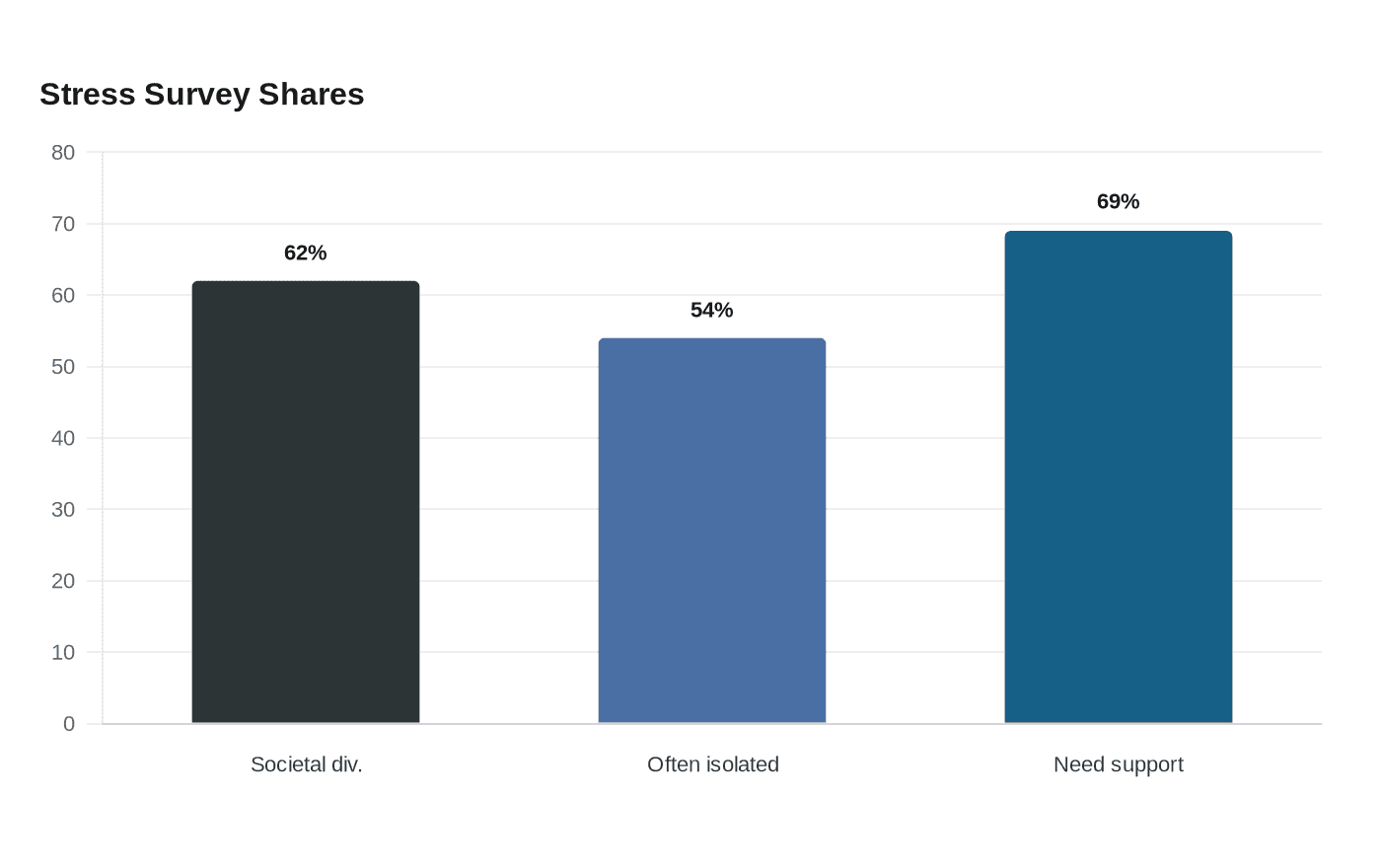
The broader social climate is adding to the pressure. In the association’s 2025 Stress in America survey, 62% of U.S. adults said societal division was a significant source of stress, while 54% said they felt isolated from others often or some of the time. The same survey found that 69% said they needed more emotional support in the past year than they received, a sign that remote workers are not confronting isolation in a vacuum.
Employers do not have to abandon remote work to address the problem. The research points instead to clearer expectations, more consistent connection, supportive supervision and deliberate attention to psychological safety. Without those steps, the flexibility that made remote work attractive can come with a quieter cost: more productivity on paper, but less support, weaker belonging and a greater risk of isolation behind the screen.
This article was produced by Prism’s automated news system from verified source data, official records, and press releases, then run through automated quality and moderation checks before publishing. The system is built and supervised by the people who set the standards it runs under. Read our full AI policy.
Know something we missed? Have a correction or additional information?
Submit a Tip