Remote work grows, but loneliness and distress deepen in America
Remote work gave millions flexibility, but loneliness hit younger, lower-income and less-educated adults hardest while 58% of Americans still said they felt optimistic.

Remote work has become a permanent feature of American jobs, but the social costs are showing up just as clearly as the flexibility benefits. New national data suggest the problem is not simply working from home itself, but who is most likely to feel cut off, how employers respond, and whether workplaces replace lost connection with anything real.
Pew Research Center found in January 2025 that adults younger than 50, lower-income Americans and people with some college or less were among the groups most likely to say they felt lonely or isolated all or most of the time. At the same time, 58% of U.S. adults said they felt optimistic all or most of the time, a reminder that distress is not uniform and that broad claims about remote work can blur important differences in experience. The data point to a more complicated story than a simple blame game: remote work may intensify isolation for some workers, but it also sits inside a wider picture of economic strain, weak social ties and uneven access to support.

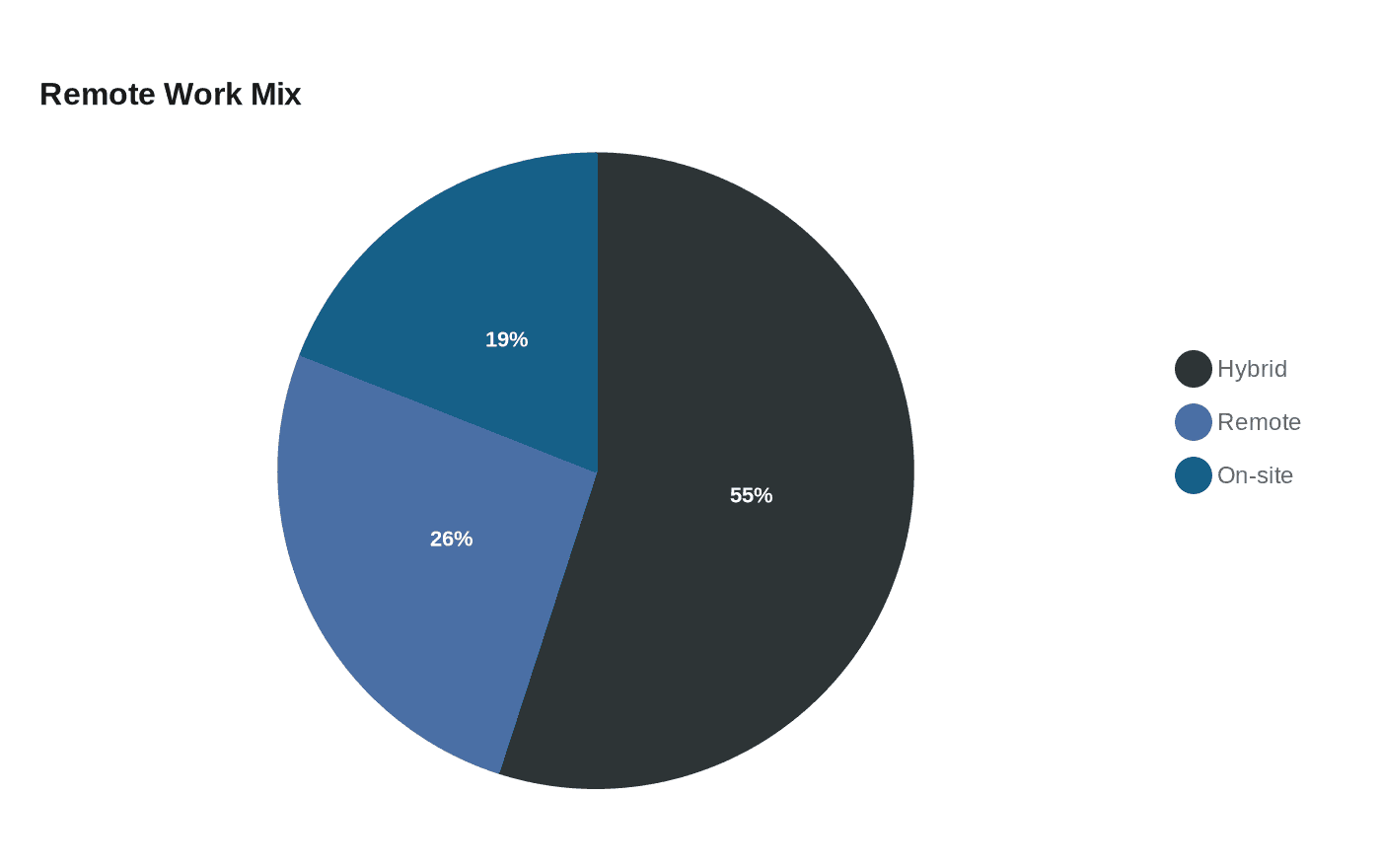
The shift happened fast. Gallup said 70% of remote-capable employees moved to working exclusively from home when the pandemic hit in March 2020. By March 2025, the picture had settled into a hybrid norm, with 55% of remote-capable employees hybrid, 26% exclusively remote and 19% exclusively on-site. Gallup said remote-capable workers make up about half of the total U.S. workforce, which means the debate is no longer about a niche slice of office employees. It is about the structure of work for millions of people.
The U.S. Bureau of Labor Statistics said 35.5 million people teleworked or worked at home for pay in the first quarter of 2024, equal to 22.9% of employed people at work, up from 19.6% a year earlier. In 2019, before the pandemic rewired the labor market, just 6.5% of private-business workers worked primarily from home. That expansion has brought real gains in commuting time and schedule control, but the evidence on productivity remains mixed. BLS said some firm-level studies show small positive productivity effects and lower turnover, while a broader industry-level study found little relationship between the ability to work entirely remotely and aggregate productivity growth.
The public-health stakes are sharpest for workers already carrying more risk. In a June 2024 report based on 2022 Behavioral Risk Factor Surveillance System data from 26 states, the Centers for Disease Control and Prevention found that loneliness and lack of social connection were linked with higher stress, frequent mental distress and a history of depression. Prevalence was highest among bisexual adults, at 56.7%, and transgender adults, at 56.4% to 63.9%. Gallup also reported that employee engagement fell to a 10-year low by 2024, and that remote workers forced back on-site saw the largest declines in feeling respected. That is the tradeoff employers now face: a full return to office can worsen morale and trust, while a weakly designed remote model can leave the most vulnerable workers more isolated. The strongest answer is not a blanket mandate, but work that is structured to preserve flexibility while restoring human contact, belonging and support.
This article was produced by Prism’s automated news system from verified source data, official records, and press releases, then run through automated quality and moderation checks before publishing. The system is built and supervised by the people who set the standards it runs under. Read our full AI policy.
Did this article answer your question?