Rescue crews battle floods in China after torrential rain kills 25
Boats and swimmers pulled residents from floodwater as torrential rain killed at least 25 across central and southwest China.

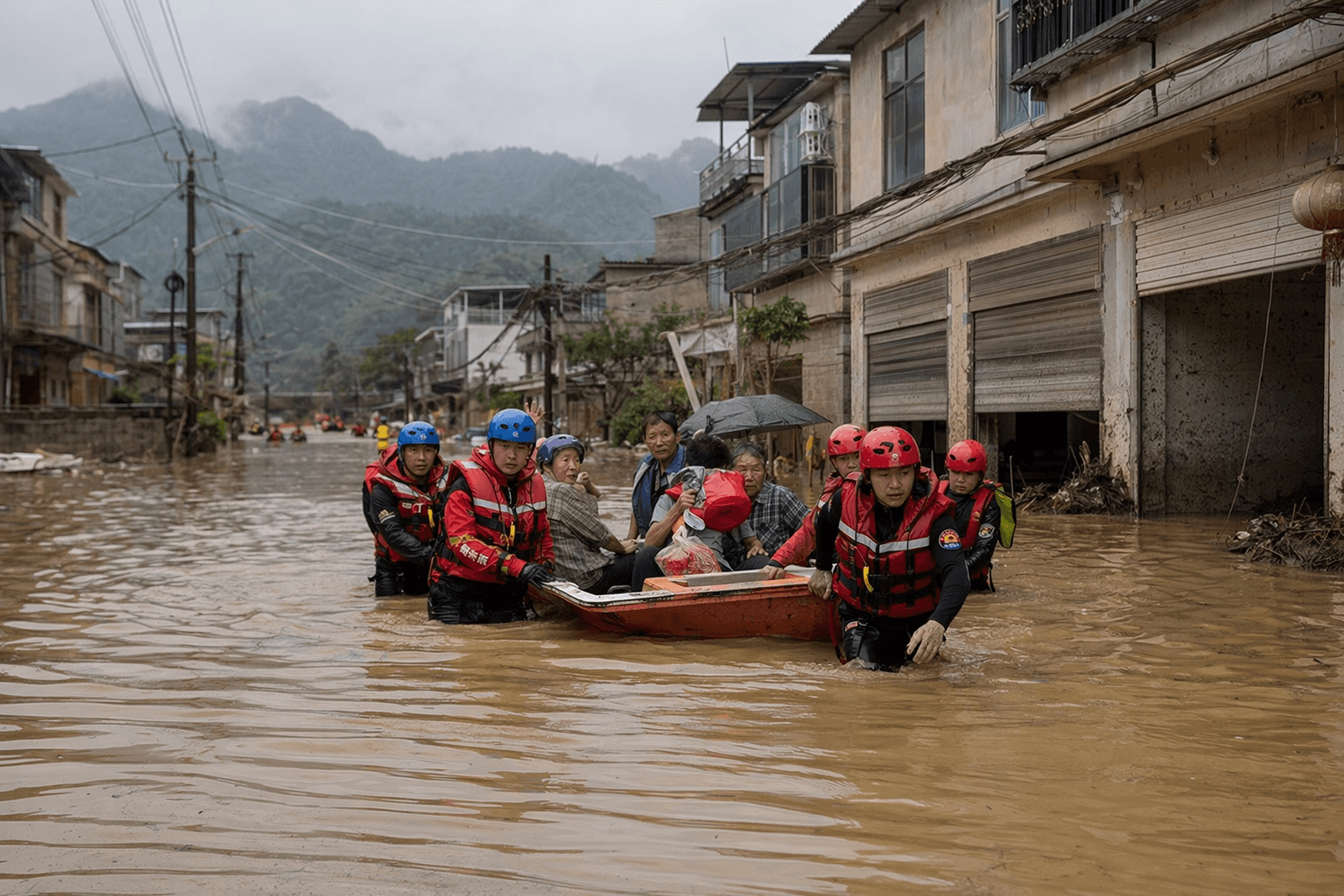
Rescue workers pushed through deep floodwater, using boats and even swimming to reach residents trapped in waterlogged neighborhoods across central and southwest China as torrential rain killed at least 25 people and shut businesses, schools and transport links.
The flooding turned fast into a regional emergency. In Guizhou Province, China’s national commission for disaster prevention, reduction and relief activated a Level-IV disaster relief emergency response on May 19, while the National Meteorological Center issued a yellow rainstorm alert, the second-lowest level in the country’s four-tier warning system. Authorities also allocated 30 million yuan to Guizhou for disaster relief, with the money aimed mainly at repairing roads, water conservancy projects and public-service facilities.
The scale of the storm system showed why the damage spread so quickly. Chinese meteorologists said the rain band stretched more than 1,000 kilometers, with some areas forecast to receive as much as 150 millimeters of rain. Additional emergency and warning coverage extended across Hubei, Hunan, Guangxi, Guangdong, Jiangxi, Anhui, Hainan and Chongqing, underscoring how a single weather system can overwhelm a wide swath of southern and central China at once.
The human cost was already rising by the time rescuers were clearing mud in Duyun, Guizhou, and moving people to higher ground. A day earlier, the death toll had stood at at least 10. By Wednesday, the number had climbed sharply as floodwaters spread through neighborhoods, roads and low-lying areas vulnerable to sudden runoff and landslides.
The flooding exposed the pressure on China’s disaster-response system at the start of the summer rainy season, when intense downpours can cut power, interrupt transport and leave communities cut off in hours. In mountain valleys and dense urban corridors alike, drainage systems can fail quickly, turning heavy rain into flash floods that also threaten landslides and further casualties. The immediate rescue work was urgent, but the broader challenge was larger: restoring roads and utilities, reopening commerce and preparing for more rain before the ground had time to recover.
Know something we missed? Have a correction or additional information?
Submit a Tip