Researchers ejected from diabetes meeting after criticizing Trump health policies
Five diabetes researchers were escorted out of a New Orleans conference after handing out an editorial attacking Trump health policy, and police confiscated the copies.

Five prominent obesity and diabetes researchers were escorted out of the American Diabetes Association’s annual meeting in New Orleans after handing out copies of an editorial that sharply criticized the Trump administration’s health and biomedical research policies. At least three police officers removed the scientists from the conference center, and copies of the editorial were confiscated as they were taken out.
The confrontation unfolded near a keynote speech at the ADA’s Scientific Sessions, the association’s flagship event and the world’s largest diabetes conference, which draws more than 12,000 researchers and clinicians each year. Among those escorted out were Steven E. Kahn, the editor in chief of Diabetes Care, and Justin Ryder of Northwestern Medicine, along with other scientists who work with major pharmaceutical companies.
The editorial at the center of the dispute was published online on April 29, 2026, and appears in the June 2026 issue of Diabetes Care. Titled “Misguided Brushes of a Pen Continue to Dismantle and Destroy Biomedical Research in the United States: We Can No Longer Afford Complacency and Fear. We Must All Act Now!”, it was written by Steven E. Kahn, Cheryl A.M. Anderson, John B. Buse and Elizabeth Selvin. The article says the authors’ views are personal, says the American Diabetes Association had no role in its development or writing, and notes that the authors receive ADA honoraria as editors and are also National Institutes of Health grant recipients.
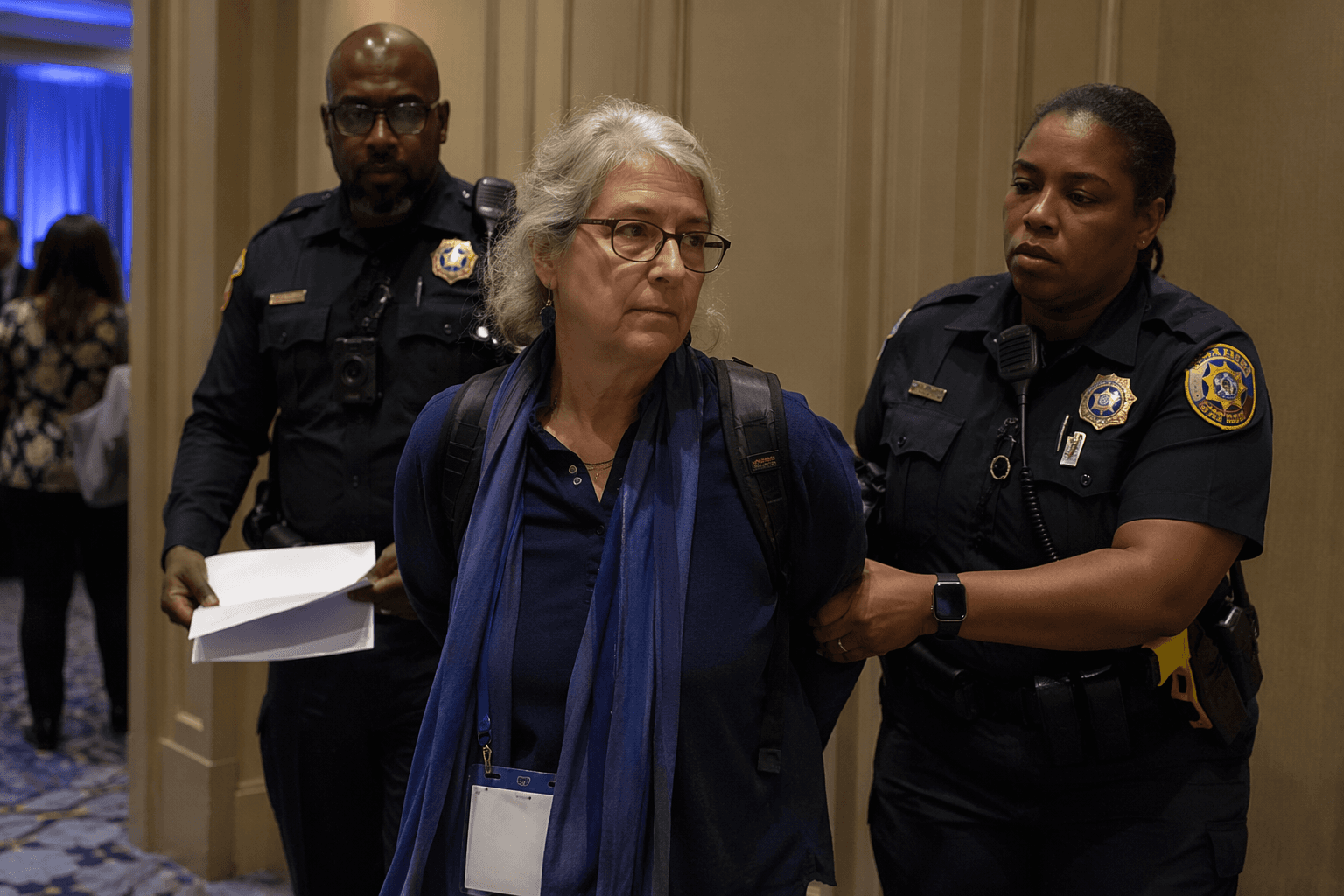
In the editorial, the authors argued that the administration’s actions are causing grave health consequences. It cites measles outbreaks and avoidable deaths, and faults leadership at the Department of Health and Human Services as well as Congress for failing to act. Their public criticism, delivered in the setting of a professional medical meeting rather than a protest, turned the issue into a broader test of how far conference organizers can go in enforcing neutrality when political speech collides with institutional order.
Several reports said some of the researchers removed from the conference were scheduled to present that weekend, raising the stakes for the episode both professionally and politically. The incident also underscored how federal policy disputes have seeped into the medical research community, where many scientists depend on government grants and regulatory stability to keep studies moving. What began as the distribution of printed handouts ended with police intervention inside one of the field’s most visible gatherings, a sign that tensions over biomedical research policy are now reshaping even the spaces built for scientific debate.
This article was produced by Prism’s automated news system from verified source data, official records, and press releases, then run through automated quality and moderation checks before publishing. The system is built and supervised by the people who set the standards it runs under. Read our full AI policy.
Know something we missed? Have a correction or additional information?
Submit a Tip