Ribcraft launches PRO 480 Electric for professional small boats
Ribcraft introduced the PRO 480 Electric, a 4.8 m RHIB with a RAD 40 outboard and 21 kWh battery. It delivers real-world consumption data useful for repower and tender projects.
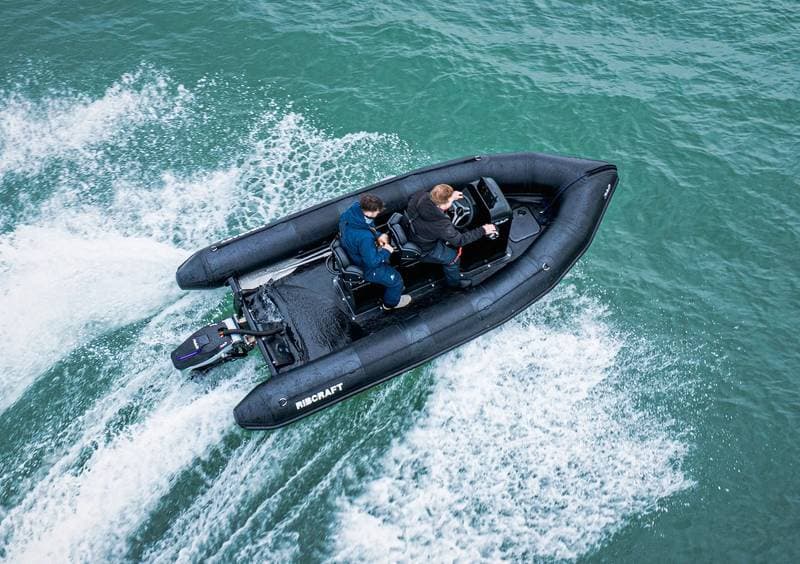
Ribcraft unveiled the PRO 480 Electric, a 4.8 m professional RHIB demonstrator built around RAD Propulsion’s RAD 40 electric outboard and a 21 kWh battery pack. The package pairs a Deep-V hull and commercial-grade composite structure with heavy-duty Hypalon tubes, aiming squarely at defence, search and rescue and commercial operators who need lower acoustic signature, cleaner operations and reduced through-life costs.
The boat’s basic dimensions are compact but purposeful: overall length 4.8 m, beam 2.1 m and tube diameter 460 mm. The RAD 40 delivers about 40 kW continuous, weighs roughly 100 kg and uses digital drive-by-wire controls; the system supports AC and DC fast charging. Those specs make the PRO 480 a useful data point for owners thinking about repowering tenders, workboats or shoreboats with electric systems.
Ribcraft released preliminary trial figures that give repower-minded sailors usable numbers when sizing batteries and estimating endurance. The demonstrator proved operational across 4 to 30 knots. The optimal endurance band sits at 12 to 16 knots with consumption around 1.53 to 1.83 kWh per nautical mile. Low-speed station keeping and covert operations at 4 to 6 knots drew roughly 0.63 to 1.27 kWh per nautical mile. High-speed response pulled 27.9 to 37.3 kW in the 18 to 22 knot band, and top tested speeds of 24 to 30 knots required about 38.5 to 45.6 kW.
Those figures translate directly into practical planning. With the 21 kWh pack, expect roughly 11.5 to 13.7 nm in the 12 to 16 knot endurance band (21 kWh divided by 1.83–1.53 kWh per nm). At low-speed loitering the same pack delivers roughly 16.5 to 33.3 nm depending on exact consumption. At high speed, a 38.5 kW draw gives about 0.55 hours of operation, which at 24 to 30 knots converts to double‑digit nautical miles of sprint capability before the battery is depleted.
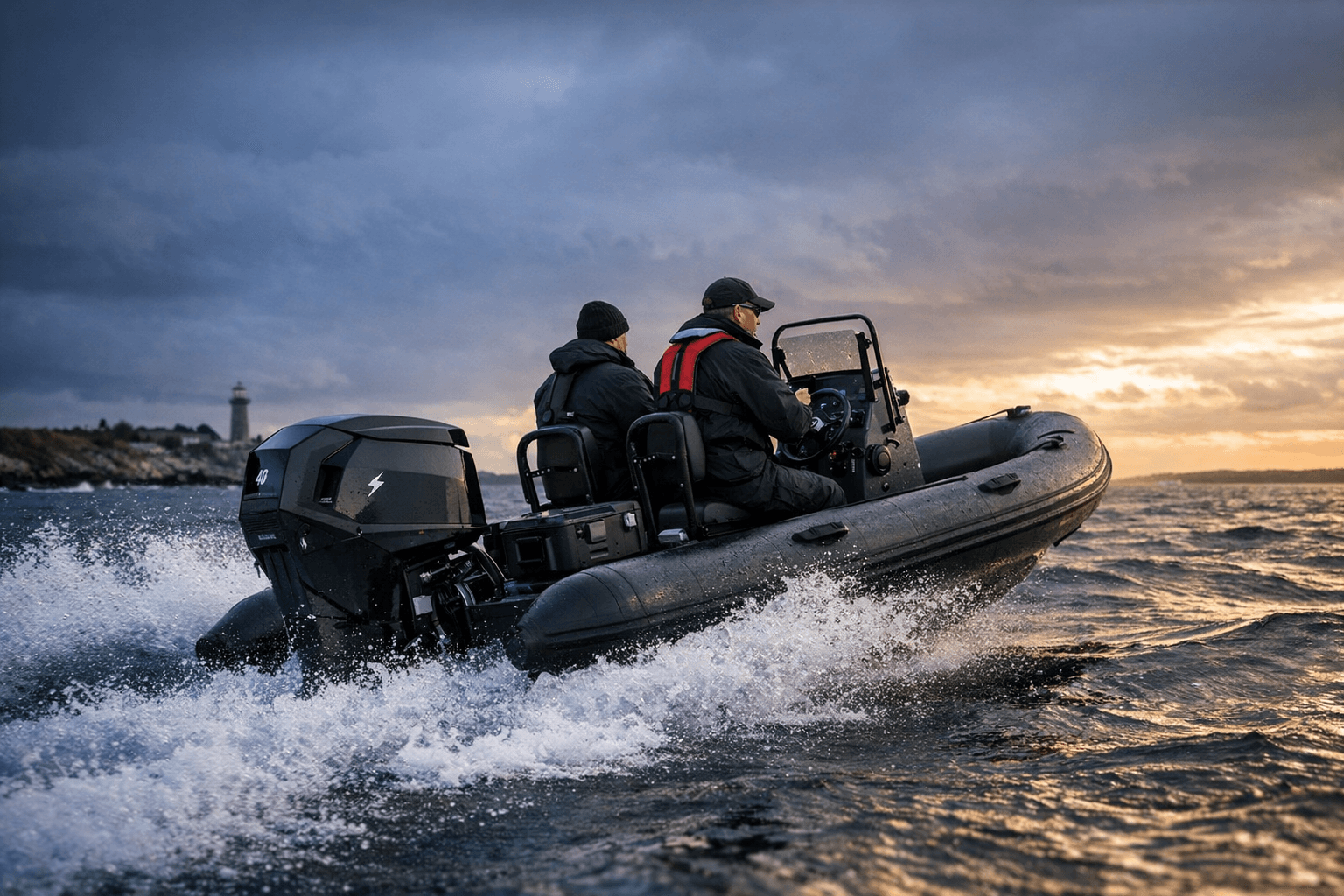
Beyond raw numbers, the PRO 480 highlights installation considerations that matter for DIY repowers. Motor mass near 100 kg affects transom loading and trim, so battery placement and ballast need planning. Drive-by-wire simplifies helm integration but requires compatible wiring, displays and fail-safe design. AC/DC fast-charging compatibility expands operational flexibility for shore hits or generator-assisted recharges, a key factor for commercial and SAR cycles.
For the sailing DIY community the PRO 480 is a practical benchmark: concrete consumption bands, clear power draws and the pairing of a compact 21 kWh battery with a 40 kW continuous outboard provide reference points for battery sizing, range estimates and installation tradeoffs. Expect these numbers to shape how owners compare electric outboards and plan repower projects as more small professional craft move to electric propulsion.
Sources:
Know something we missed? Have a correction or additional information?
Submit a Tip