Rotary gives $9.9M to WHO for Pakistan polio vaccination drive
Rotary International awards US$9.9 million to WHO to fund door-to-door and subnational campaigns aiming to protect 27 million children in Pakistan's high-risk districts.

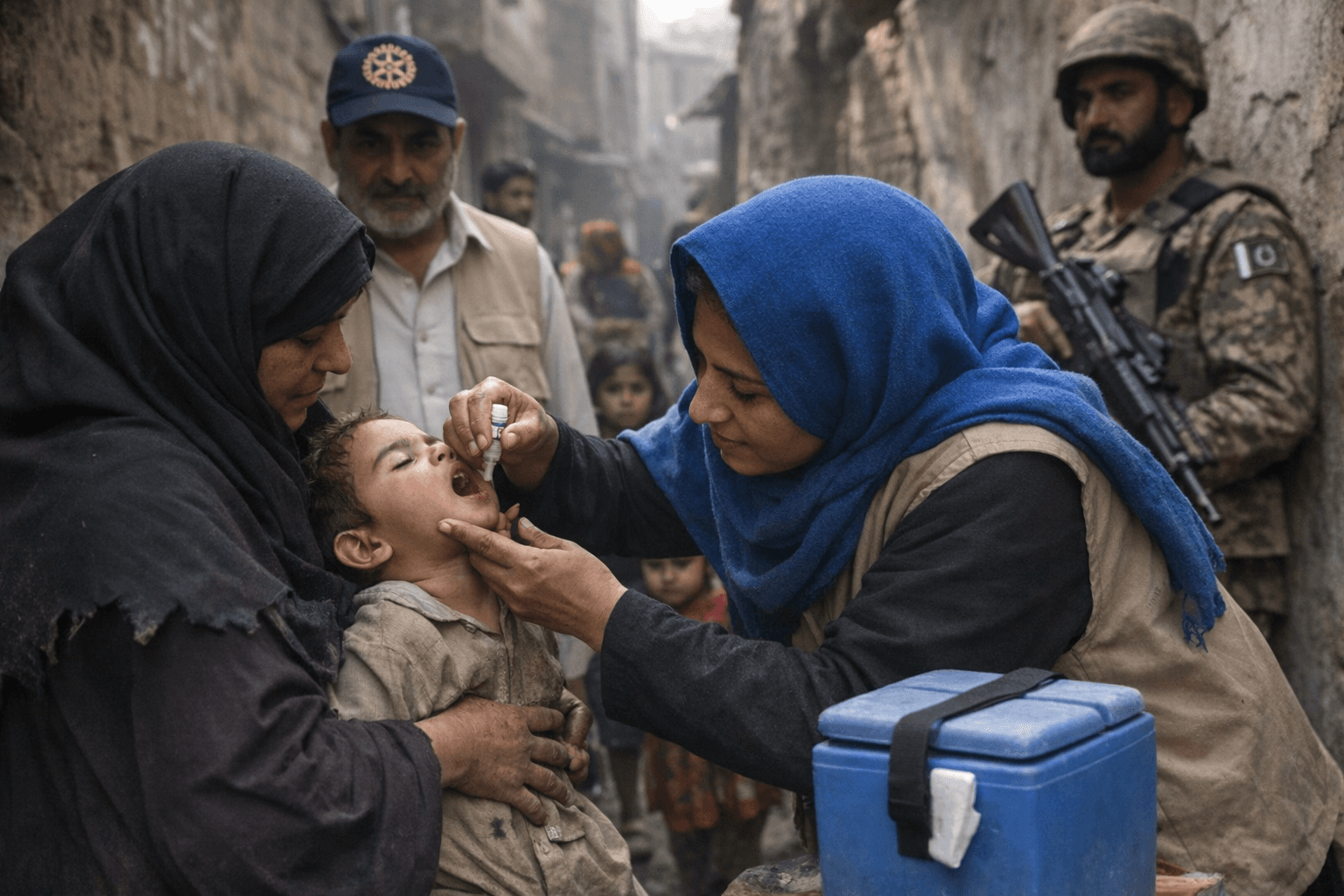
Rotary International has awarded US$9.9 million to the World Health Organization Regional Office for the Eastern Mediterranean to support Pakistan’s 2026 polio eradication activities, WHO EMRO announced. The funding is earmarked for door-to-door and subnational vaccination campaigns aimed at protecting an estimated 27 million children in high-risk districts, part of a concentrated effort to interrupt persistent transmission.
WHO EMRO said the grant will support vaccine delivery, surveillance, community engagement, and the implementation and maintenance of polio eradication programs in areas with the greatest need. A Polioeradication source cited alongside the announcement noted that Rotary funding in affected regions also underwrites emergency outbreak response activities and that Afghanistan and Pakistan remain the only countries reporting cases of wild poliovirus.
The grant arrives as partners race to close immunity gaps that sustain transmission in hard-to-reach and conflict-affected communities. Public health officials stress that door-to-door campaigns remain essential where routine immunization is inconsistent and where surveillance must be intensified to detect silent transmission. Rotary’s contribution is intended to shore up frontline operations: vaccinators, cold-chain logistics, community mobilizers, and the surveillance workforce that traces and tests suspected cases.
Rotary’s support for polio eradication has a long pedigree. Its PolioPlus program began in 1985, and Rotary joined WHO, UNICEF and the U.S. Centers for Disease Control and Prevention in the Global Polio Eradication Initiative. Partners including the Bill & Melinda Gates Foundation and Gavi later joined the effort. At the GPEI’s launch, there were roughly 350,000 polio cases annually; partner efforts have since reduced incidence by more than 99.9 percent, according to partner summaries cited in the reporting.
The announcement also recalled recent emergency contributions. In late 2024, Rotary committed US$500,000 to support the first round of a two-round vaccination campaign in Gaza after confirmation of a polio case in an infant, illustrating how flexible funding can be deployed swiftly in outbreak settings.
Different organizations cite varying totals for Rotary’s cumulative contributions. Endpolio states, “Rotary's overall contribution to the eradication effort nears $800 million.” A Polioeradication excerpt reports Canadian Rotary members have contributed US$50 million “of the more than US$2.9 billion Rotary has committed to fighting polio.” Rotary’s own materials say Rotary’s funding for polio eradication “exceeds $1 billion,” and UNICEF’s reporting contends Rotary has contributed “more than $1 billion to UNICEF,” helping vaccinate “over 400 million children globally” each year and supporting procurement and distribution of “over 1 billion doses of polio vaccines annually.”
Those differing figures underscore both the scale of private philanthropy in global health and the difficulty of reconciling cumulative tallies across multiple partners, programs and time frames. Rotary materials also emphasize legacy effects: polio-funded surveillance and immunization workforces have been redirected to detect and respond to other threats, from yellow fever to Ebola, strengthening broader health systems.
For Pakistan, the immediate public health implication is clear: sustained, targeted funding can enable the campaigns needed to close immunity gaps and protect millions of children. The campaign will test the ability of health teams to reach marginalized communities and counter persistent barriers - from access constraints and mistrust to conflict and poverty. Ending polio in the last endemic settings remains as much a challenge of social equity as of medicine, requiring continued resources, local engagement and coordination across global and community partners.
This article was produced by Prism’s automated news system from verified source data, official records, and press releases, then run through automated quality and moderation checks before publishing. The system is built and supervised by the people who set the standards it runs under. Read our full AI policy.
Did this article answer your question?