Royal Caribbean drops Mexico water park plan after environmental backlash
Environmental backlash halted Royal Caribbean’s Mahahual water park after Mexico rejected a plan critics said would strain reefs, mangroves and a tiny coastal town.

Royal Caribbean withdrew its plan for a major water park on Mexico’s Caribbean coast after regulators rejected the proposal and environmental opposition swelled around fears for a fragile reef-linked shoreline. The project, marketed as a “Perfect Day” development, was aimed at Mahahual, a beach town in Quintana Roo with fewer than 3,000 residents, and was meant to help the cruise company expand beyond ships into land-based tourism.
Mexico’s environment ministry, Semarnat, said the proposal was never authorized for development, construction or operation. Alicia Bárcena said Royal Caribbean had presented three functionally connected pieces, a water park, a beach club and a reconstruction of the pier, and that the ministry judged the package together because of its environmental footprint. Semarnat said the company announced the project in 2024 but did not file its environmental impact statement until December 2025, after public criticism was already building.
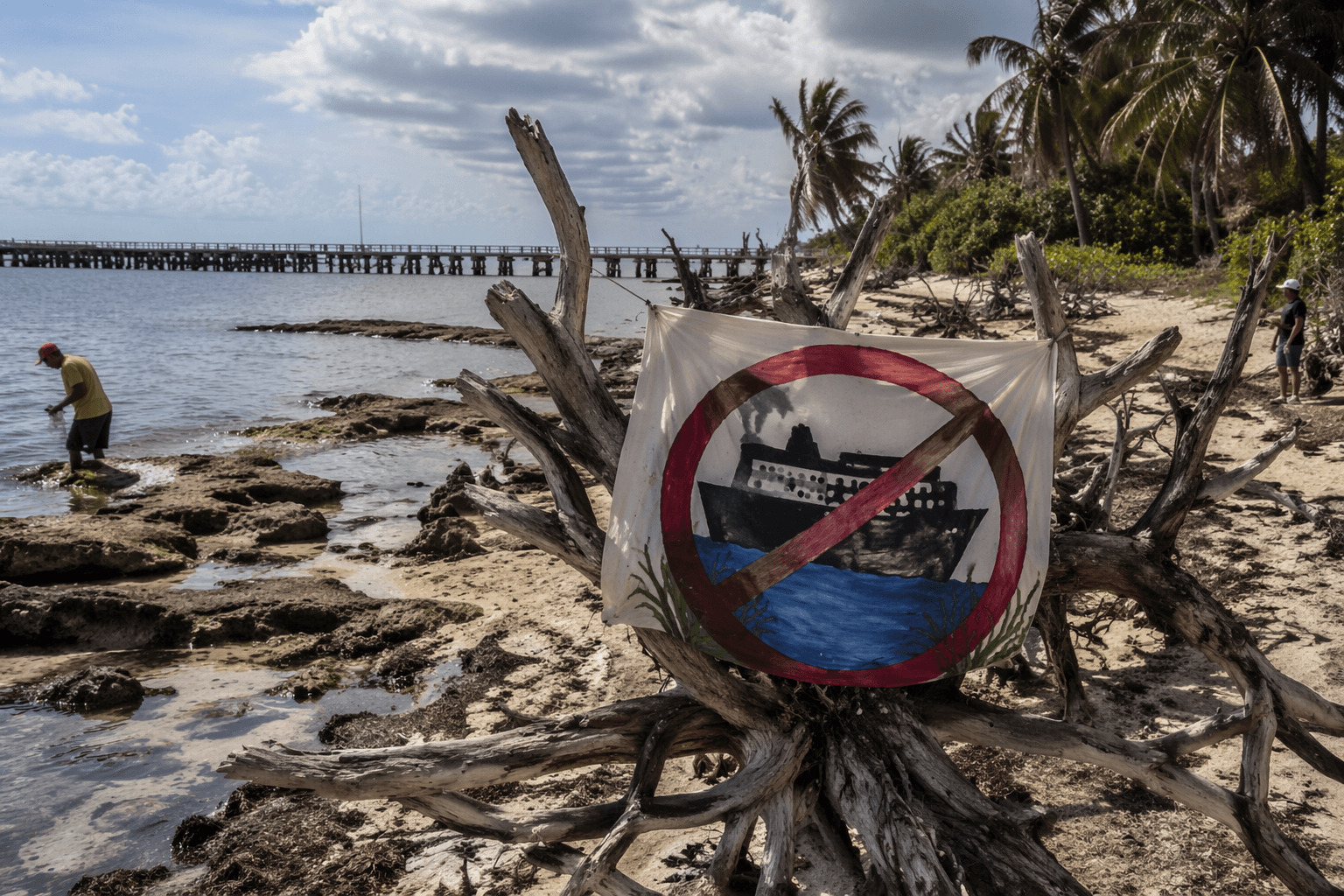
The scale of the plan sharpened the backlash. Reports said the development would have included more than 30 waterslides, about 12 eateries and 24 bars. Depending on how the maritime-terrestrial zone was counted, the project was described as covering either more than 90 hectares of jungle and mangrove or 82.58 hectares. Royal Caribbean said it could bring 20,000 to 21,000 cruise visitors a day, a volume critics said would overwhelm Mahahual and intensify pressure on an area already tied closely to the Mesoamerican Reef.
President Claudia Sheinbaum signaled that the government would not approve a project that put the ecological balance of the area at risk. Bárcena later said the ministry had warned other cabinet agencies that the plan had not gone through environmental review when it was first announced. The ministry ultimately rejected it on technical and legal grounds, citing possible harm to mangroves, reefs and the region’s hydrological balance.
Public opposition became a decisive force. Greenpeace Mexico activists protested, social media campaigns spread under the hashtag #salvemosmahahual, and petitions opposing the project reportedly gathered between 4.5 million and 4.8 million signatures. Advocates framed the fight as one over coastal protection, fishing livelihoods, coral reefs and sea-turtle nesting habitat.
Royal Caribbean Mexico president Ari Adler Brotman criticized what he described as remote online opposition from people unfamiliar with Mahahual, though the company said it regretted the decision and still hoped to invest in Mexico. Greenpeace and other environmental groups called the cancellation a victory for public pressure, and the outcome underscored how local activism and regulatory scrutiny are reshaping the future of resort development in climate-sensitive coastal regions.
This article was produced by Prism’s automated news system from verified source data, official records, and press releases, then run through automated quality and moderation checks before publishing. The system is built and supervised by the people who set the standards it runs under. Read our full AI policy.
Know something we missed? Have a correction or additional information?
Submit a Tip