Russia Deploys Oreshnik Missile in Massive Strike on Ukraine
Russia says it used a newly unveiled Oreshnik intermediate-range ballistic missile during a large overnight assault on Ukraine that Ukrainian officials say involved hundreds of drones and dozens of missiles. The attack killed at least four people in Kyiv, struck diplomatic premises and appears aimed at western energy infrastructure, raising alarm among European capitals about escalation and the weapon's strategic implications.
Early on Jan. 9, Russia announced that its armed forces employed the Oreshnik intermediate-range ballistic missile as part of a massive overnight strike on Ukraine, an assault Kyiv described as involving hundreds of drones and dozens of missiles. Ukrainian authorities report at least four people were killed in Kyiv and more than two dozen injured, and multiple buildings were damaged, including an apartment block near a diplomatic compound.
President Volodymyr Zelenskyy has cited specific figures for the barrage, saying it included 242 drones, 22 cruise missiles and 13 ballistic missiles, though other Ukrainian statements and intelligence accounts describe the assault in broader terms. Local officials in Kyiv report between 22 and 25 people were wounded in the capital. Municipal authorities also said one of the damaged buildings is adjacent to the Qatari embassy, underscoring the strike's diplomatic and civilian consequences.
Russian official statements framed the Jan. 9 operation as retaliation for an alleged Ukrainian drone strike on a residence used by President Vladimir Putin in late December. Ukraine denies responsibility and has called the Kremlin account false. U.S. President Donald Trump has also publicly rejected the Russian claim. Moscow did not provide detailed target coordinates or disclose how many Oreshnik missiles were used.
Russian state commentary and military bloggers say the Oreshnik struck a large underground natural gas storage facility in the Lviv region in western Ukraine. Lviv's mayor reported that a ballistic missile hit critical infrastructure and estimated the munition traveled at roughly 13,000 kilometers per hour. German authorities and some Western analysts have suggested the missile may not have carried a conventional warhead in this instance, though Moscow has not confirmed the warhead status or the precise target.
The Oreshnik, described by Russian leadership as capable of hypersonic speeds and multiple independently targetable warheads, represents a significant element in Moscow's long-range strike toolkit. A Russian government portal has billed the missile with a range measured in thousands of miles and a potential aggregate yield described in stark comparative terms. Ukrainian intelligence assessments circulated among analysts contend the weapon can carry several warheads, each configured for submunitions, but independent analysts caution overstatements about invulnerability and strategic utility.
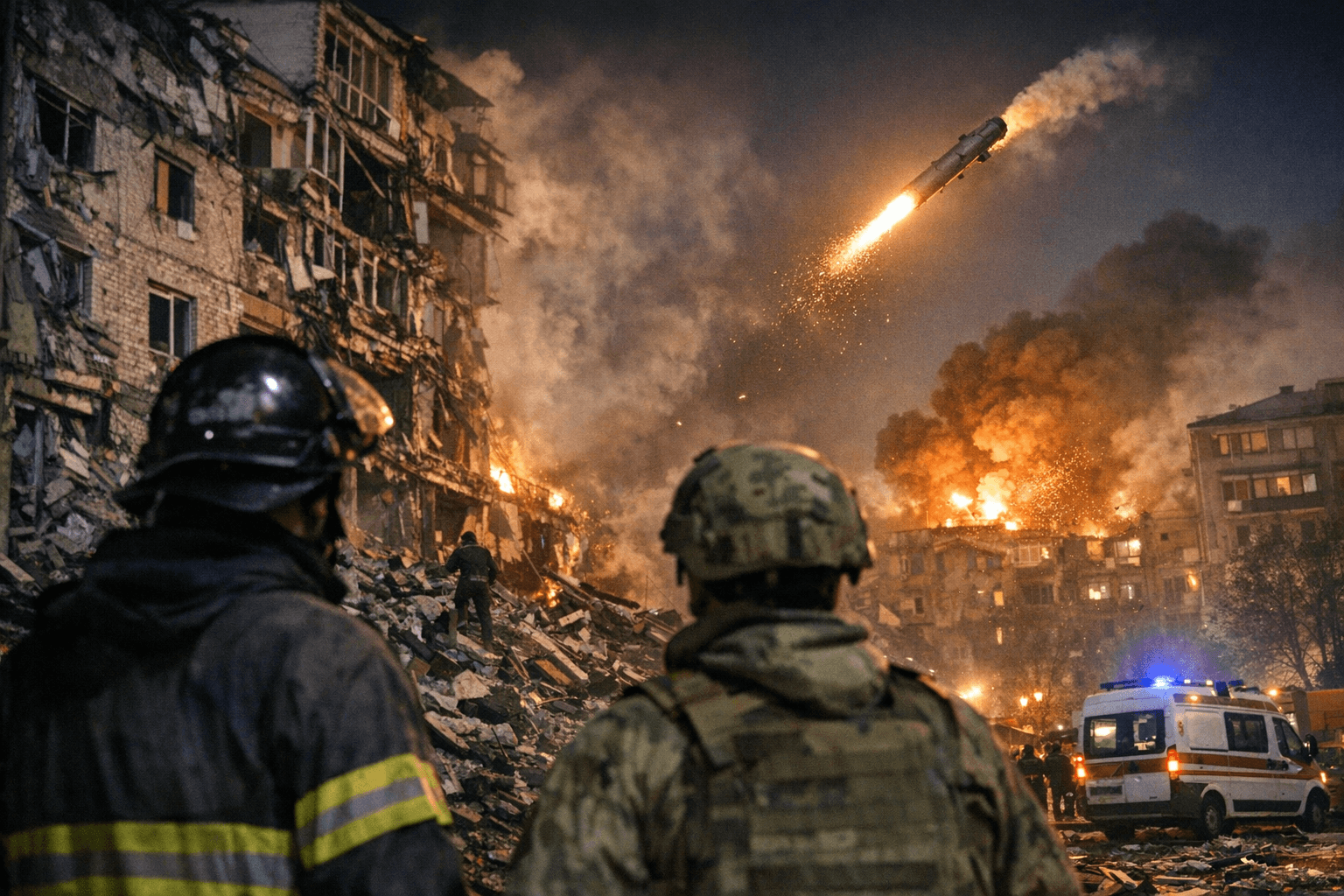
This deployment marks one of the most prominent uses of the system since its first publicized appearance in late 2024 and reports that launchers have been forward-stationed in allied territory. Belarusian leadership has acknowledged the presence of Oreshnik systems on its soil, raising concerns in neighboring states about the missile's reach.
Western governments reacted with alarm, characterizing the strike as an escalation and pressing for clearer international responses. The apparent targeting of energy storage and distribution infrastructure in western Ukraine has immediate humanitarian and geopolitical implications for European energy security, particularly as winter persists. Legal experts emphasize that attacks on dual-use or civilian infrastructure must be subject to investigation under the laws of armed conflict.
Investigators face significant challenges in independently verifying the exact sequence of events, the number and types of missiles used, and the Oreshnik's payload status. Until transparent on-site assessments are possible, the strike will deepen Western concerns about the operational use of advanced long-range systems and the risk of further destabilizing the region.
This article was produced by Prism’s automated news system from verified source data, official records, and press releases, then run through automated quality and moderation checks before publishing. The system is built and supervised by the people who set the standards it runs under. Read our full AI policy.
Did this article answer your question?