Russia launches massive drone and missile assault on Ukraine power grid
Russian strikes hit energy infrastructure, killing civilians and leaving hundreds of thousands without power during a deep winter cold snap.

A coordinated overnight barrage of drones and missiles struck Ukraine, concentrating on power plants, substations and other civilian infrastructure and leaving hundreds of thousands of households without electricity as temperatures plunged. Ukrainian authorities said the attack caused multiple deaths and injuries, widespread damage to residential buildings and major outages that compounded an already dire humanitarian situation during a severe winter cold snap.
Ukrainian leaders and military officials gave differing tallies of the weapons used, underscoring the attack's scale and the difficulty of verification in active combat. President Volodymyr Zelenskyy reported almost 300 strike drones accompanied by a mix of ballistic and cruise missiles. The Ukrainian Air Force provided a more granular accounting, saying roughly 242 drones and 36 missiles were involved, including 22 cruise, 13 ballistic and one medium-range ballistic missile, and noting that one missile was described as nuclear-capable. The Air Force also reported that some strikes reached 19 locations, while air defenses "destroyed or suppressed" large numbers of incoming weapons.
Russian defense authorities confirmed the use of the Oreshnik intermediate-range ground missile system, a weapon Moscow describes as capable of hypersonic speeds and multiple warheads. Ukrainian air defenses said they intercepted or suppressed most of the barrage, but strikes that penetrated defenses inflicted concentrated damage across multiple regions.
Kyiv and surrounding oblasts were among the worst hit. Kyiv officials reported damage to dozens of facilities and residential blocks, and said several hundred thousand households in the region lost power; some independent accounts put the portion of the capital without electricity as high as 70 percent, with heating and running water disrupted in parts of the city. In the northeast, a strike on a logistics site in the Kharkiv region was reported to have killed several people and wounded others. Ukrainian emergency services attributed at least four deaths and 25 injuries to strikes in the broader attack, with casualty and outage figures still being updated as rescue teams worked in freezing conditions.
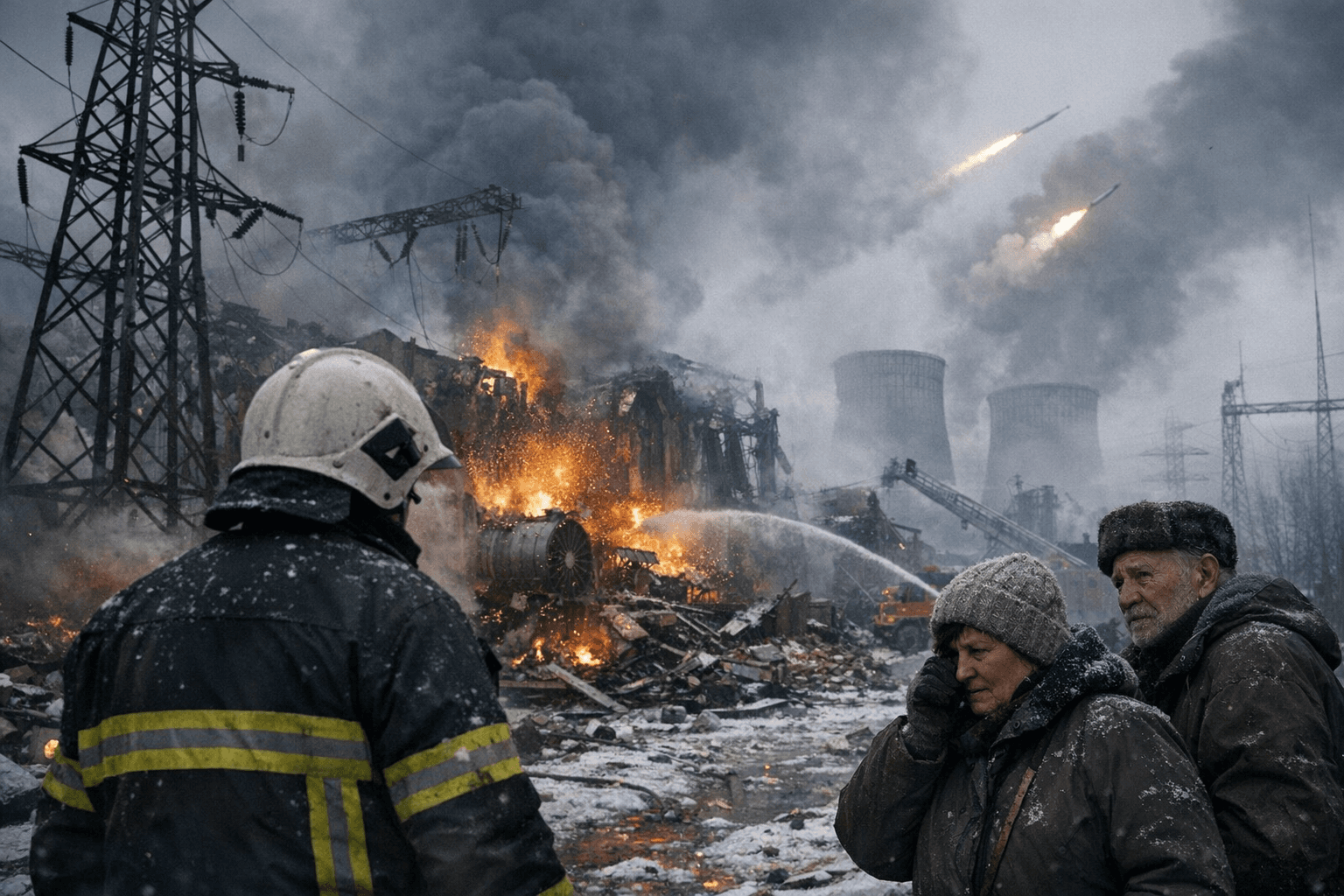
Daytime temperatures in Kyiv dropped to about minus 12 degrees Celsius, forcing residents to seek warmth in powered facilities and emergency shelters, and prompting municipal authorities to mobilize hot meal distribution and priority restoration of heating for vulnerable populations. The United Nations monitoring group has documented a high civilian toll over the past year, underscoring the widening humanitarian consequences of sustained assaults on civilian infrastructure.
International reactions focused on the escalation in scope and ambition of attacks. Ukrainian officials called for urgent bolstering of Western air defenses; the United States described the recent strikes as a "dangerous and inexplicable escalation" in diplomatic comments. Analysts say the assault underscores a persistent Russian strategy of targeting energy and civilian systems to impose winter hardship and erode resilience.
Markets and policy makers will monitor several knock-on effects: renewed pressure on regional electricity and natural gas markets, higher risk premia for infrastructure investors, and intensified calls in Europe for accelerated deliveries of advanced air defense systems and funding for grid hardening. As the conflict enters its fourth year, the pattern of repeated strikes on energy networks points to longer-term challenges for Ukraine's reconstruction, civilian protection and the stability of energy supplies across the region. Rescue and repair operations continue, and officials warn that final casualty and damage tallies are likely to rise.
This article was produced by Prism’s automated news system from verified source data, official records, and press releases, then run through automated quality and moderation checks before publishing. The system is built and supervised by the people who set the standards it runs under. Read our full AI policy.
Did this article answer your question?


