Russia mounts massive overnight missile and drone barrage on Ukraine
Ukraine says hundreds of drones and dozens of missiles struck energy sites, threatening power supplies and testing Western support.
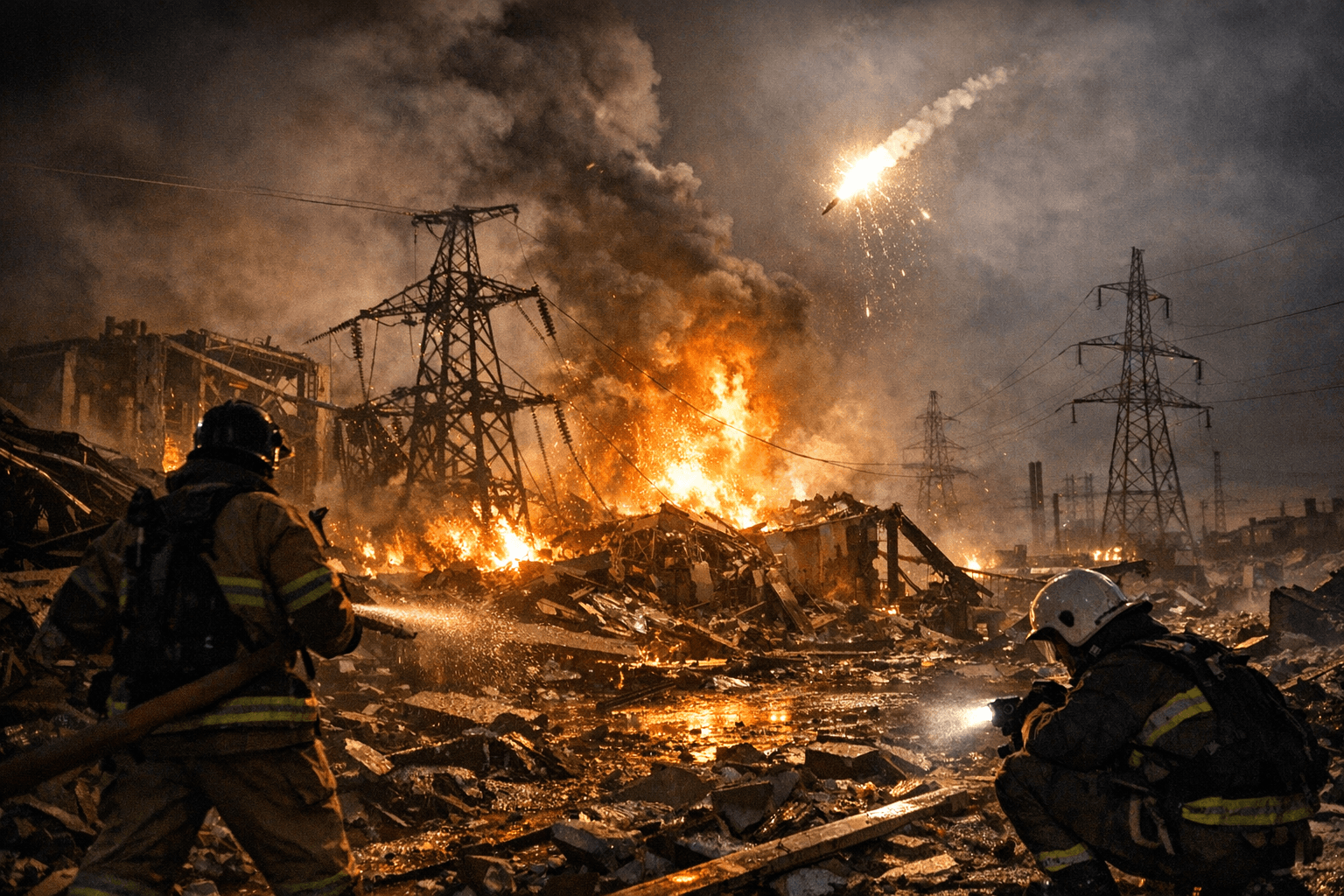
Ukrainian officials said Russian forces launched one of the largest combined missile-and-drone strikes in months, sending scores of cruise and ballistic missiles and hundreds of unmanned aerial vehicles at targets across the country overnight into Saturday. Kyiv said the attack concentrated on electricity generation and distribution and left parts of the capital and other regions in blackout.
Ukraine’s Air Force said 71 missiles and 450 drones were launched and that its defences shot down or suppressed 38 missiles and 412 drones. Energy Minister Denys Shmyhal told authorities that two thermal power stations in western regions were hit and that substations and key electricity distribution lines were damaged, cutting power to homes and disrupting services. Images from Kyiv showed cars moving through streets plunged into darkness after the strikes.
President Volodymyr Zelenskyy pressed allies for a stronger response, saying every such blow required a tougher international stance. “Every such strike by Russia confirms that the attitude in Moscow has not changed: they are still counting on war and the destruction of Ukraine, and they do not take diplomacy seriously,” he said, and characterized Moscow’s choice as “choosing terror and escalation” rather than engagement in diplomacy. Kyiv has urged partners to increase weapons supplies and pressure on Moscow.
Moscow’s Defence Ministry defended the operation, saying its forces “carried out a massive strike” on what it described as Ukraine’s military-industrial complex and energy facilities “used in their interests, as well as places of storage and assembly of long-range unmanned aerial vehicles.” The ministry also said it downed at least 10 Ukrainian drones overnight.
NATO’s secretary-general urged member states to “dig deep in their stockpiles” and provide the missiles Ukraine needs, reflecting alarm in Western capitals at the scale and intensity of the attack. The barrage came days after a round of U.S.-brokered talks aimed at de-escalation, and follows a Kremlin statement in which a Russian official had said Moscow agreed to halt strikes on Kyiv for a week until Feb. 1 after a personal request from U.S. President Donald Trump.
Timing in open accounts is inconsistent. Some video uploads and social-media posts suggested a rush-hour barrage on Feb. 6 that coincided with a rare U.S.- and UAE-mediated prisoner swap and Ukrainian claims of a long-range strike deep inside Russian territory. Kyiv officials and military sources, however, described the assault as overnight into Saturday and published the engagement tallies and damage assessments that form the basis of official briefings.
Initial reports did not include confirmed casualty figures. Independent verification of the attack’s scale, the exact weapon types used and the precise interception rate was not available in early statements. Forensic analysis of debris, satellite imagery and air-defence radar feeds will be needed to corroborate claims from both sides. The strikes have increased pressure on Western governments to accelerate deliveries of air-defence and long-range munitions even as humanitarian and power-restoration teams work to repair damaged plants and restore electricity to affected communities.
This article was produced by Prism’s automated news system from verified source data, official records, and press releases, then run through automated quality and moderation checks before publishing. The system is built and supervised by the people who set the standards it runs under. Read our full AI policy.
Did this article answer your question?


