Russia struggles to make gains in eastern Ukraine as drones dominate battlefield
Russia can still punish Ukraine with drone and missile strikes, but in eastern Ukraine that firepower has not translated into fast territorial gains.
A battlefield built for attrition
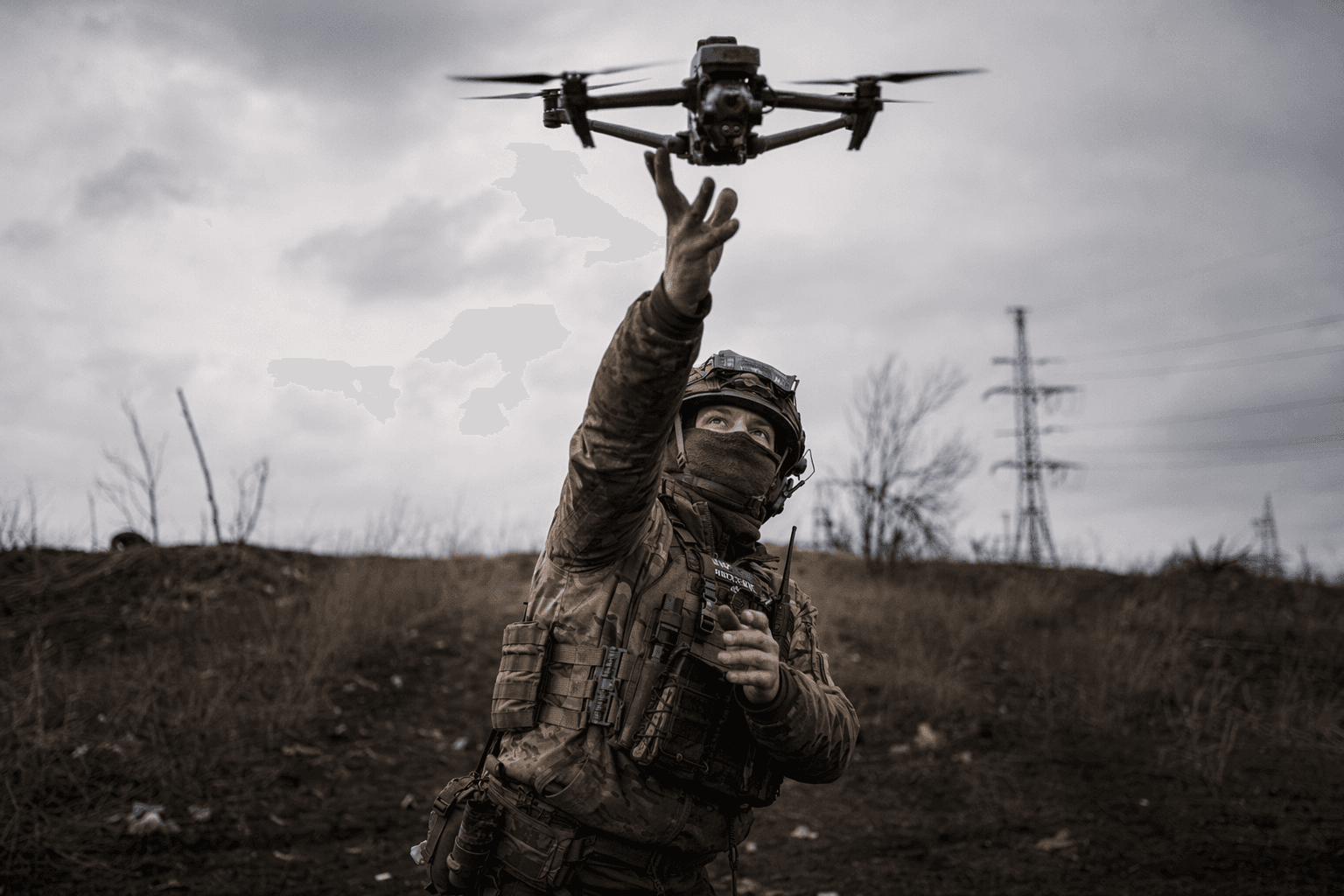
Russia’s war in eastern Ukraine has become a test of endurance, not speed. Drones now saturate the front, exposing supply routes, tracking movement, and making every push more expensive, while Russian units still struggle to convert damage into durable advances.
The deeper problem is structural. Fighting in eastern Ukraine began in 2014, when government forces and Russia-backed separatists first clashed, and the full-scale invasion that began in February 2022 turned that front into a grinding attritional war where ground gained is measured in small increments and paid for in heavy losses.
Why advances are slowing
The Institute for the Study of War said Russian advances slowed over the six months from October 2025 through March 2026, even as the Russian military kept pressing in different sectors. ISW linked that slowdown to Ukrainian counterattacks, mid-range strikes, the block on Russia’s use of Starlink terminals in Ukraine, and Kremlin efforts to throttle Telegram, all of which compounded long-running battlefield problems for Russian forces.
That matters because the front is no longer defined by a clean breakthrough or a single collapsing line. ISW assessed that Ukrainian forces continued to contest the initiative across frontline sectors for a prolonged period, leaving the battlefield in a state of contested momentum rather than territorial rupture. In practical terms, Russia can still force movement, but not at a pace that turns artillery pressure and drone strikes into rapid map changes.
Drones are changing offensive warfare
Cheap surveillance and strike drones have become one of the defining features of the war, because they shrink the space in which a force can move unseen. ISW assessed that Russian forces are using tactical unmanned aerial vehicles to produce some effects of battlefield air interdiction against Ukrainian ground lines of communication in eastern Ukraine, meaning they can disrupt supply, movement, and reinforcement even when they cannot punch through defensively held ground.
That same drone environment is also making offense harder to sustain. In June 2025, ISW said neither Russia nor Ukraine had deployed artificial intelligence or machine learning drones at scale, even though both were racing to develop them. The result is a battlefield shaped more by sheer numbers, operator skill, and constant adaptation than by a decisive technological leap that can quickly restore maneuver warfare.
Russia has shown it can still blanket Ukraine with long-range drone and missile attacks. On February 17, 2026, ISW reported that the Ukrainian Air Force said Russian forces launched 425 drones and missiles in one overnight strike, a reminder that drone warfare extends far beyond the immediate front line. That kind of pressure can damage infrastructure, disrupt logistics, and force scarce air defense resources to stretch across the country, but it still does not guarantee ground gains in eastern Ukraine.
What Russia is trying to gain from the pause
ISW said in its May 9, 2026 map update that Russian forces used the reduction in tempo from the partial May 9 ceasefire to redeploy forces and optimize logistics, likely in support of imminent future offensives. That suggests Moscow continues to treat pauses not as signs of restraint, but as opportunities to reposition, resupply, and prepare another round of attacks.
This is the logic of the current campaign: create pressure with drones and strikes, exploit any pause to improve logistics, and then try to push forward where Ukrainian lines show strain. But the very need to optimize logistics underlines the problem Russia still has not solved, which is how to turn firepower into meaningful territorial change when every road, trench approach, and rear-area node can be watched and hit.
How Ukraine is adapting
Ukraine has also built the battlefield around drones, but for different purposes. Reuters reported on May 5, 2026 that Volodymyr Zelensky said Ukrainian troops were rapidly increasing medium-range drone strikes on Russian forces, signaling a widening effort to hit logistics, artillery, and other support nodes deeper behind the line.
ISW said on March 19, 2026 that Ukrainian drone units were increasingly prioritizing artillery, drone operators, and logistics targets in the near rear to achieve tactical effects. That approach reflects a practical understanding of modern combat: when the front is saturated with sensors and drones, the fight shifts toward breaking the enemy’s ability to sustain itself rather than seeking a single dramatic assault.
At the same time, Ukrainian defenders have been candid about the limits of unmanned systems alone. Reuters reported in late 2025 that troops around Pokrovsk said drones could not stop Russian advances by themselves and that more soldiers were needed to prevent infiltration. That warning captures the central tension of the drone era: drones can delay, disrupt, and attrit, but they do not occupy terrain.
Why the war remains so hard to win
The war in eastern Ukraine is now defined by a grim division of labor. Russia can still inflict damage through drone swarms, missile strikes, and pressure on supply lines; Ukraine can answer by striking Russian logistics, artillery, and drone crews in the near rear. Yet neither side has found a system that restores the kind of rapid offensive warfare that once seemed possible on open ground.
Pokrovsk shows the limit clearly. Even where drones are everywhere, defenders still need infantry, reserves, and depth to stop infiltration, while attackers still need logistics that can survive long enough to feed an advance. That is why the battlefield remains stubbornly slow, why each mile costs more, and why Russia can keep causing destruction without reliably converting it into the kind of territorial gains that would change the war’s strategic shape.
The emerging pattern is not breakthrough, but pressure. Drones are making offensives more visible, more fragile, and more expensive, and in eastern Ukraine that has turned military progress into a contest of endurance rather than a race for ground.
This article was produced by Prism’s automated news system from verified source data, official records, and press releases, then run through automated quality and moderation checks before publishing. The system is built and supervised by the people who set the standards it runs under. Read our full AI policy.
Know something we missed? Have a correction or additional information?
Submit a Tip