Russia warns of rising risk of direct clash with NATO
Russia’s deputy foreign minister warned that a direct clash with NATO was getting more likely, as a drone incident in Estonia and fresh airspace violations sharpened Baltic tensions.

Russia’s deputy foreign minister used a rare public warning on May 19 to signal how far the Kremlin sees tensions with NATO rising, saying the risks of direct confrontation were growing and could have catastrophic consequences. In an interview with TASS, Sergei Ryabkov framed the moment as one of escalation, not routine rivalry, and cast NATO as the side pushing Europe toward a dangerous military collision.
Ryabkov said European capitals were amplifying a narrative about a looming high-intensity war with Russia, and he tied that rhetoric to what he described as provocative moves in the nuclear sphere. That matters because it turns a political dispute into a nuclear-risk argument, raising the stakes for any future airspace incident, missile-defense deployment, troop movement or NATO exercise near Russia’s borders. The warning did not announce new policy; it was a temperature check on how Moscow wants the confrontation to be understood.
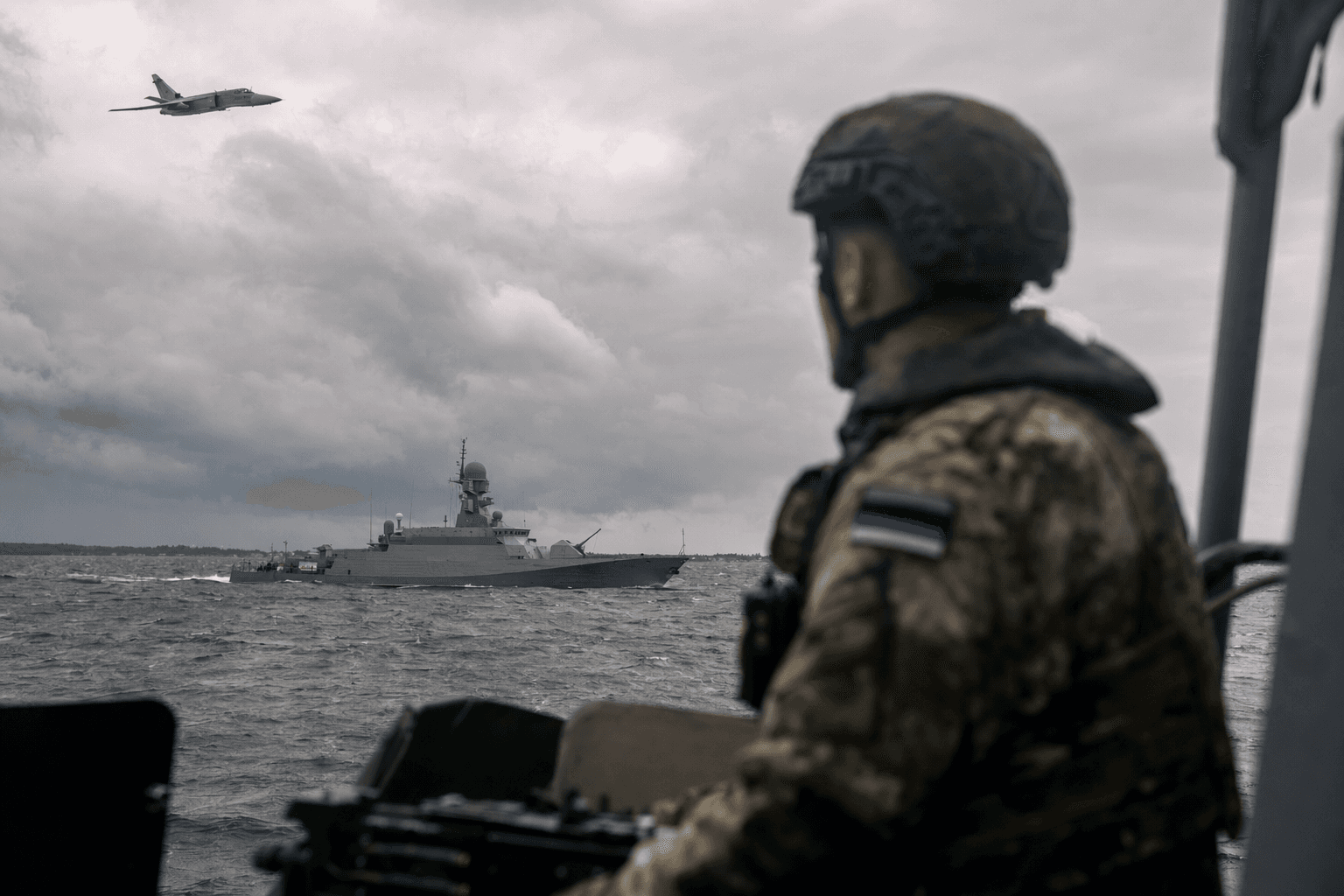
The backdrop gave the comments immediate weight. On the same day, a NATO fighter jet shot down a drone that entered Estonian airspace after Ukraine blamed Russia for steering it off course, adding to a string of cross-border drone incidents that have unsettled the Baltic states. Just days earlier, on May 13, 14 NATO allies said Russia’s repeated airspace violations on the alliance’s eastern flank underscored the urgent need to strengthen air defenses against missiles and drones.

The dispute is unfolding as NATO, a defensive alliance of 32 countries from Europe and North America, faces sharper questions about deterrence on its eastern edge. NATO Secretary General Mark Rutte warned in December 2025 that Russia may be ready to attack the alliance within five years, while Sweden and Finland’s accession has altered security calculations across the Baltic and Nordic region. That expansion has added new lines of contact and more potential flashpoints, especially around the Baltic Sea.
Ryabkov’s warning is best read as part of a broader effort to define the current standoff on Moscow’s terms: not as isolated friction, but as a strategic contest in which a misread move could spiral quickly. In that environment, any arms delivery, military drill or strike near alliance borders can become more than a tactical event. It can become the next test of whether pressure stops short of a direct clash.
Know something we missed? Have a correction or additional information?
Submit a Tip