Russian Court Sentences Sergei Udaltsov to Six Years in Prison
A Moscow court convicted Sergei Udaltsov on December 25, 2025, finding him guilty of justifying terrorism and sentencing him to six years in a maximum security penal colony. The case, tied by independent outlet Mediazona to an online article supporting activists who received long prison terms earlier this month, sharpens concerns about expanding use of terrorism laws against political dissent.
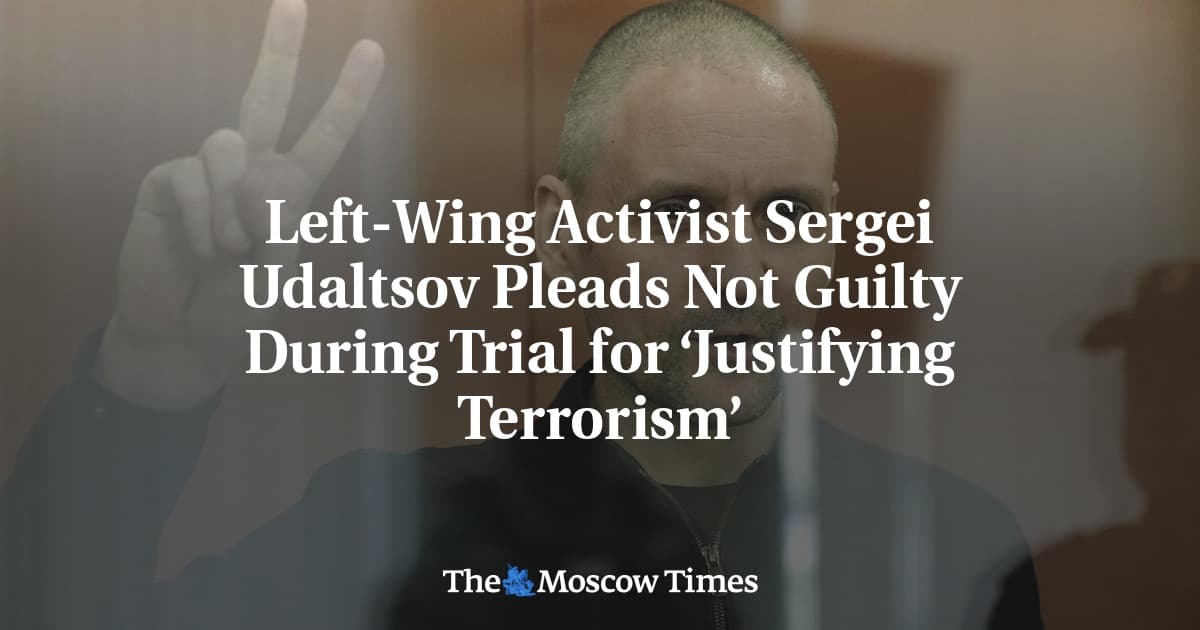
A Russian court on December 25 convicted Sergei Udaltsov, the leader of the Left Front movement, of justifying terrorism and sentenced him to six years in a maximum security penal colony. Multiple outlets described Udaltsov as both a pro war activist and a critic of President Vladimir Putin, and reported that he was arrested in 2024 before the trial concluded this month.
Independent news site Mediazona reported that the terrorism related charge was based on an article Udaltsov posted online in which he expressed support for another group of activists who were convicted earlier this month and sentenced to prison terms ranging from 16 to 22 years. Those longer sentences for the other activists, and Udaltsov’s conviction for endorsement, underscore prosecutors’ use of expansive terrorism and extremism statutes to penalize public statements and associations rather than violent acts.
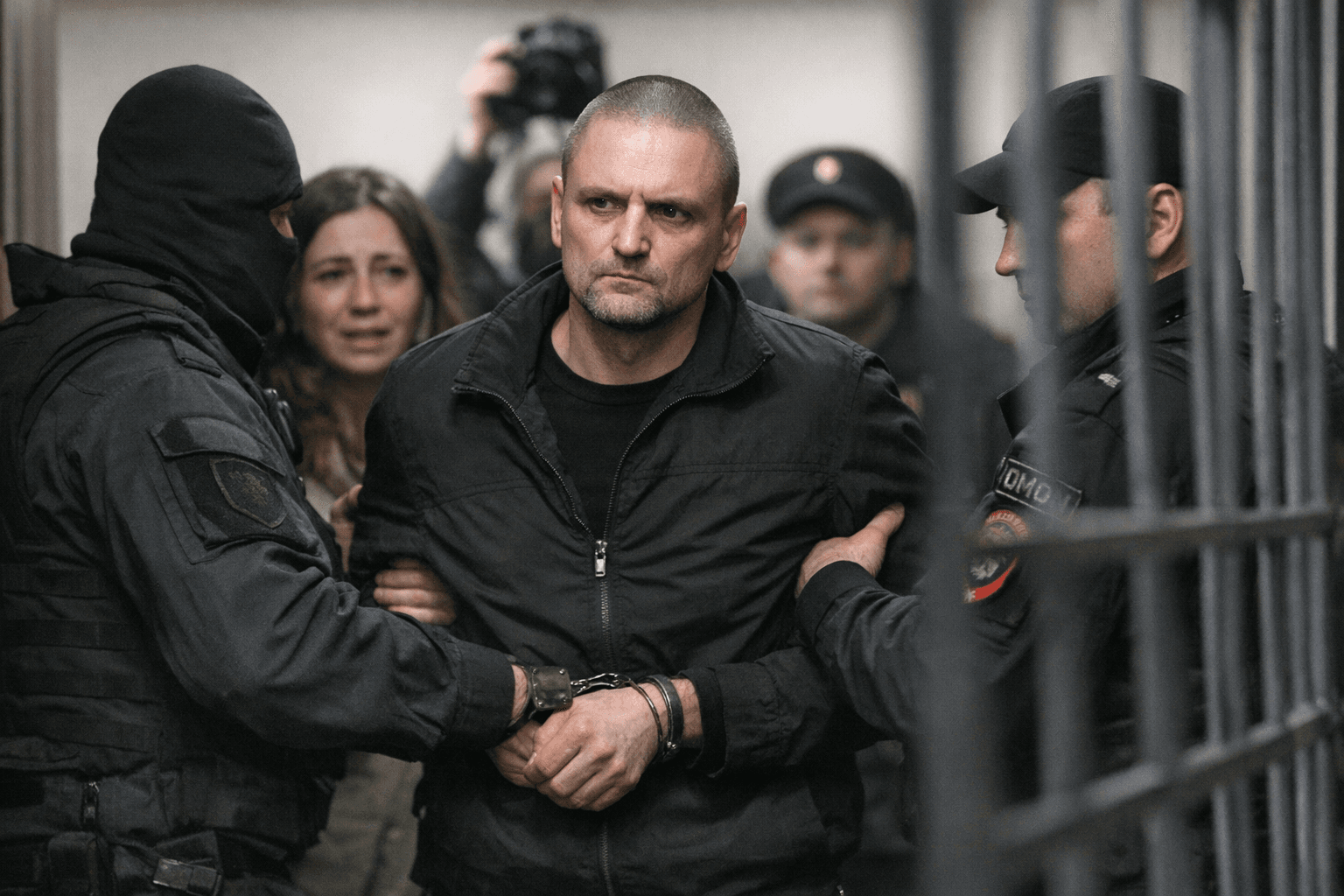
File photographs accompanying coverage show Udaltsov behind a courtroom cage in an image dated April 21, 2025 and credited to AP photographer Pavel Bednyakov. State news agency TASS is reported to have noted earlier run ins with the law, including a December 2023 Moscow court order for 40 hours of compulsory labor after Udaltsov was detained in Red Square while attempting to unfurl a flag bearing an image of Josef Stalin.
The case adds to a pattern of high profile prosecutions since the 2022 invasion of Ukraine, when Russian authorities broadened the use of national security and anti extremism legislation against critics, independent journalists, and civil society figures. By applying terrorism related statutes to online commentary and political advocacy, the prosecutions raise legal and political questions about the thresholds for conviction and the evidentiary standards used in politically sensitive cases. Public reporting on this trial does not include courtroom transcripts, prosecutor statements, or defense responses, leaving significant gaps in the record available to outside observers.
For the Kremlin, the conviction of a figure described as both pro war and critical of the president signals a tightening of control over political expression, even among those who do not fall into a conventional opposition category. For the Left Front and its affiliates with the Communist Party, the sentence will likely weaken organizational capacity and deter public activism given the severity of recent penalties for associated figures.
Economically, the domestic consolidation of authority through punitive legal measures carries familiar costs for investor sentiment and market perceptions of political risk. While the immediate market reaction to a single legal case is typically muted, cumulative crackdowns can increase the country risk premium over time, discourage foreign investment, and weigh on long term productivity through reduced civic space and talent flight. The conviction comes at a moment when observers are already sensitive to political stability in assessing Russia’s risk profile.
With key facts reported by multiple outlets but limited disclosure of the evidence presented in court, the broader implications of Udaltsov’s conviction will depend on whether the state pursues similar cases and how legal standards are applied in future prosecutions.
This article was produced by Prism’s automated news system from verified source data, official records, and press releases, then run through automated quality and moderation checks before publishing. The system is built and supervised by the people who set the standards it runs under. Read our full AI policy.
Did this article answer your question?