Russian drones and missiles pound Kyiv ahead of Zelenskiy meeting with Trump
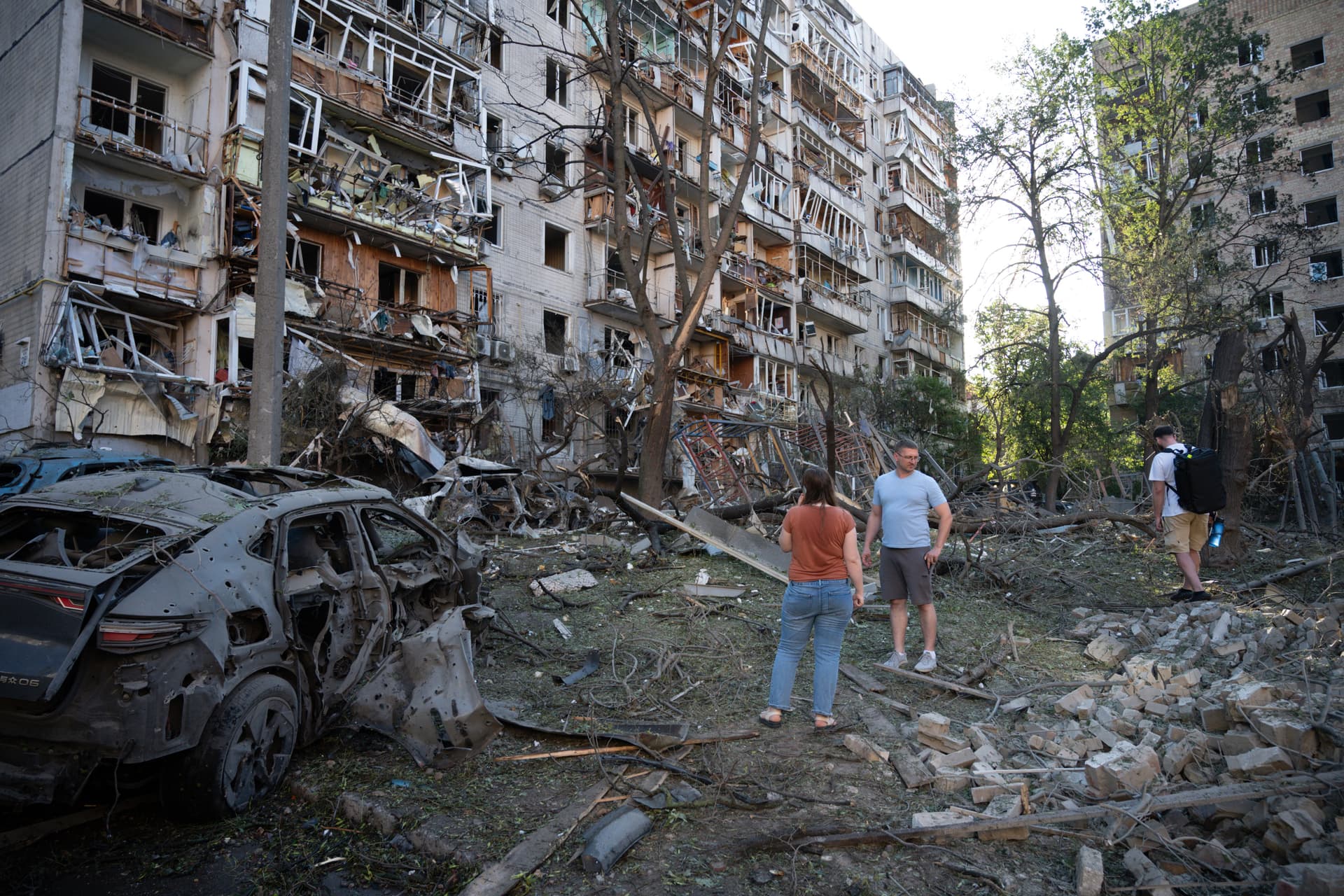
A large, hours long Russian assault on Kyiv on December 27 cut power and heating to parts of the capital, damaged residential buildings and caused civilian casualties just before President Volodymyr Zelenskiy was due to meet U.S. President Donald Trump. The strikes highlighted persistent Russian long range strike capabilities, raised humanitarian concerns as temperatures hovered near freezing, and complicated fragile diplomatic efforts toward a potential peace accord.
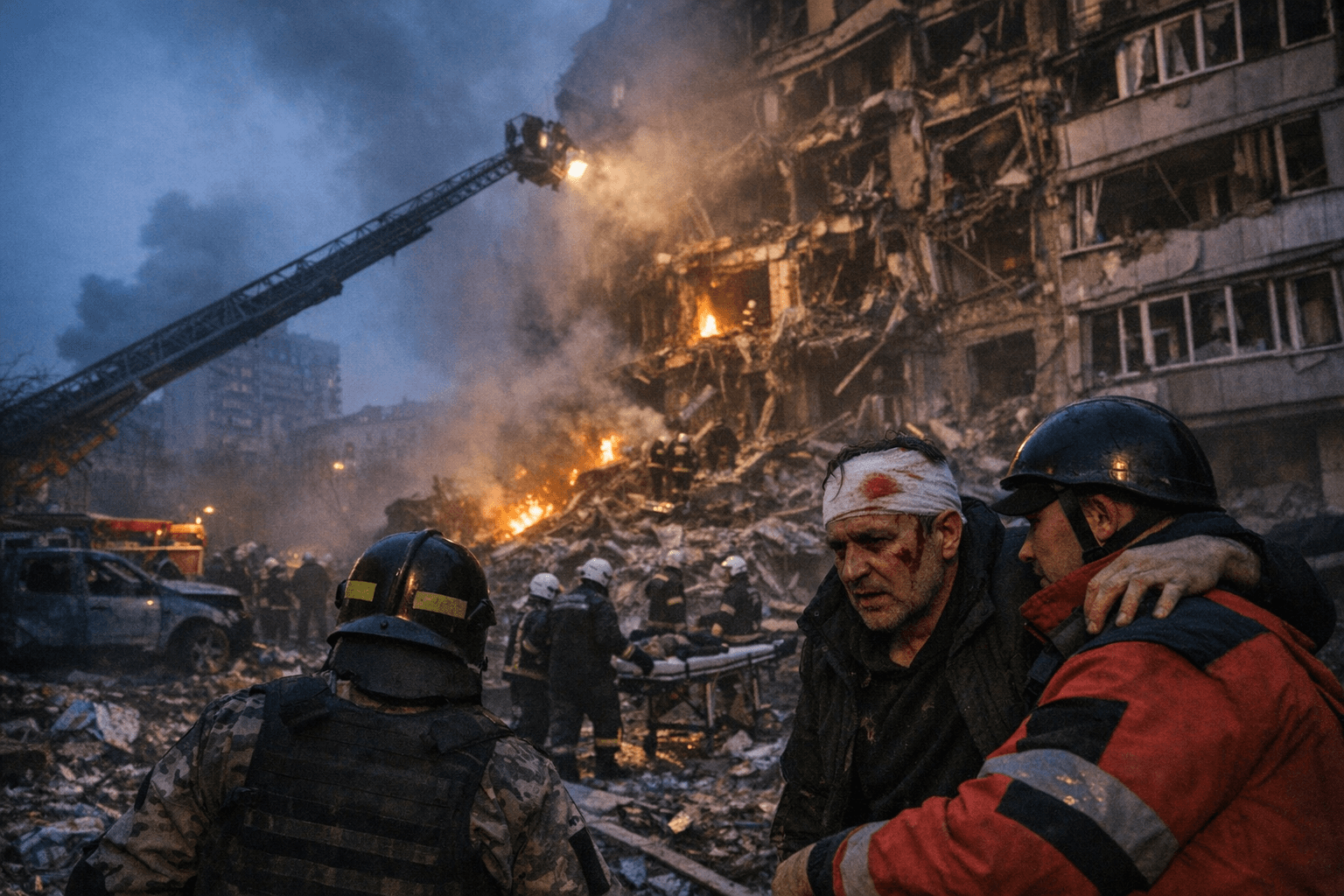
A sustained Russian assault on the night of December 27 sent explosions and anti aircraft fire across Kyiv and other regions of Ukraine, cutting electricity and heating for large swaths of the capital and damaging residential blocks. The bombardment began in the early hours of the morning and continued into daylight, with accounts describing an hours long campaign that emergency services said required prolonged firefighting and rescue work.
Estimates of the scale varied. Operational tallies published by Ukrainian channels and independent observers described waves of drones and missiles, with some counts running into the hundreds. One set of estimates put the attack at roughly 500 attack drones and about 40 missiles, while other descriptions used broader language of hundreds of munitions. Air defence systems were active over large parts of Kyiv, with eyewitnesses reporting explosions across the city and military channels citing both cruise and ballistic missiles among the weapons used.
Casualty and damage figures diverged across reports. Ukrainian authorities reported one person killed and 19 injured in the overnight strikes, while other accounts indicated dozens wounded. Several residential buildings were damaged and emergency crews worked through the night to extinguish fires. Infrastructure impact was acute in winter conditions. Ukrainian officials said roughly one third of the capital had been left without heat, and hundreds of thousands of residents were reported to be without electricity at temperatures near freezing, heightening immediate humanitarian risks.
The strikes coincided with high level diplomacy. President Zelenskiy was due to meet President Trump in the United States to discuss terms for a possible accord aimed at ending nearly four years of war. Ukrainian officials said Zelenskiy intended to press territorial and security guarantees at the meeting, and he framed the attack as proof that Moscow was not serious about peace efforts. Ukrainian statements also suggested the assault may have been timed in reaction to Washington brokered diplomatic activity.
A Russian official described the talks as potentially a "turning point" in efforts to end the fighting, a characterization reported without attribution of a name. The timing of the strikes immediately preceding the diplomatic engagement will test whether a negotiated path can survive renewed kinetic pressure and signals from the battlefield.
There were regional operational consequences. Polish authorities temporarily closed two airports in response to the strikes, adding to concerns about wider spillovers across allied airspace.
Beyond the immediate human toll, the assault carries economic and market implications. Repeated long range attacks on civilian infrastructure amplify winter humanitarian costs and increase pressure on Western donors to sustain military, energy and reconstruction assistance. Markets historically react to such escalations with upward pressure on energy and defence related assets and with safe haven flows into sovereign debt and the dollar, although reaction patterns will depend on the scale and duration of the conflict. In policy terms, the strikes are likely to harden Kyiv and allied bargaining positions while complicating any swift diplomatic breakthrough, reinforcing a longer term trend of protracted, high intensity conflict with deep economic and social costs.
This article was produced by Prism’s automated news system from verified source data, official records, and press releases, then run through automated quality and moderation checks before publishing. The system is built and supervised by the people who set the standards it runs under. Read our full AI policy.
Did this article answer your question?