Samsung Introduces Galaxy Z TriFold, Its First Three Panel Phone
Samsung Electronics unveiled the Galaxy Z TriFold on December 1 and 2, marking the company s first consumer smartphone that unfolds across three panels to create a roughly 10 inch interior display. Priced at about 3.59 million won, roughly $2,440, the device is being positioned as a technology showcase rather than a mass market product, a sign of how foldable design is evolving but remains costly and complex.
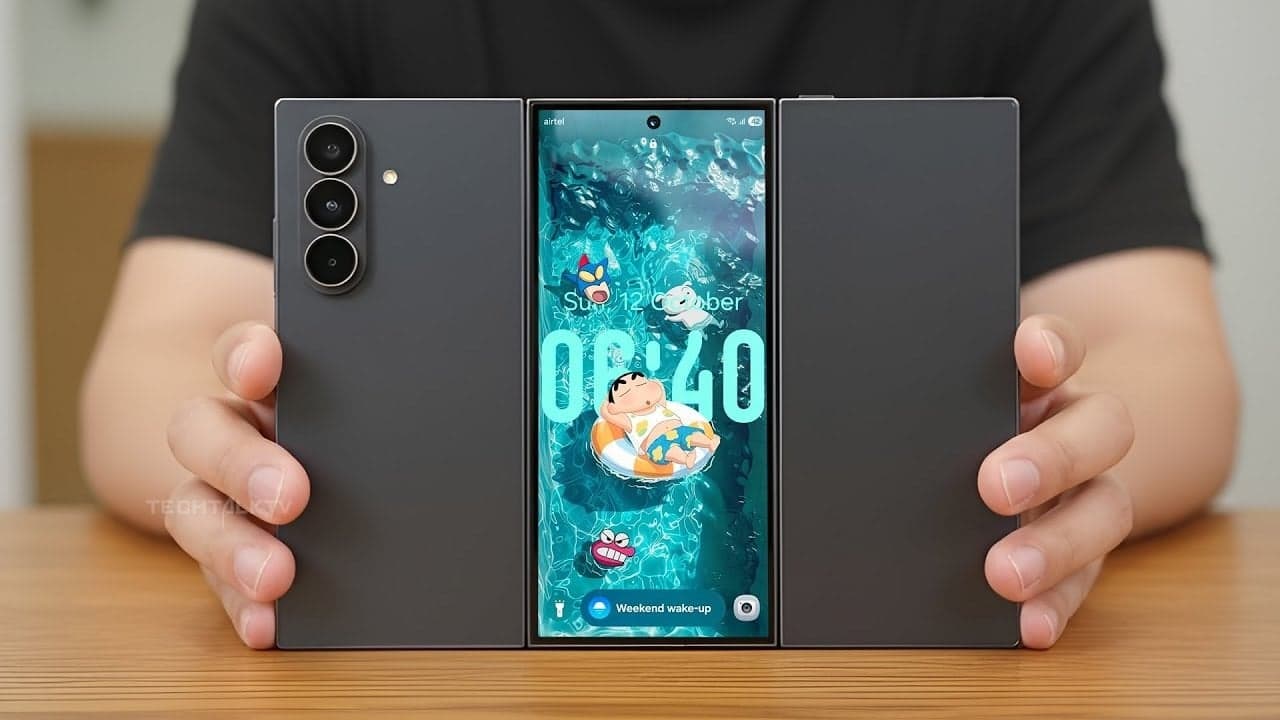
Samsung Electronics on December 1 and 2 revealed the Galaxy Z TriFold, the company s first consumer device that folds across three panels to produce an interior display roughly the size of a small tablet. The device represents a new step in foldable hardware by extending the single and dual fold approaches that have defined the market to date, while emphasizing display real estate and novel form factor possibilities.
Priced at about 3.59 million won, roughly $2,440, the TriFold is not aimed at volume sales according to Samsung, but instead is being presented as a showcase of engineering and design. The company said the device will go on sale in South Korea on December 12 and will roll out in select markets later this year, with a possible U.S. launch in the first quarter of 2026.
The TriFold uses three connected panels to deliver a roughly 10 inch interior display, blurring the line between smartphone and tablet. Samsung also outfitted the device with what it called its largest flagship battery and super fast charging, addressing two of the most persistent complaints about large folding screens, battery life and charging speed. Beyond those headline features Samsung has leaned into premiums in build materials and hinge engineering to support the additional folding axis.
Despite the spectacle, industry analysts warned that three panel folding remains a niche proposition. High component costs, complex assembly and lower yields for novel hinge and display architectures push prices well above mainstream flagship models. That combination makes the TriFold unlikely to move in large volumes in the near term, and positions it as a halo product for technology enthusiasts and early adopters.
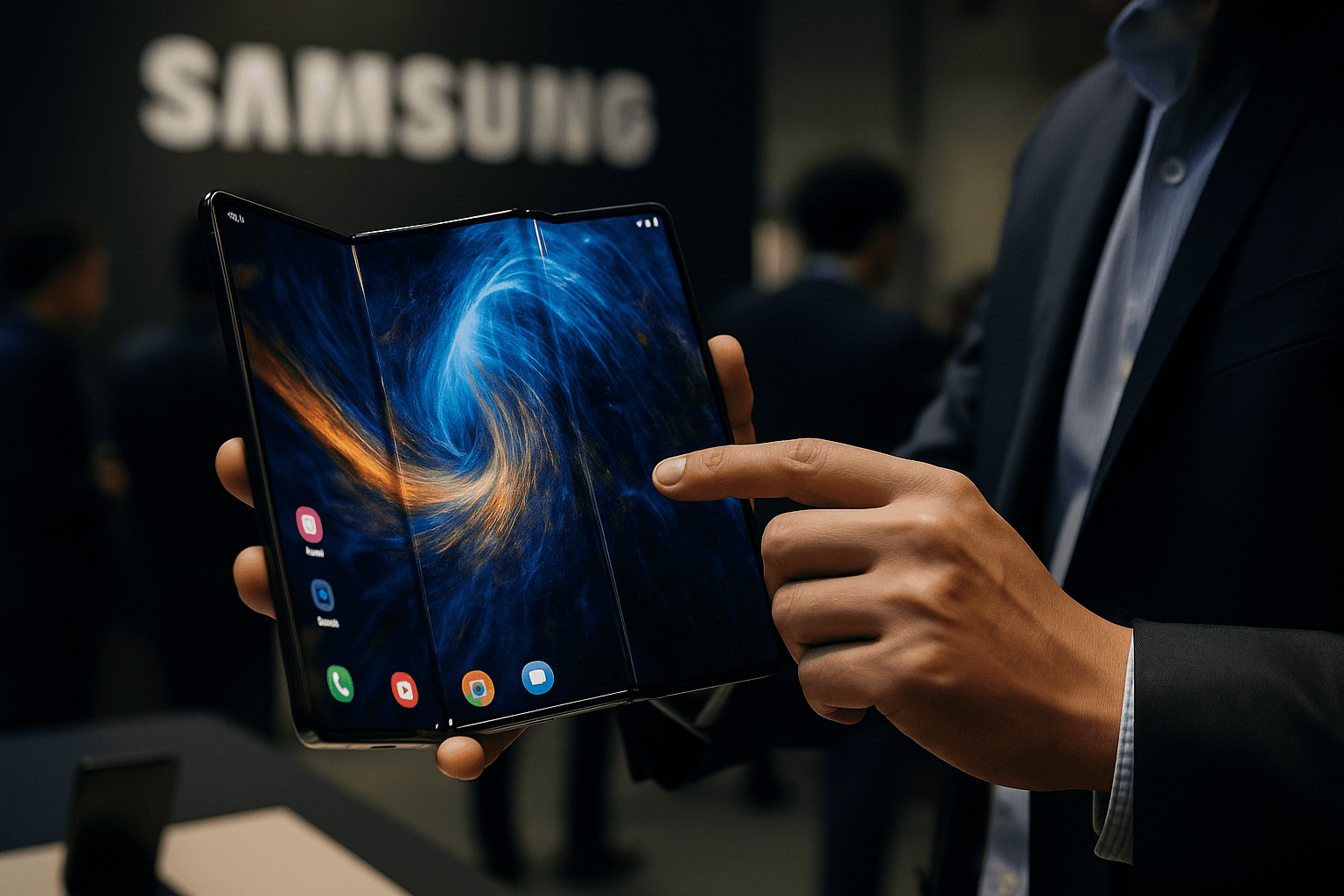
The device arrives as competition in the foldable space is intensifying. Other manufacturers have introduced foldables that open to tablet size or close to compact pocket friendly form factors, and Samsung s TriFold signals a willingness among major vendors to experiment with new folding geometries. For consumers the practical questions will be durability, software that makes use of the expanded screen area, and whether the additional functionality justifies the premium price.
For developers and app makers the TriFold also creates new design constraints and opportunities. Multi panel unfolded surfaces demand adaptive interfaces and continuity across seams, and success for the format will depend in part on software that treats the expanded display as more than a larger canvas.
Samsung s launch of the TriFold underscores the company s strategy of using flagship devices to push technological boundaries while acknowledging that not every innovation will be an immediate commercial hit. The coming months will test whether consumers and app ecosystems embrace yet another folding approach, or whether three panel designs remain a specialized niche inside a still maturing market.
This article was produced by Prism’s automated news system from verified source data, official records, and press releases, then run through automated quality and moderation checks before publishing. The system is built and supervised by the people who set the standards it runs under. Read our full AI policy.
Did this article answer your question?