San Francisco Opens Mission Cabins for Super Bowl Week, Advocates Decry Displacement
San Francisco opened a 60-cabin temporary shelter at 1979 Mission Street and added beds during Super Bowl LX week, measures officials call relief and advocates call displacement.
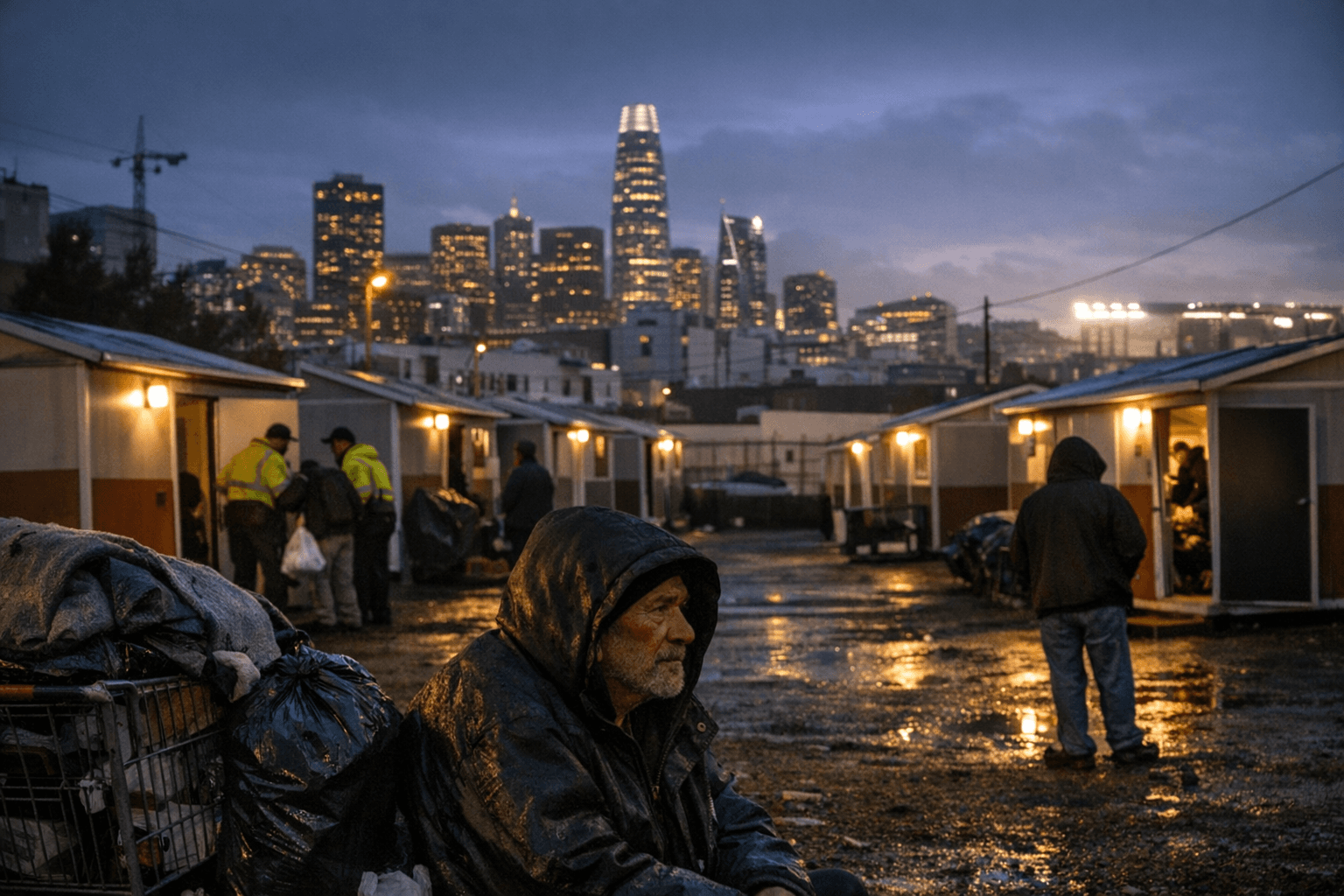
San Francisco opened Mission Cabins, a 60-cabin temporary shelter at 1979 Mission Street, as city officials moved to expand shelter capacity while the region hosted Super Bowl LX. Mayor London N. Breed and Supervisor Hillary Ronen announced the program as part of a broader push to provide alternatives for people living on downtown sidewalks during the influx of visitors.
The city framed Mission Cabins as a replicable interim shelter model. Shireen McSpadden, executive director of the Department of Homelessness and Supportive Housing, said, “The launch of the Mission Cabins expands an innovative shelter model for people experiencing homelessness in the Mission,” and added that “The Mission Cabins are a step towards creating more inclusive and compassionate shelter in areas of high need, where everyone has the opportunity to thrive with dignity.” City officials say the site is modeled after the 33 Gough Cabins and will “provide private cabins and onsite support services for individuals experiencing homelessness.” Five Keys Schools and Programs was selected to operate the site and provide onsite social services, and the Department of Public Health will offer health services on site several days per week.
City statements place Mission Cabins inside a claimed expansion of capacity since 2018. Officials say “Since 2018, San Francisco has expanded shelter capacity by over 60%, with over 3,900 shelter beds now online and more coming online soon,” and that “Over the last five years, San Francisco has helped over 15,000 people permanently exit homelessness.” The Mission Cabins program is expected to run for at least two years, until a planned long-term affordable housing development on the site breaks ground.
Emergency winter shelters continued to operate alongside Mission Cabins. The long-running Interfaith Winter Shelter program marked its 37th year and is scheduled to run through March 29, 2026, rotating among five sites including Canon Kip Senior Center and the Cathedral of St. Mary of the Assumption. Canon Kip operates 30 beds and St. Mary’s 80 beds; officials say guests self-refer and bed availability shifts nightly. “Those who stay at the shelter sites are all self-referrals,” said Deborah Bouck of the Department of Homelessness and Supportive Housing. “While bed availability changes each night starting at 6 p.m., when the sites transition from their daily operations, visitors can hold onto their bed for more than one night.” Bouck added that rotations “happen on a monthly-ish basis and is posted online. Guests are informed of the move beforehand.”
Advocates and people experiencing homelessness criticized the city’s approach during Super Bowl week, saying relocations resembled displacement rather than long-term solutions. A local social-media post headlined “San Francisco Opens Homeless Shelter for People Forced to Move During Super Bowl” captured public concern about forced moves and temporary measures. City officials say they funded additional overnight beds for the week, but public advocates argue the underlying problem remains unresolved.
For San Francisco residents, the practical picture is mixed: Mission Cabins increases short-term capacity and pairs shelter with onsite services, but the city’s tallies and claims on long-term exits from homelessness merit scrutiny. The Mission Cabins timeline — at least two years until housing breaks ground — and the Interfaith program’s seasonal operations provide near-term shelter, while questions persist about how many beds were added specifically for Super Bowl week, how relocations were handled, and what metrics will track durable housing outcomes.
Know something we missed? Have a correction or additional information?
Submit a Tip