San Francisco Supervisors Approve Lifetime Term Limits on June Ballot
San Francisco supervisors voted 7-4 to place a charter amendment on the June 2 ballot that would impose lifetime two-term limits for mayor and supervisors, affecting who can run again.
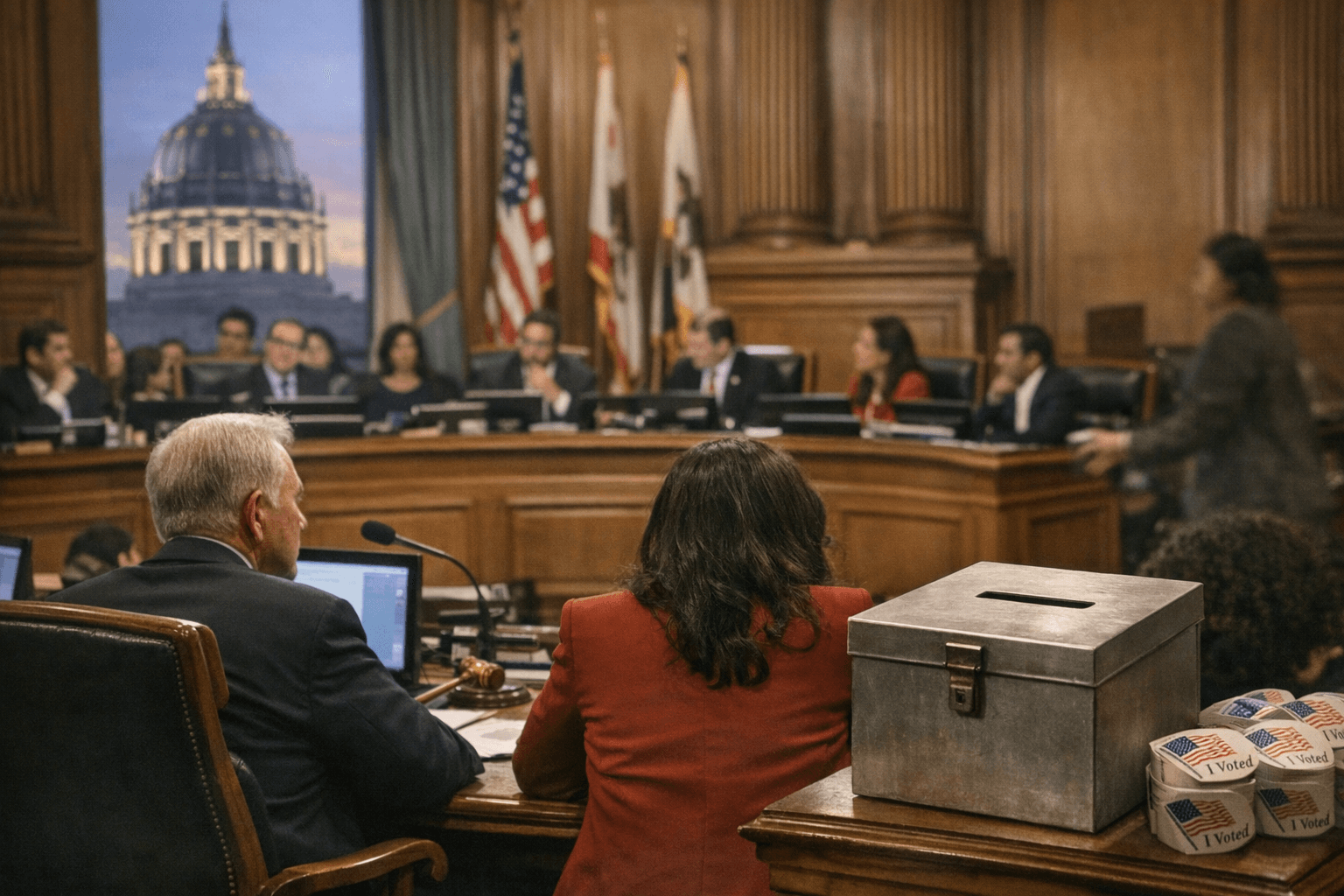
The San Francisco Board of Supervisors voted 7-4 to place a charter amendment on the June 2 ballot that would bar anyone from serving more than two four-year terms in their lifetime as mayor or as a member of the Board of Supervisors. Ballots for the June primary will begin mailing in early May, setting up a citywide decision on term-limit policy that could change how experienced elected officials return to office.
Under current rules, officials are limited to two consecutive terms but may run again after a four-year hiatus. Proponents argued the amendment closes that pathway back into office. Bilal Mahmood, the measure’s sponsor, said in a social media post: “This ballot measure will do three simple but essential things: establish clear lifetime term limits for Mayor and Supervisor, close a loophole that allows politicians to step aside and run again indefinitely, and give voters a voice in charting their own destiny.” Mahmood further framed the change as generational, saying the board has shifted and that voters should be able “to send a message to Washington” about two-term limits.
A roster of supervisors joined sponsorship: Myrna Melgar, Stephen Sherrill, Matt Dorsey, Danny Sauter, Alan Wong, and Jackie Fielder. District 6 Supervisor Matt Dorsey offered an atypical supporting argument, citing institutional continuity: “As someone who spent 14 years in the San Francisco city attorney’s office, I would argue that the absence of term limits for that office has enabled it to have continuity that really has made it a more formidable force for change than it would have been otherwise.”
Opposition on the board came from Shamann Walton, Connie Chan, Chyanne Chen and Board President Rafael Mandelman, who voted against placing the measure on the ballot. Walton raised concerns about the expense of additional elections and said he did not view the loophole as pervasive. The proposal has drawn forceful outside criticism as well. Former Governor Jerry Brown called the idea objectionable, saying, “I think a lifetime ban is a bad idea” and that the proposal was “a proposal that doesn’t deserve the dignity of the whole process of a charter amendment.” Brown dismissed the notion that the change would spur younger representation as “total nonsense” and argued the measure “stigmatizes people simply because they choose to serve, effectively declaring them ‘unworthy to ever submit yourself to the voters again.’”
Legal questions about the amendment’s reach were raised at the board meeting. Russi told the panel that “under current case law, the statute that supervisor Walton mentioned does not apply to San Francisco” and added that as a charter city San Francisco may “determine how term limits are applied, and this would include applying the proposed measure’s lifetime term limits both to current office holders and past office holders.” The source did not provide Russi’s title.
The debate has focused on a narrow empirical point: only one supervisor has used nonconsecutive terms since the 1990s, a pattern critics say makes the change disproportionate. Supporters counter that a clear lifetime cap would prevent repeat returns and give voters a definitive rule. Voters will decide June 2 whether to replace the current consecutive-term restriction with a lifetime two-term ceiling, and the measure’s legal consequences for former officeholders and practical impact on incumbent turnover will likely draw scrutiny if it passes.
Know something we missed? Have a correction or additional information?
Submit a Tip