Santa Ana Winds Fuel Southern California Brush Fires, Forcing Evacuations
The Springs Fire near Moreno Valley hit 45% containment as 50mph Santa Ana winds drove two simultaneous brush fires, forcing evacuations across Southern California.
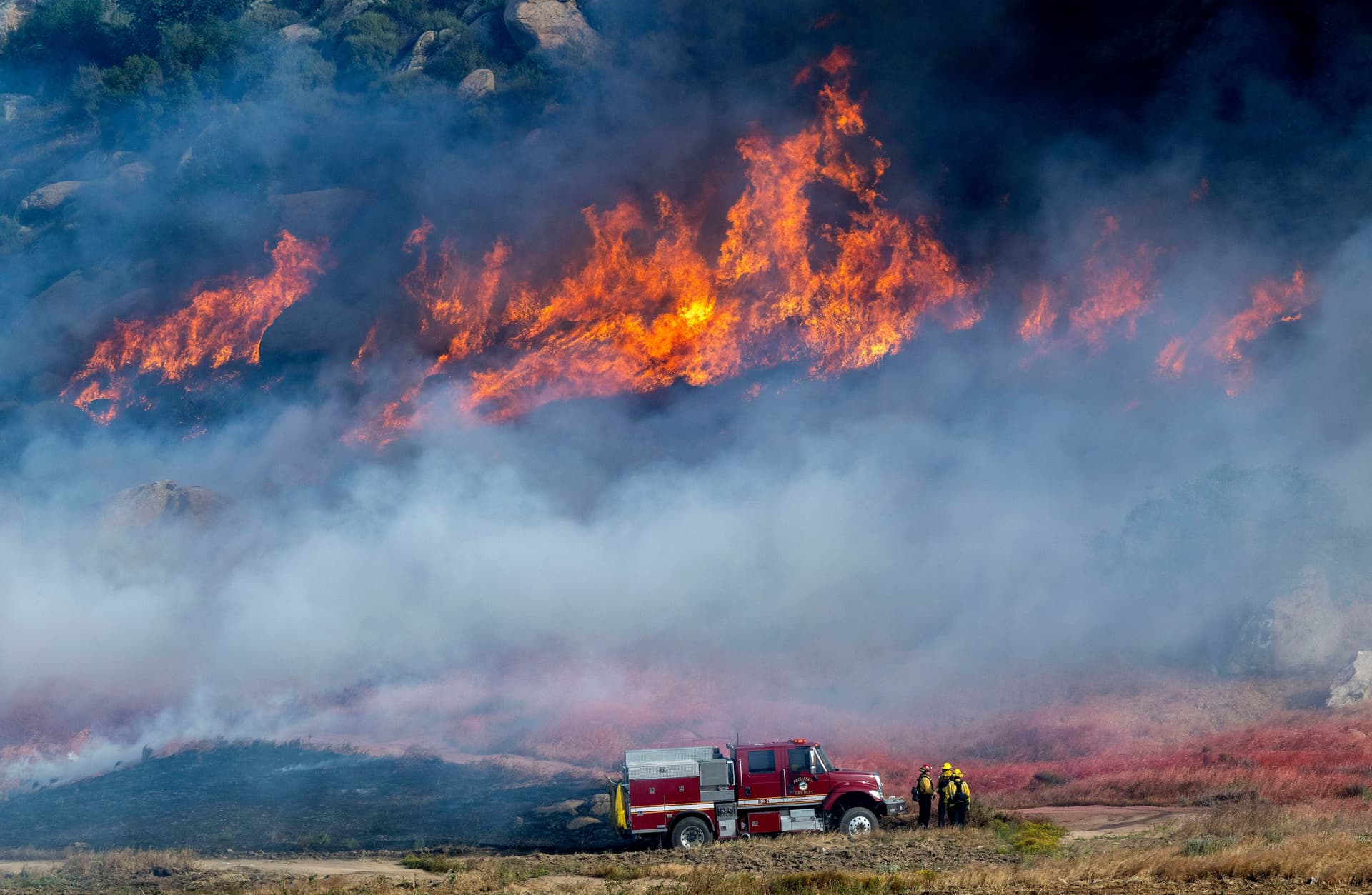
Fifty-mile-per-hour gusts from a powerful Santa Ana wind event drove two separate brush fires across Southern California, forcing evacuations near Moreno Valley and Acton while crews scrambled to establish containment lines on terrain that produces some of the most dangerous fire behavior in the country.
The Springs Fire, burning in the hills near Moreno Valley, reached 45% containment, a threshold that allowed emergency managers to begin lifting some evacuation orders as the immediate threat to structures receded. But containment percentages tell only part of the story: a fire sitting at 45% still has more than half its perimeter uncontrolled, meaning the remaining line stays vulnerable to wind-driven runs if conditions intensify overnight or shift direction. Residents returning to lifted zones should expect road closures near active perimeters to lag the evacuation lifting by hours, as crews clear debris and verify structural hazards before allowing unrestricted access.
A second fire erupted near Acton, in the northern reaches of Los Angeles County, sending another wave of residents under evacuation notices as fire maps circulated across emergency alert channels. The concurrent ignitions stretched firefighting resources across two counties simultaneously, complicating suppression strategy in communities embedded deep in the wildland-urban interface, where residential development presses directly against combustible native chaparral.
Santa Ana winds were identified as the primary driver behind both fires. These offshore wind events push warm, dry air from the inland desert toward the coast, pairing low relative humidity with cured vegetation to create fire weather conditions capable of producing rates of spread that outpace traditional suppression tactics. Gusts at 50 mph place this event firmly in the severe category.
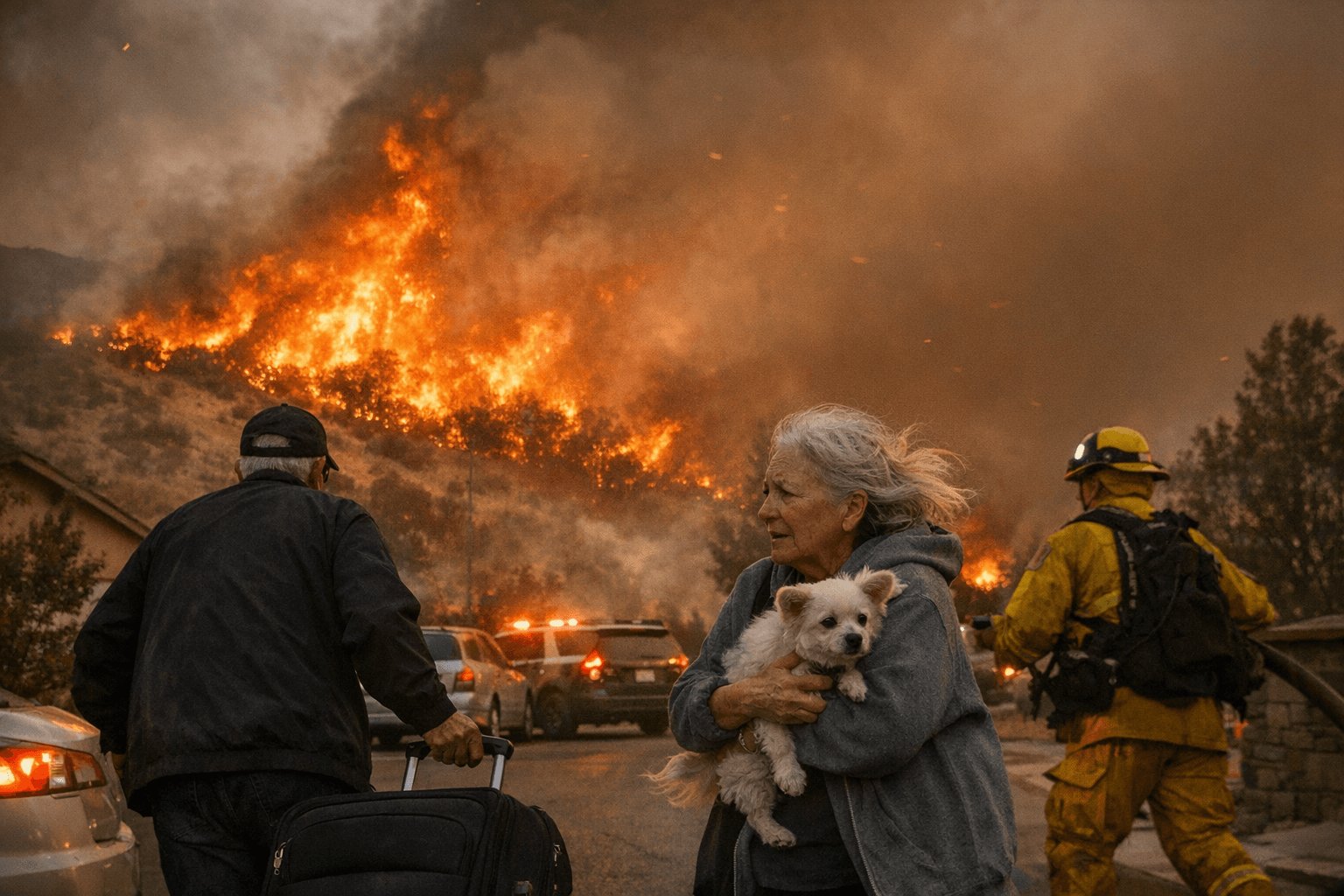
For anyone in or near an active evacuation zone, the first 24 hours of a wind-driven fire require decisive action. Evacuation warnings are designed to allow time for orderly departure before an order becomes mandatory; treating a warning as equivalent to a full order has historically narrowed the margin of error that gets people out safely. Downwind communities not under formal evacuation status faced degraded air quality as smoke columns built over both fire locations, making N95-grade respirators advisable even for those well outside the perimeter.
The Acton-to-Moreno Valley corridor reflects a wider pattern across Southern California where decades of exurban growth have placed more homes in direct contact with fire-prone vegetation. What once qualified as a routine vegetation fire increasingly reshapes evacuation logistics, strains mutual-aid networks, and accelerates pressure on the public agencies responsible for managing a landscape that the Santa Ana winds never stop testing.
This article was produced by Prism’s automated news system from verified source data, official records, and press releases, then run through automated quality and moderation checks before publishing. The system is built and supervised by the people who set the standards it runs under. Read our full AI policy.
Did this article answer your question?