When Dreams Die and Life Collapses, Recovery
Bankruptcy filings rose 15% in 2024, and most Americans are 90 days from financial collapse; but from job loss to addiction to divorce, the architecture of recovery is real, proven, and often communal.
The Anatomy of Collapse
Loss rarely announces itself politely. A layoff notice arrives on a Tuesday. A spouse says they're done. A court filing signals the end of a business that consumed a decade of your life. Sometimes these events pile on simultaneously, the way financial hardship, addiction, and marital breakdown so often travel together. What follows is not a self-help sermon. It is a clear-eyed look at how people, families, and communities rebuild after the worst happens, grounded in what the evidence actually shows.
The numbers are not abstractions. According to federal court data, 529,080 bankruptcies were filed in the United States between March 2024 and March 2025. Filings rose 15% in 2024 compared to the prior year, a surge driven not primarily by recklessness but by structural forces: income decline, medical costs, and the cumulative pressure of high-cost living. A survey by the Consumer Bankruptcy Project found that 78% of filers cited a drop in income as a contributing cause, and 65% pointed to medical issues, including both the bills themselves and the income lost while being sick. According to federal court data, 529,080 bankruptcies were filed in the United States between March 2024 and March 2025. Among those who hadn't fully recovered financially after bankruptcy, the main barriers were high living costs (88.4%), low income or unemployment (85.8%), and continued medical expenses (82.5%), pointing toward structural conditions rather than personal behavior as the primary obstacle. The experience carries an emotional toll that rivals some of life's most demanding events: more than a third of filers said bankruptcy was more stressful than buying their first home (36.6%) or having a child (35.5%).
When the Floor Drops
The particular cruelty of collapse is its compounding nature. Job loss often precedes or triggers bankruptcy. Bankruptcy strains marriages. Marriages breaking apart can accelerate addiction. Addiction erodes the employment prospects needed to escape debt. Personal financial problems such as high levels of debt, medical bills, divorce, and job loss can each independently push people toward insolvency, but they rarely operate in isolation. Understanding this interconnection is the first step toward breaking the cycle, because it reframes the question from "why did I fail?" to "what system of pressure created this outcome?"
The financial exposure is stark at every income level. Most Americans have roughly three months of financial cushion before bills go unpaid. Lose a job, face a medical emergency, or absorb one too many price hikes, and roughly four in ten adults would be out of options in about 90 days. That is not a moral failing. It is the arithmetic of wages that have not kept pace with housing, healthcare, or childcare costs.
The Long Work of Financial Recovery
Rebuilding finances after a major rupture is sequential, not spontaneous. The first step is almost always a honest reckoning: listing every asset, every debt, every monthly obligation without flinching. This is harder than it sounds. The psychological weight of looking directly at a $60,000 credit card balance or a foreclosure notice is real, and many people delay it for months, compounding the damage.
After assessment comes triage: separating what can be restructured from what must be surrendered. Chapter 7 bankruptcy discharges most unsecured debt but requires liquidating non-exempt assets. Chapter 13 creates a three-to-five-year repayment plan that can allow people to keep their homes. Neither path is failure; both are legal instruments designed precisely for this kind of crisis. Financial recovery after job loss, divorce, or serious illness follows a structured path: assessing the full situation, rebuilding a budget, protecting credit where possible, and exploring debt relief options, with consistency and professional guidance as the accelerators.
The emotional accounting matters as much as the financial one. Bankruptcy, according to survey respondents, is experienced as comparably traumatic to divorce, two of life's most destabilizing events arriving at the same level of psychological cost.
Addiction, Rupture, and the Road Back
Substance use disorder sits at the intersection of nearly every other form of collapse discussed here. It degrades employment, dissolves marriages, empties savings, and in its most acute forms, ends lives. Yet recovery is not only possible; it is statistically common. Millions of Americans describe themselves as being in recovery, and the research consistently shows that with appropriate treatment and community support, long-term recovery is achievable across a wide spectrum of addiction severity.
Addiction and financial hardship are deeply intertwined: when individuals struggle with addiction, they often find themselves facing significant financial strain, driven by the cost of sustaining the addiction itself, lost income, and mounting debt from deprioritizing financial responsibilities. What this means practically is that treating addiction in isolation from the financial and relational wreckage it creates is likely to be insufficient. The most effective recovery programs address all of these dimensions in parallel.
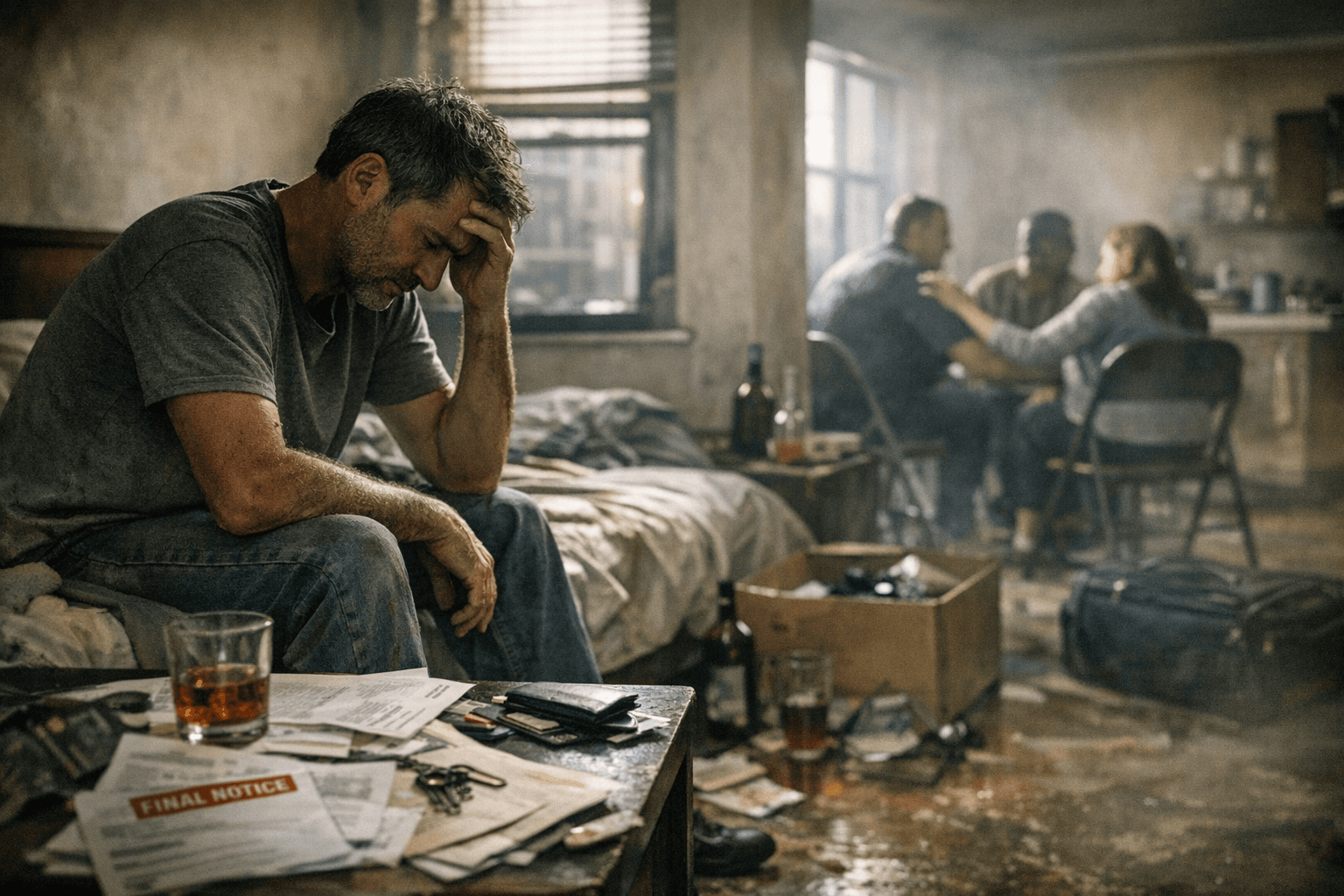
For couples navigating addiction alongside potential divorce, the options are not binary. Some couples want to try healing together, while others choose to part ways while still giving each other a chance at recovery, and treatment programs increasingly reflect this reality by including sessions that involve both partners, even when divorce is part of the picture.
The Community Architecture of Recovery
Individual willpower is real but insufficient. The most durable recoveries, financial, relational, or substance-related, are almost never solitary achievements. They are community projects.
Mutual aid networks have emerged as a critical and underappreciated part of this infrastructure. The 2024 Recovery-Ready Community Index found substantial growth in recovery assets: seven recovery organizations, 37 recovery houses, more than 200 peer support specialists and recovery coaches, and more than 1,800 regular mutual aid meetings operating in communities committed to rebuilding people, not just managing their symptoms. Churches, which number among the most prevalent community institutions in the country, serve as anchors for this support system, offering everything from food pantries and emergency housing referrals to addiction recovery groups and financial counseling.
Second-chance employment policies represent another critical lever. Second chance hiring programs rest on the premise that communities thrive when everyone can contribute: supporting individuals with criminal records, past addiction, or employment gaps creates stronger bonds through mutual benefit, where both the individual and the broader community gain. Richard Miles, who spent 15 years wrongfully incarcerated, now runs Miles of Freedom, a nonprofit that helps others rebuild their futures through exactly this kind of employment-focused restoration.
What Recovery Actually Requires
The honest account of recovery resists easy uplift. People do rebuild after bankruptcy, after divorce, after addiction, after reputational collapse, but the process is rarely linear and almost always longer than anyone expects. Several things consistently mark the recoveries that hold:
- Community, not isolation. The people who rebuild most durably are those who ask for help early, accept it without shame, and stay connected to others who have been through similar ruptures.
- Structural support, not just personal motivation. Second-chance hiring policies, debt restructuring laws, peer support specialists, and addiction treatment coverage are not luxuries. They are the scaffolding that makes individual effort possible.
- Time, measured in years. Financial recovery from bankruptcy typically takes seven to ten years to fully restore credit. Addiction recovery is understood by clinicians as a long-term, often lifelong process. Expecting a faster timeline creates the conditions for relapse or despair.
- Honesty about what was lost. The marriages, careers, and dreams that die in the course of a collapse do not always come back. Sometimes recovery means building something genuinely new rather than restoring what existed before. That distinction matters.
The most important fact about collapse may be the simplest: it is common enough that an entire infrastructure of laws, institutions, mutual aid networks, and professional disciplines exists to help people navigate it. You are not the first. The path is marked. The work begins the moment you decide to take it.
This article was produced by Prism’s automated news system from verified source data, official records, and press releases, then run through automated quality and moderation checks before publishing. The system is built and supervised by the people who set the standards it runs under. Read our full AI policy.
Did this article answer your question?

