Santería Priests Invoke Deities for Peace as U.S. and Cuba Tensions Rise
Santería priests held ceremonies in Havana invoking Eggun and other deities for peace as U.S.-Cuba tensions rise and the island braces for economic strain.
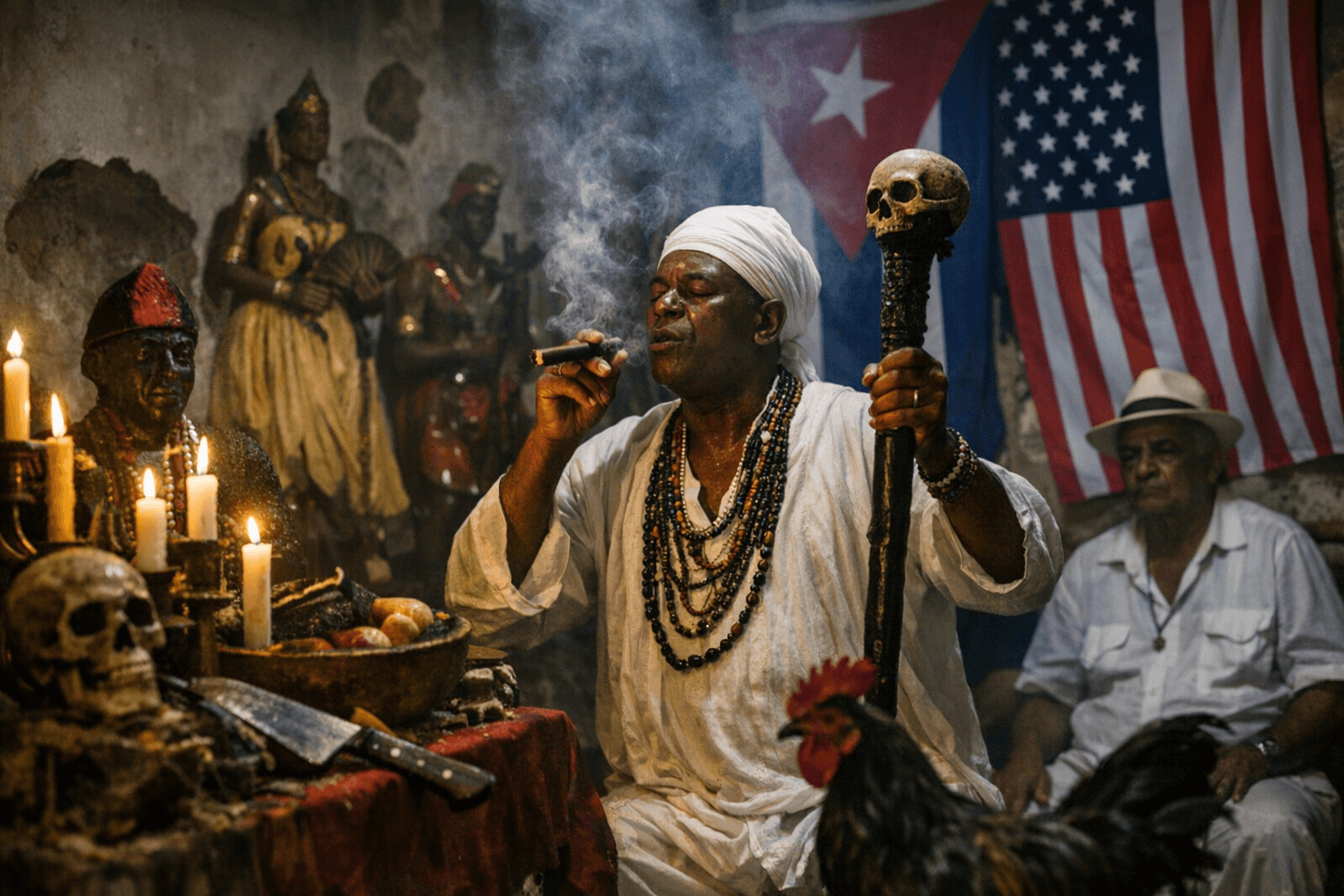
Santería priests and priestesses gathered in Havana and other communities to offer gifts and ask deities for peace as geopolitical tensions and economic strain weigh on the island. The rituals, held Sunday in the courtyard of an old house beneath a leafy mango tree and in other locations, followed divinations in late December and on Jan. 2 that predicted the possibility of war and violence affecting Cuba and the world.
Several dozen babalawos raised their voices in prayer, chanting in ancient Yoruba brought to Cuba by enslaved Africans and preserved orally. The ceremony opened outdoors with sacrifices of a hen, a rooster, and a dove as priests and parishioners asked Eggun, the deity of the ancestors, for permission to invoke his power and presence. Participants then moved into a large room in the house for the second part of the rites, dressed in white and wearing necklaces and headdresses.
Inside they knelt before a large basket and bowls filled with grains. The bowls contained beans, corn, and two eggs, an offering noted as generous given rising local food costs. Worshippers made an offering to Azowano, identified in the rites as one of the forms Saint Lazarus takes in Santería. Photographs from the ceremonies show priests performing a cleansing ritual with roosters and later sharing a meal after the cleansing.
Organizers and practitioners framed the ceremonies as practical protection for families and society. Lázaro Cuesta, a renowned priest who organized the Havana gathering, said, “We...believe that through sacrifices and prayers we can alleviate the impact of harmful issues.” Eraimy Léon, a 43-year-old babalawo, explained the purpose: “We do these spiritual cleansings so there's discipline, to be able to handle violence.” He added, “We do them for society and for our families.” Yusmina Hernández, a 49-year-old santera and homemaker who participated in the rites, said, “As religious people, we always try to distance ourselves from anything negative that comes into our lives.” At another point while tending food, she told onlookers, “We have faith. We believe in what we do.”
The ceremonies took place as the island faces tighter external pressure and a fragile economy, factors that practitioners said make spiritual work urgent. Some republished accounts emphasized a tightening of U.S. sanctions and direct threats from U.S. leadership, a backdrop that organizers cited when urging spiritual healing and calm.
For Cubans, the gatherings are both ritual and community coping mechanism: they reaffirm Afro-Cuban identity and provide a structured response to uncertainty. Expect similar ceremonies to continue as divinations and community leaders monitor unfolding political and economic developments, with Catholic and Santería calendars and local neighborhood networks often coordinating where and when groups will convene.
Know something we missed? Have a correction or additional information?
Submit a Tip