Satena turboprop crash kills 15 including lawmaker Diógenes Quintero
A Satena Beechcraft 1900 crashed in northeastern Colombia, killing all 15 aboard including a victims' representative; authorities said investigations will follow.
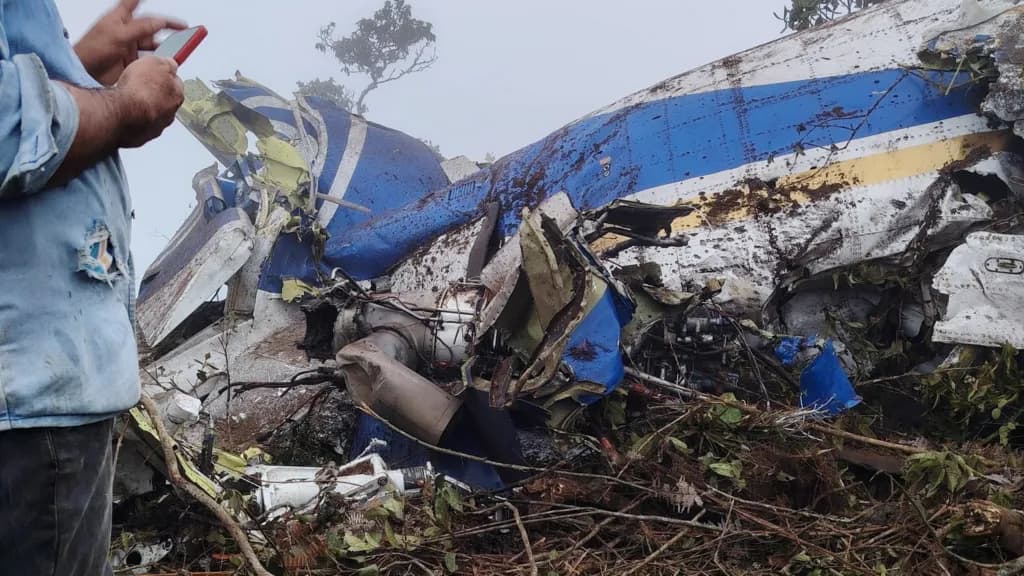
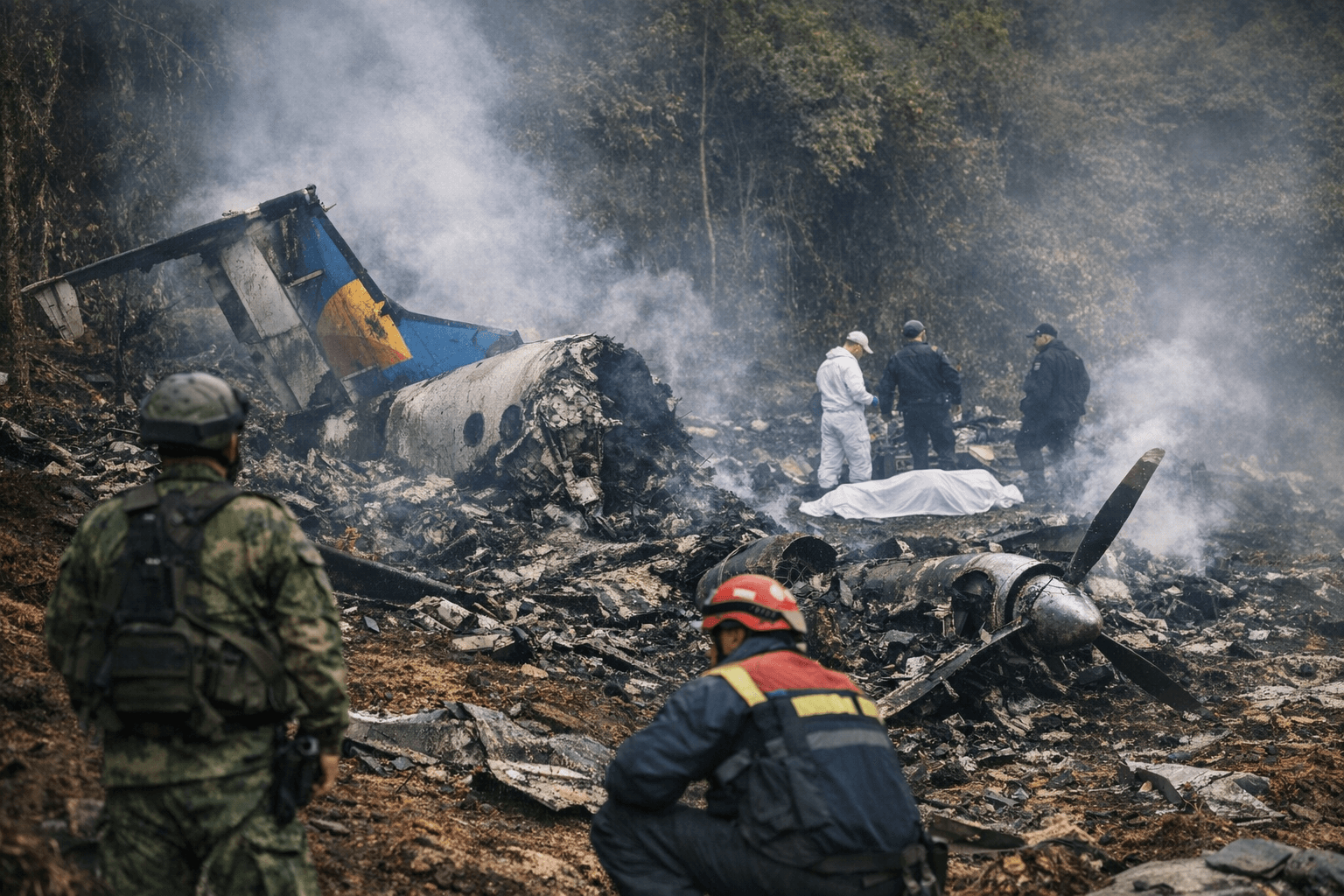
A state-run Satena twin-propeller Beechcraft 1900 crashed in a mountainous area of Norte de Santander in northeast Colombia, killing all 15 people aboard, including lawmaker Diógenes Quintero Amaya and members of his team. The aircraft, registered HK4709, departed Cúcuta at 11:42 a.m. en route to Ocaña and lost contact with air traffic control minutes after takeoff, Satena said.
Local officials in the community of Curasica alerted authorities to the downing, and a rescue team was dispatched to "assess the condition of the passengers," Satena said. Colombia’s Transportation Ministry, after officials reached the site, said, "Once the aircraft was located on site, authorities regrettably confirmed that there were no survivors." Authorities did not provide a cause and said a formal investigation would be opened.
Fifteen people were aboard the flight: two crew members and 13 passengers. Among the dead, the most politically prominent was Diógenes Quintero Amaya, 36, a lawyer and human rights defender elected in 2022 to one of 16 seats in Colombia’s lower chamber reserved for victims of the internal armed conflict. Those seats were created under the 2016 peace agreement with the FARC to represent more than nine million registered victims. Quintero’s team mourned him and a colleague in a social-media statement quoted by Satena: "Today, life took two of this team's members: Diógenes Quintero, a man who dedicated his life to serving those most in need, and Natalia Acosta, who always looked after the entire team and filled every space with happiness." A local social leader and congressional candidate, Carlos Salcedo, was also reported among the dead; full passenger manifest details have not been released.
The flight typically takes about 40 minutes, underscoring the role of short regional routes in connecting remote Andean and border communities where roads are slow or insecure. The loss of a scheduled Satena service and this particular flight raises immediate questions about safety oversight for small turboprops that serve rural Colombia, operational protocols on mountainous routes and the resilience of state-subsidized air links. Satena is a government operator whose air services are often the only rapid connection between isolated municipalities and departmental capitals; disruptions can have outsized economic impact on communities that rely on air transport for commerce, health care access and public administration.
For markets and public finances, the crash may prompt higher scrutiny of Satena’s operations and push regulators to demand accelerated safety reviews and potential fleet upgrades. That could translate into short-term increases in operating costs or demands for additional state subsidies to maintain connectivity while compliance measures are implemented. Insurers and aviation suppliers will be watching for the scope of the investigation and any findings about maintenance, weather, pilot training or air traffic control communications, all factors that could influence premiums and procurement choices for regional carriers.
Officials have not confirmed whether flight number 8895 or the 1900D variant cited in an unverified forum post were involved; those details remain to be corroborated. Investigators have yet to release the precise crash coordinates, weather information, ATC transcripts, or the status of flight recorders. Families of the victims, congressional authorities and aviation regulators are expected to receive further briefings as the probe advances.
This article was produced by Prism’s automated news system from verified source data, official records, and press releases, then run through automated quality and moderation checks before publishing. The system is built and supervised by the people who set the standards it runs under. Read our full AI policy.
Did this article answer your question?


