Saudi Fund Ends LIV Golf Financing After 2026 Season
Saudi Arabia will stop funding LIV Golf after 2026, ending a $5 billion spending spree that became a symbol of its prestige-driven era.

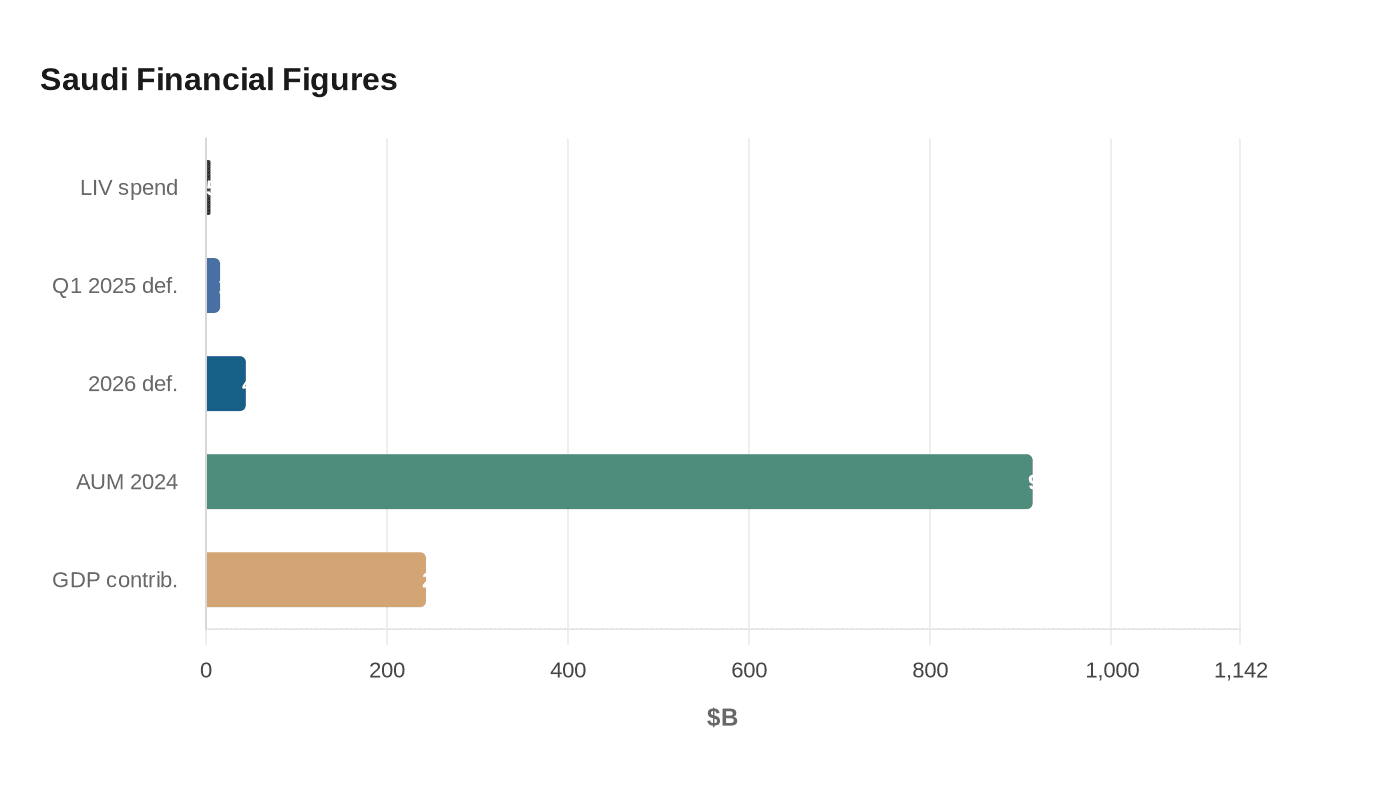
Saudi Arabia’s Public Investment Fund will end funding for LIV Golf after the 2026 season, closing one of the kingdom’s most visible and expensive sports bets. The move follows more than $5 billion in spending on the breakaway league since it launched in 2022, a scale of outlay that made LIV a centerpiece of Saudi Arabia’s push to project influence through high-profile global sports.
LIV Golf was founded in 2021 as a rival to the PGA Tour, and in 2023 it agreed to a merger framework with the PGA Tour that still has not been finalized. The fund said the long-term investment required by the league no longer fits its current strategy, which it described as being shaped by current macro dynamics. LIV said it is seeking long-term financial partners and has reorganized its board and leadership as it looks for a path forward.
The retreat lands at a moment when the kingdom’s finances are under greater strain. Saudi Arabia recorded a budget deficit of SR58.7 billion, or $15.65 billion, in the first quarter of 2025, with lower oil revenues and elevated spending weighing on the balance sheet. The Saudi Ministry of Finance has also projected a 2026 deficit of about SR165 billion, or $44 billion, equal to roughly 3.3% of gross domestic product, even as spending is steered toward priority sectors.
That tension is what makes the LIV reversal so telling. The Public Investment Fund said assets under management rose 19% to $913 billion at year-end 2024, and its own figures say it now has more than 220 portfolio companies and has generated a cumulative non-oil GDP contribution of $243 billion from 2021 to 2024. Even so, the end of LIV financing suggests that Saudi Arabia is beginning to separate the projects that build long-term economic capacity from the splashy, prestige-driven bets that defined the early years of Crown Prince Mohammed bin Salman’s Vision 2030 campaign.
For global markets, the signal is clear: Riyadh is not abandoning its ambitions, but it is becoming more selective about where it places sovereign capital. The kingdom still wants influence in Washington, in elite sports, and in foreign investment circles, yet the LIV decision shows that the era of unchecked marquee spending is giving way to a harder calculation about returns, priorities, and political credibility.
This article was produced by Prism’s automated news system from verified source data, official records, and press releases, then run through automated quality and moderation checks before publishing. The system is built and supervised by the people who set the standards it runs under. Read our full AI policy.
Did this article answer your question?