Scientists recreate nuclear fireball conditions, find fallout forms differently
Scientists at Lawrence Livermore recreated fireball conditions and found the cooling path of vaporized material may reshape fallout. The result could sharpen contamination models and emergency planning.
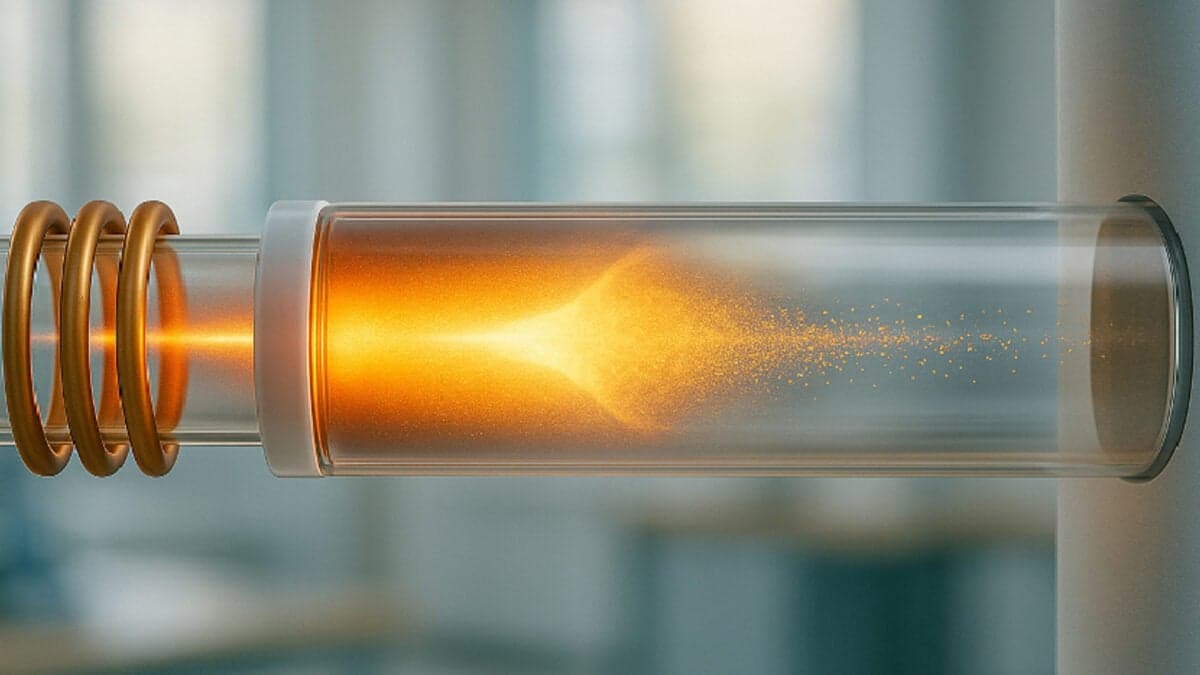
Scientists at Lawrence Livermore National Laboratory recreated part of the extreme environment inside a nuclear fireball and found that radioactive fallout may form differently than long-standing models assumed. The key variable was not just the blast heat, but what happened in the split seconds afterward, when vaporized material cooled and condensed into particles.
That cooling path may matter far more than researchers had appreciated. If the early transition from vapor to particles shapes the debris that later settles out of the air, then the details of particle size, spread and persistence could look different from what planners and analysts have built into older simulations. That has direct consequences for emergency response, contamination mapping and forensic analysis after a nuclear detonation or a radiological event.

The work addresses a problem that has challenged scientists for decades: nuclear fireballs are so violent and so short-lived that they are extraordinarily difficult to reproduce in a laboratory. By creating controlled conditions that approximate part of the process, the Livermore team focused on the cooling and condensation stage that links the initial explosion to the longer-lasting environmental hazard. That is the stage where the chemistry and physics of fallout begin to take shape.
The surprise in the fallout suggests previous assumptions may have missed a key variable. If scientists can better model how material behaves as it leaves the fireball, they can improve predictions about where contamination could travel, how quickly it could spread and how long dangerous particles might remain in the environment. Those refinements would help authorities estimate sheltering zones, evacuation timing and other urgent public-health decisions with more precision.
The findings also matter beyond emergency management. Better fallout models strengthen nuclear forensics, which depends on understanding the debris left behind after an incident. They also support detection work and broader environmental analysis, showing how modern laboratories continue to study nuclear phenomena for security and safety as much as for basic science.
At a time when fast, accurate response matters more than ever, a better picture of how fallout forms could change the calculations that follow a detonation. The new result points to a narrower window of physics, but a wider set of practical consequences for how authorities prepare for and respond to one of the most dangerous outcomes of a nuclear blast.
This article was produced by Prism’s automated news system from verified source data, official records, and press releases, then run through automated quality and moderation checks before publishing. The system is built and supervised by the people who set the standards it runs under. Read our full AI policy.
Did this article answer your question?