Scott Galloway warns of crisis facing young men in Western democracies
Scott Galloway, Jonathan Haidt and Richard Reeves cast young men’s loneliness as a structural crisis, and Galloway later urged: “Get off your phone.”
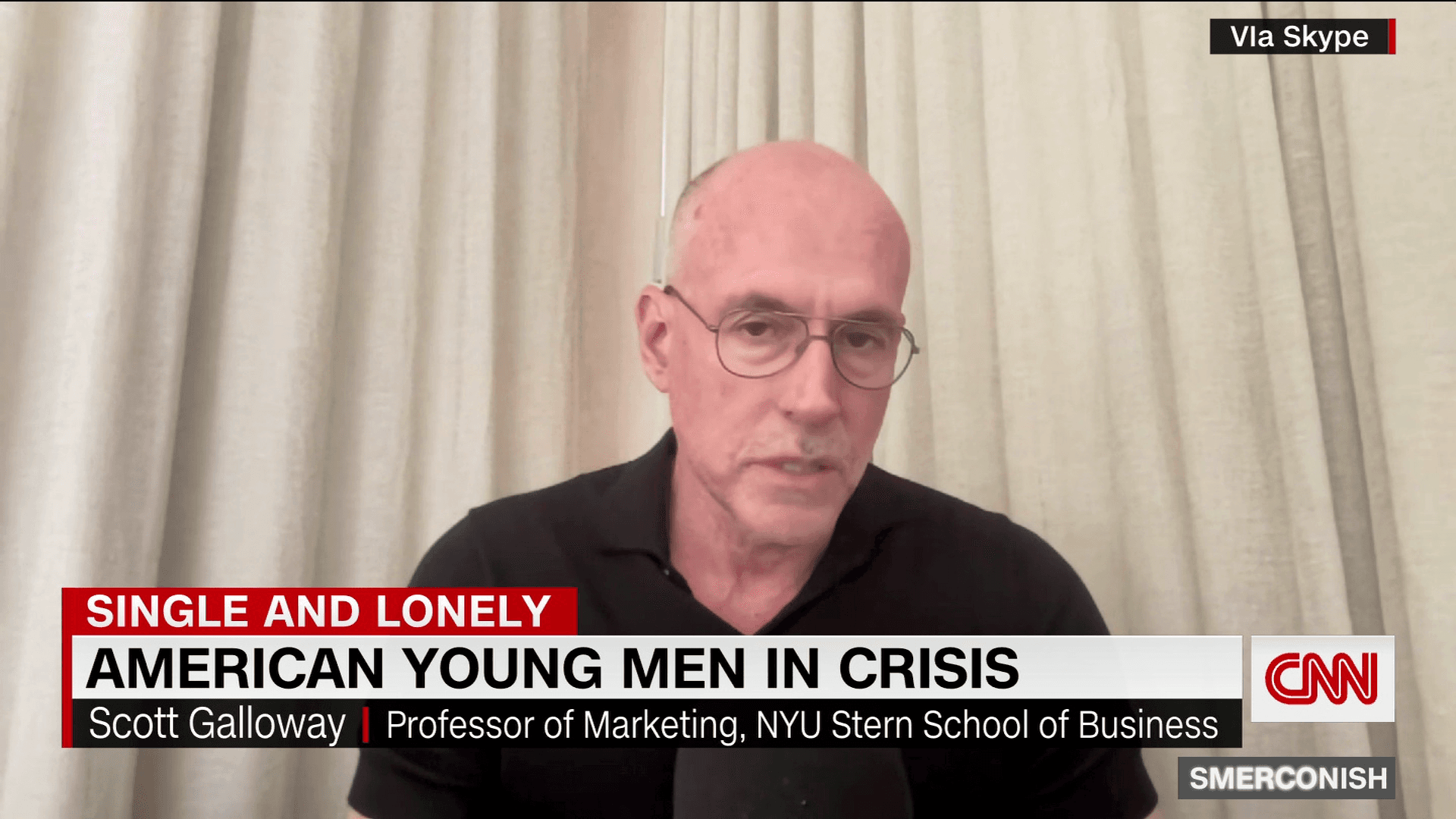
Scott Galloway brought Jonathan Haidt and Richard Reeves onto a Prof G Conversations episode on Aug. 14, 2025 to examine what he called the crisis facing young men, focusing on the collapse of in-person childhood, the rise of social media and gambling apps, and the loss of real-world rites of passage.
NYU Stern School of Business, where Galloway is a professor, put the argument in starker terms on its book page for Notes on Being a Man: “Boys and men are in crisis. Rarely has a cohort fallen further and faster than young men living in Western democracies.” The page adds that boys are less likely than girls to graduate from high school or college, and that one in seven men reports having no close friends. Those numbers point beyond family dynamics and into schools, labor markets and the social institutions that once gave boys a clearer route into adulthood.
Galloway has tied that deterioration to the attention-based economy as well. In a June 3, 2024 podcast summary, he described a system in which attention is converted into ads and dollars, arguing that constant bombardment has helped isolate young men. By Nov. 3, 2025, in a TODAY interview, he said men and boys were struggling like never before and pressed one simple prescription: “Get off your phone” and get out into the world. In an earlier April 11, 2025 appearance on The View, he discussed his definition of masculinity and why young men were struggling right now.
The debate around Galloway’s book has widened beyond his own platform. Richard V. Reeves, who founded the American Institute for Boys and Men, has repeatedly amplified the discussion, and Galloway and Reeves later answered listener questions in an episode titled How to Raise Good Men. That conversation, as described on the show, covered talking to boys about sex, navigating device addiction, supporting teachers and modeling healthy masculinity. Critics from male-advocacy and left-leaning circles have argued that Galloway oversimplifies the problem, but the controversy has only pushed the same institutional question higher: which fixes are real, and which amount to diagnosis without a system to back it up.
This article was produced by Prism’s automated news system from verified source data, official records, and press releases, then run through automated quality and moderation checks before publishing. The system is built and supervised by the people who set the standards it runs under. Read our full AI policy.
Did this article answer your question?