Scream Club grows nationwide as participants shout away stress
A free Sunday scream on Chicago’s lakefront has spread to 17 U.S. chapters, drawing hundreds as experts question its mental-health claims.
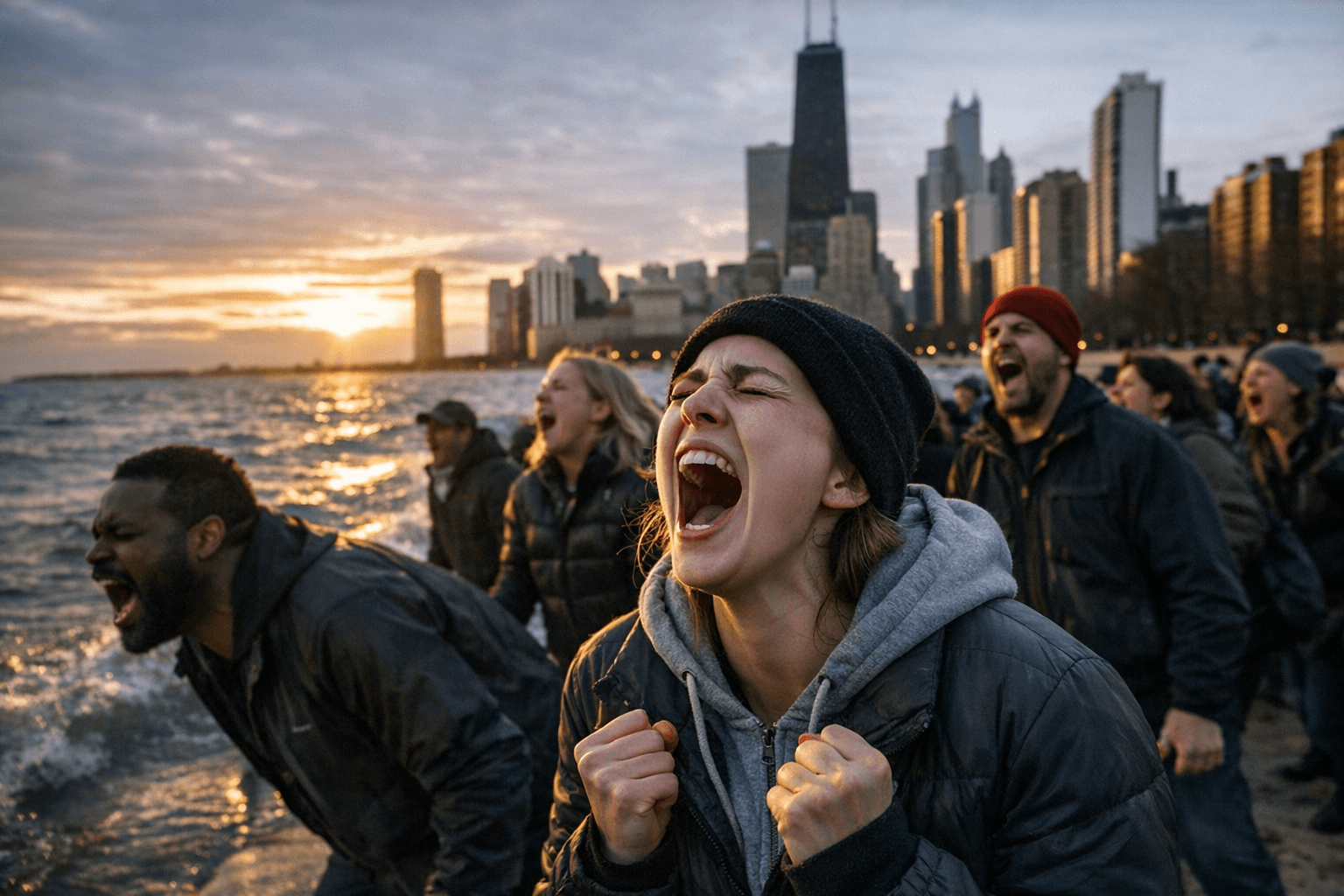
What began as a couple’s rough patch on the shore of Lake Michigan has become a national ritual of release, with Scream Club spreading to 17 chapters in less than a year and drawing hundreds to Chicago’s North Avenue Beach Pier.
Every Sunday at 7 p.m., participants gather at the pier for a free, no-sign-up session built around a simple idea: write down what is weighing on you, let it go, and scream. In Chicago, some reports say more than 200 people have shown up on Sundays. The routine often starts with people writing frustrations on biodegradable paper and tossing it into the water, followed by deep breathing and vocal warm-ups such as humming before the collective shout.
The founders, Manny Hernandez and Elena Soboleva, said the idea took shape after they screamed together by Lake Michigan during a difficult stretch in their relationship and realized other people wanted in. Their version of Scream Club now sits at the center of a wider wave that has expanded beyond Illinois to Seattle, Austin, Chattanooga, Atlanta, Detroit and San Juan, Puerto Rico.
The appeal is easy to understand. Supporters describe the gatherings as a place to release stress, grief and tension while also building community. That combination has helped the club travel quickly through a high-stress culture in which many people are looking for low-cost, low-barrier ways to feel better, even briefly, without an appointment or a waiting list.
The evidence for mental-health benefit, however, is far less dramatic than the sound of the scream itself. Ashwini Nadkarni, a psychiatry professor at Harvard Medical School, has noted that decades of research have not found scream therapy to be an effective treatment for mental health conditions, even if some participants experience it as a stress reliever. That distinction matters for a trend that is increasingly being framed not just as a social event, but as a wellness practice.
The concept has a long backstory in primal scream therapy, developed by psychoanalyst Arthur Janov in the 1960s. Scream Club’s founders and supporters treat that history more as inspiration than doctrine, borrowing the language of emotional release while leaving medical claims on the sidelines. For now, the movement’s power appears to lie less in clinical proof than in the shared act of showing up, breathing together and letting the noise out in public.
This article was produced by Prism’s automated news system from verified source data, official records, and press releases, then run through automated quality and moderation checks before publishing. The system is built and supervised by the people who set the standards it runs under. Read our full AI policy.
Did this article answer your question?