Seattle Mayor Unveils Bills to Expand Tiny-Home Villages and Streamline Shelter Leasing
Seattle Mayor Katie Wilson unveiled the Neighbor by Neighbor Initiative March 5, 2026, a package of bills to expand allowable tiny-home-village sizes and speed leasing for temporary shelter sites.
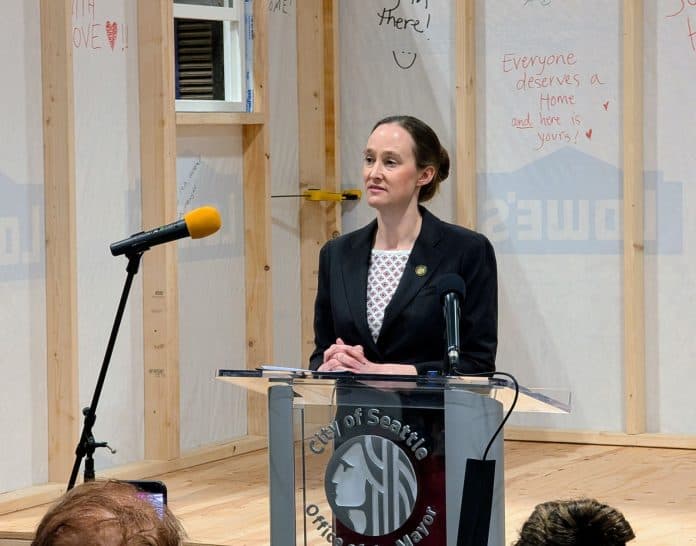
Seattle Mayor Katie Wilson unveiled the Neighbor by Neighbor Initiative, a package of bills designed to fast-track emergency housing creation by expanding allowable tiny-home-village sizes and streamlining leasing for temporary shelter sites. The announcement on March 5, 2026 centered on two concrete changes city code and leasing practice that Wilson framed as immediate tools to open more shelter capacity.
The Neighbor by Neighbor Initiative bundles multiple legislative changes into a single package of bills aimed specifically at increasing the scale of tiny-home villages permitted in Seattle. By changing what the city currently defines as allowable tiny-home-village sizes, the bills target the physical capacity of sites that can host tiny-home units and seek to reduce the need for piecemeal approvals that slow deployment.
Alongside size increases, the package proposes streamlined leasing for temporary shelter sites. Those provisions address timelines and transactional hurdles that shelter operators and landowners encounter when leasing property for temporary housing. The administration says those leasing reforms are intended to shorten the time from site identification to occupancy for tiny-home villages and other emergency shelter setups.
Mayor Wilson framed the initiative as a response to ongoing demand for rapid emergency housing solutions in Seattle, with the twin priorities of enabling larger tiny-home villages and making temporary shelter leases quicker to execute. The Neighbor by Neighbor Initiative therefore links physical expansion - the allowable village sizes - with administrative fixes - streamlined leasing - to accelerate placements of people into shelter.

Unveiled March 5, 2026, the bills mark a policy push by the mayor’s office to use both zoning-related adjustments and leasing reforms to scale tiny-home responses in the city. For tiny-house organizers and shelter providers tracking permitting and site readiness, the package makes clear the administration intends to change the levers that have constrained village size and site activation.
The immediate effect of the Neighbor by Neighbor Initiative will depend on how the proposed bills move through Seattle’s legislative process and how city departments implement the leasing changes. For proponents of tiny-home villages, Mayor Katie Wilson’s March 5, 2026 announcement signals a city-level effort to expand unit counts per site and to shorten the path from an identified parcel to a functioning temporary shelter.
Know something we missed? Have a correction or additional information?
Submit a Tip