SEC Reports $17.9 Billion in FY2025 Relief, Shifts Focus From Case Volume
The SEC's $17.9B FY2025 haul is dominated by a single 2009 Ponzi case; strip it out and real enforcement totals just $2.7 billion, signaling a sharp shift under Chair Paul Atkins.
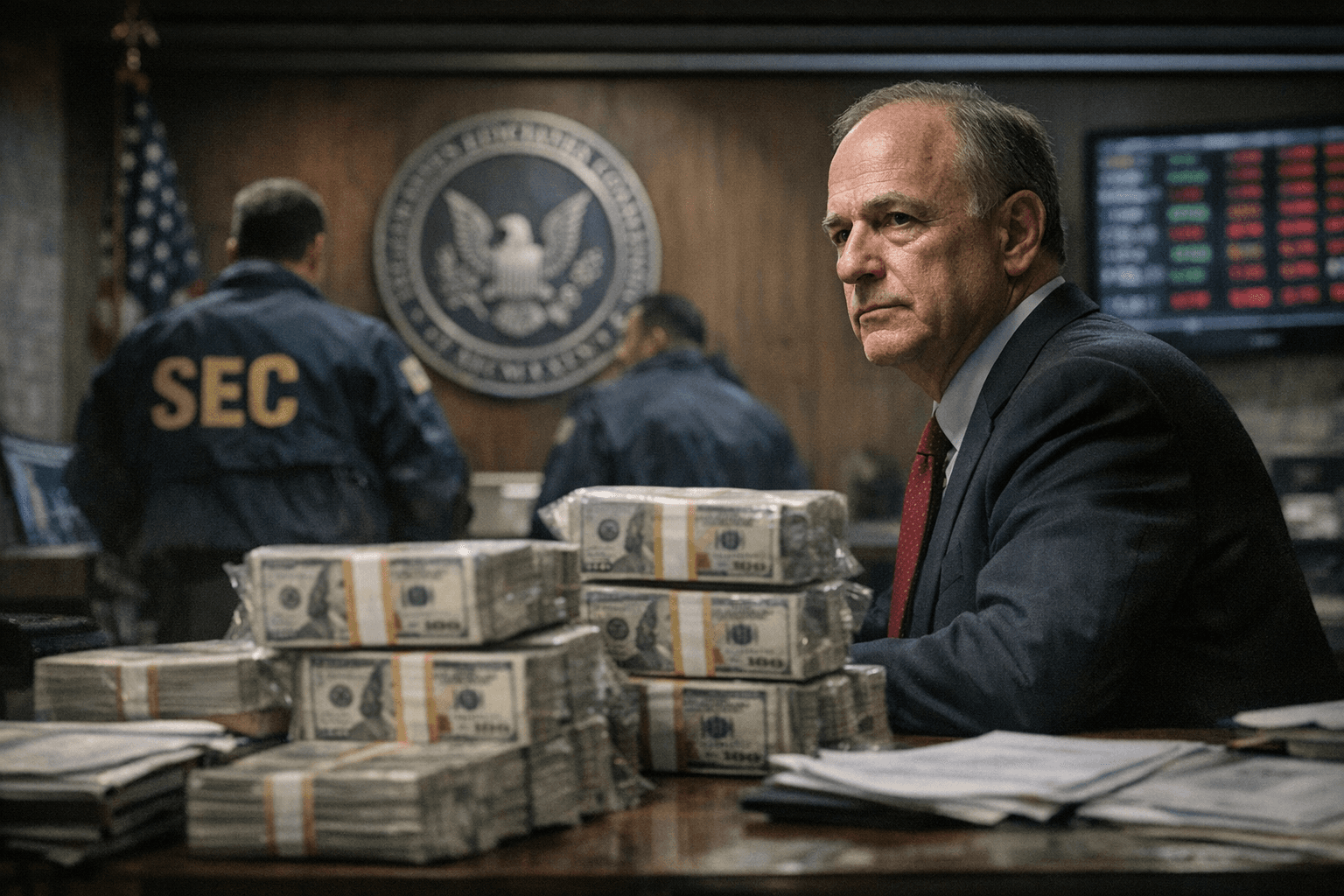
The SEC's headline $17.9 billion in fiscal year 2025 monetary relief is, by the agency's own accounting, substantially a mirage. Strip away the long-running Robert Allen Stanford Ponzi scheme litigation, a case the Commission originally filed in 2009 involving an $8 billion fraud, and remove amounts already "deemed satisfied" by parallel criminal restitution and forfeiture orders, and the adjusted total collapses to approximately $2.7 billion: $1.4 billion in disgorgement of ill-gotten gains and prejudgment interest and $1.3 billion in civil penalties. That recalibrated figure is what Chair Paul Atkins wants the public to measure him against.
The Commission disclosed these figures April 7 in its formal FY2025 enforcement results release, covering the fiscal year that ended September 30, 2025. The agency filed 456 total enforcement actions, including 303 standalone cases and 69 follow-on administrative proceedings, down sharply from 583 actions and $8.2 billion in financial remedies the prior year. Of the harmed-investor component, the agency returned approximately $262 million to affected investors and awarded roughly $60 million to 48 individual whistleblowers.
The headline figure's construction is itself a political statement. The SEC noted that "deemed satisfied" amounts "historically had not been broken out or excluded in annual Commission statistics," an explicit departure from prior reporting practices that Atkins used to frame the previous leadership's record as inflated. The release described FY2025 as an "unprecedented" transition period, calling out a late-term surge of filings before the January presidential inauguration as a resource misallocation that prioritized "volume and record-setting penalties" over substantive investor protection.
Atkins, tapped by President Trump, was direct in characterizing the pivot. The Commission, he said, has "redirected resources toward the types of misconduct that inflict the greatest harm, particularly fraud, market manipulation, and abuses of trust, and away from approaches that prioritized volume and record-setting penalties over true investor protection." The data reflects that reorientation: securities offering fraud and insider trading together accounted for nearly 33 percent of FY2025 actions, up from 26 percent the prior year, while actions against public companies reached a record low of just four under Acting Chair Uyeda and Atkins combined.
The structural consequences for compliance programs are already visible. In March 2025, the SEC rescinded a 2009 rule that had allowed the Enforcement Division director to authorize formal investigations unilaterally, requiring full Commission approval instead. That change is expected to slow the pipeline of new investigations, increase the leverage of defense counsel in early-stage negotiations, and reduce the volume of expansive or novel legal theories the agency pursues. Firms that previously settled quickly to avoid reputational risk from an SEC subpoena may find the calculus has shifted: with fewer formal orders being issued and the agency signaling preference for self-reported violations and meaningful cooperation, the benefits of early disclosure have grown.
For sectors such as crypto and off-channel communications, the shift cuts differently. Public interest groups and congressional Democrats have already raised concern that a volume-reduction strategy leaves the Commission underinvested in emerging areas of investor harm. The SEC's own framing, that some prior enforcement actions produced "no direct investor harm," will be contested by those who argue that deterrence is itself a measurable form of investor protection. Whether Atkins's narrower, deeper enforcement posture proves sufficient to cover ground in fast-moving markets is a question FY2026's results will begin to answer.
This article was produced by Prism’s automated news system from verified source data, official records, and press releases, then run through automated quality and moderation checks before publishing. The system is built and supervised by the people who set the standards it runs under. Read our full AI policy.
Did this article answer your question?

