Semrush explains how Google Knowledge Graph shapes brand visibility
Google’s Knowledge Graph now underpins brand visibility in search and AI, so agencies need to audit entity signals, schema, and branded citations with far more discipline.
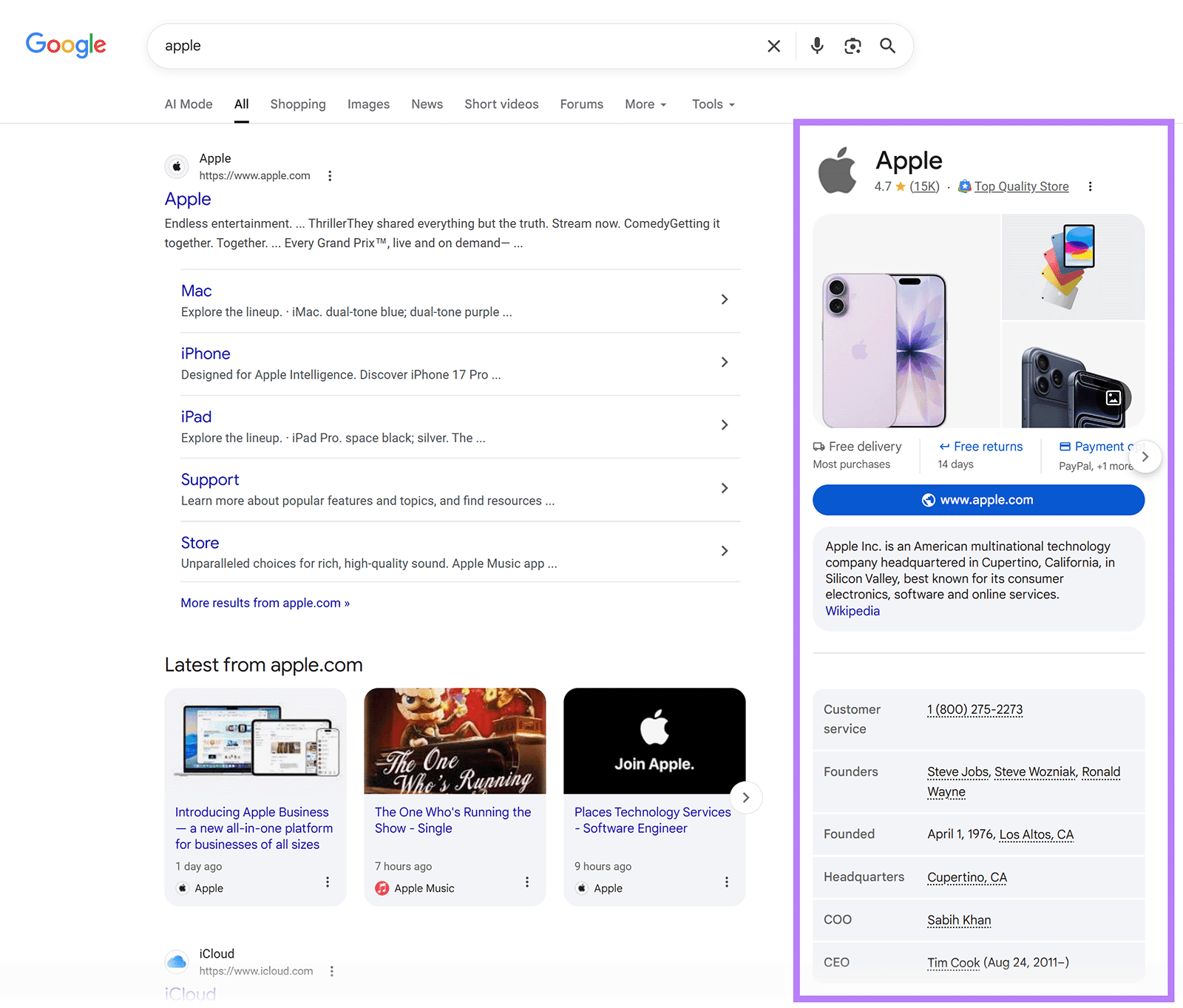
Google’s Knowledge Graph is the difference between a brand that looks like a pile of keywords and one that reads like a real entity. Semrush’s guide makes the useful point here: if Google can map who you are, what you sell, and how your brand connects to people and places, you are far more likely to show up clearly in search and in AI-assisted discovery.
What Google Knowledge Graph actually is
Google launched the Knowledge Graph in 2012 as a way to understand real-world entities and the relationships between them, not just matching strings of text. In that original rollout, Google said it held more than 500 million objects and more than 3.5 billion facts and relationships. By 2020, Google was describing a system with over 500 billion facts about five billion entities, which tells you how much heavier the semantic layer behind search has become.
The model is easier to grasp if you think in entity terms. Semrush breaks the system into nodes, edges, and attributes, which is exactly the language marketers need if they want to stop thinking only about keywords. A business, a founder, a product line, a city, and a website can all be nodes; the links between them are the relationships; the details attached to each are the attributes that help Google decide whether the brand is one thing, several things, or a confused mess.
Google says the information in Knowledge Graph and knowledge panels comes from across the web, open sources, licensed databases, and content provided by owners. That matters because the machine is only as good as the identity signals it can collect. If your brand name, location, description, leadership, and product labels do not line up, Google has to guess, and guessing is where visibility gets sloppy.
Why this matters now for agencies
This is where entity SEO becomes an agency service instead of a theory deck. The payoff is not just a nicer knowledge panel, though that is part of it. The bigger win is teaching search systems, and increasingly AI systems, to understand the brand as a clearly defined entity with stable relationships to its services, people, and official properties.
Google’s own guidance makes the opportunity plain. Knowledge panels are automatically generated when enough information is available on the open web, and official representatives can claim some panels and suggest changes. That creates a practical workflow for agencies managing brand data quality, because the job is not just to earn coverage, but to make sure the machine can reconcile the brand with the right facts.
For agencies, that means Knowledge Graph optimization sits at the intersection of entity SEO, brand consistency work, and structured data strategy. If you can improve how a client is represented in Google’s systems, you are also improving the odds that AI tools can cite, summarize, or recommend that client with fewer errors. In other words, machine readability has become a visibility strategy.
What to audit right now
Structured data first
Google Search Central says Organization structured data on a home page can help it better understand an organization’s administrative details and disambiguate it in search results. It also says structured data gives explicit clues about a page’s meaning, which is exactly why it matters so much for entity-first SEO. This is not decorative markup. It is one of the cleanest signals you can hand Google about what a business is.
- Organization schema on the home page
- Clear name, logo, sameAs links, and contact details
- Product or service schema where it actually fits the page content
- Author markup and bios when people are part of the brand’s authority footprint
A practical audit starts with the basics:
The point is not to pile on schema for its own sake. The point is to reduce ambiguity so Google does not have to infer the client’s identity from scattered text and inconsistent references.
Verify the business layer
Google also says verified Business Profiles let businesses manage address, contact info, business type, and photos. That is the public-facing identity layer many brands neglect after setup, even though it often feeds the exact details people see first. Agencies should treat the Business Profile as a living asset, not a one-time listing exercise.
Search Console verification matters too, because Google says it helps establish website ownership. In practice, that is useful for control, trust, and technical accountability. If the organization’s own site is not verified and maintained, the brand’s own signals will be weaker than they need to be.
Tighten entity consistency across the web
The most important audit is the least glamorous one: consistency. Google’s systems need the same company name, same core description, same executive names, and same product or service relationships across owned pages, bios, profiles, press materials, and directory listings. When those signals drift, the entity gets fuzzy, and fuzzy entities are harder to surface cleanly.
For agencies, this is where branded citations and earned mentions become part of the Knowledge Graph conversation. The brand does not need every mention to be a link, but it does need the facts to match. The more often the same identity pattern appears across the web, the easier it is for Google to map the brand correctly.
Map products and services to the entity
Knowledge Graph is not just about company names. It is about relationships, which is why product and service architecture matters so much. If a brand sells multiple lines, serves multiple categories, or operates across multiple locations, those relationships should be reflected clearly on site and in supporting profiles.
- Product family pages that describe real relationships, not just marketing copy
- Service pages that use consistent naming and avoid internal jargon
- Founder and leadership bios that connect people to the company entity
- Location pages that align with the verified business record
That means the agency checklist should include:
This is the kind of housekeeping that sounds boring until it moves a brand from ambiguous to unmistakable.
Why the display layer still matters
Google says knowledge panels can include official websites and social profiles, and they may appear differently on mobile, where multiple panels can be interspersed among results instead of showing up as one right-rail card. That is a reminder that entity visibility is not a single layout problem. It is a cross-surface problem, and agencies should plan for how the brand looks when the panel appears, when it does not, and when the same entity is presented in a different position on a phone.
That also explains why claiming and updating panels matters. If Google has enough information to build the panel, then the brand’s job is to make sure the machine is working from the best available facts. When agencies manage this well, they are not gaming search. They are giving Google a cleaner model of the client’s business.
The old keyword era rewarded pages that could repeat phrases with enough confidence. Entity-first SEO rewards brands that are legible, connected, and consistent enough for machines to trust. That is why Knowledge Graph is no longer a curiosity buried in search lore. It is part of the infrastructure that decides whether a brand is understood at all.
Know something we missed? Have a correction or additional information?
Submit a Tip