Semrush urges agencies to treat brand mentions as visibility assets
Brand mentions are no longer PR leftovers. Semrush says agencies can turn them into measurable visibility across search, AI answers, and buying decisions.
Brand mentions are the new visibility currency
Semrush is pushing agencies to stop treating brand mentions like a vanity PR byproduct and start treating them like an asset that can be tracked, improved, and sold. In practical terms, a mention is any online reference to a company, product, or service, whether or not it links back, and that broader definition is the whole point.

The shift matters because visibility is no longer confined to blue links. Search engines and AI systems are increasingly trying to understand who a brand is, what it is associated with, and whether it deserves to be surfaced inside generated answers. That makes mention strategy a lot more than reputation management. It becomes a measurable layer of SEO, digital PR, and AI discoverability.
Semrush’s three mention types change the job
Semrush breaks brand mentions into linked mentions, unlinked mentions, and AI mentions, and each one plays a different role. Linked mentions are the easiest to explain: they still drive referral traffic and can support classic SEO value because they point people straight back to a site.
Unlinked mentions are the underappreciated middle layer. They do not send a click by themselves, but they build awareness, reinforce credibility, and strengthen entity signals that help search engines and AI systems understand what a brand is connected to. Search Engine Land has made a similar case, arguing that unlinked mentions still matter for SEO and brand visibility, which is exactly why agencies should stop dismissing them as “non-links.”
AI mentions are the newest layer, and they are the one clients are already feeling whether they know it or not. Semrush uses the term for references inside AI-generated responses, including systems such as ChatGPT, Google AI Overviews, and Google AI Mode. If a brand shows up there, it can shape the shortlist before a user ever lands on a website.
Why the timing changed so fast
Google made the turning point obvious when it announced at Google I/O in May 2024 that AI Overviews would roll out to users in the United States. What had looked like an experiment quickly became a mainstream search feature, and the traffic mix started changing with it. Semrush later reported that AI Overviews appeared on 13.14% of U.S. desktop search results pages in March 2025, up from 6.49% in January 2025.
That growth matters because it is not just happening on informational queries. By October 2025, Semrush said commercial and transactional AI Overviews had grown as well, which means AI-generated answers were moving deeper into purchase intent. Google Search Central’s own guidance also reinforces the broader shift: structured data helps Google understand page content and identify people, books, or companies referenced on a page, which is another sign that entity understanding now sits at the center of search.
The rest of the market is catching up to the same reality. Ahrefs said it analyzed 75,000 brands in its AI brand visibility research, which shows that AI visibility is now being measured at scale rather than discussed as a theory. Semrush’s own AI search study added another sharp lesson: in finance prompts, Reddit outranked financial experts 176% of the time when ChatGPT answered questions. That is the kind of result that should make any agency rethink where authority is actually being formed.
What agencies should monitor, and where
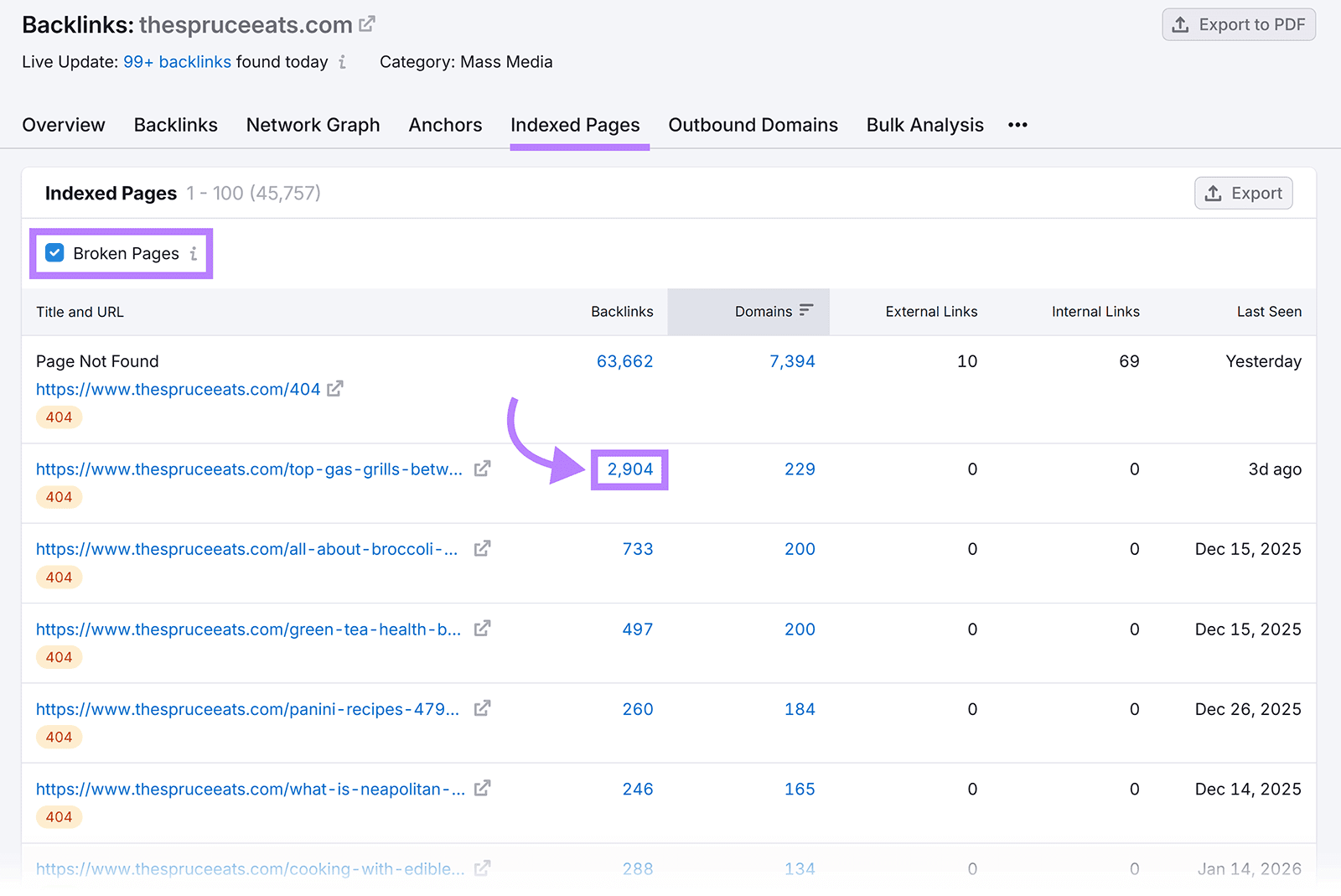
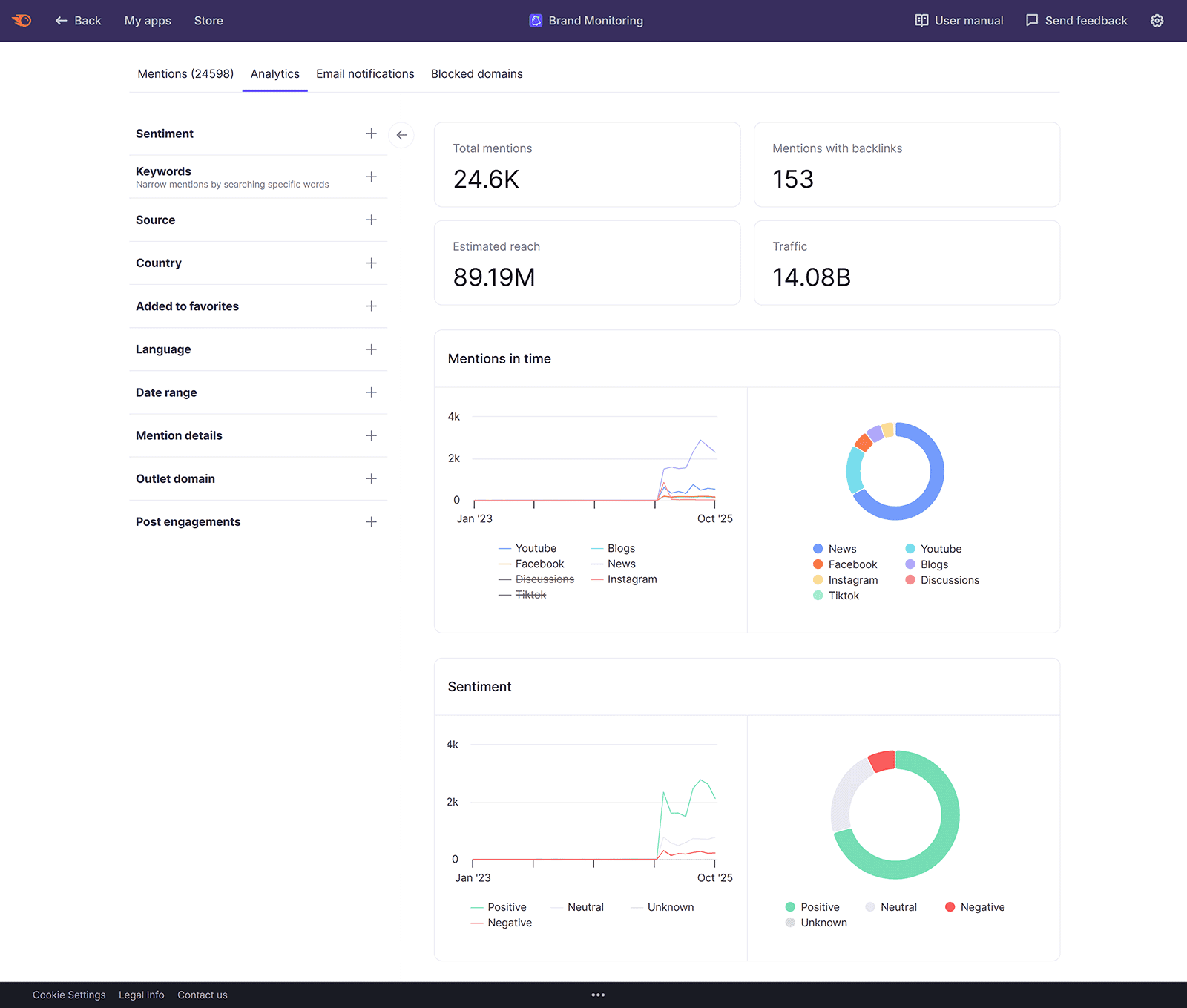
If you only track backlinks, you are missing the surfaces that now shape perception. Semrush says agencies should monitor brand mentions across news, Reddit, podcasts, social platforms, and reviews, because those are the places where reputation, authority, and AI discovery are being built in real time.
A useful tracking stack looks like this:
- News coverage and trade mentions, where credibility gets amplified quickly
- Reddit threads, where community language can feed AI responses in surprising ways
- Podcasts, where expert associations can spread without a traditional link
- Social platforms, where topic clusters and brand sentiment move fast
- Reviews, where product trust and purchase intent are often decided
The point is not to chase mentions everywhere. The point is to identify which sources are most likely to be read by both people and machines, then make sure the brand shows up in the right context, with the right associations.
AI mentions are influence, not just visibility
The big trap is assuming that an AI mention equals a sale. A 2026 Idea Grove survey found that only 2% of consumers would buy from an AI-recommended brand without researching it first, which is a useful reality check. AI can introduce a brand, but it does not replace the trust stack that still has to be built through search presence, reviews, credible coverage, and repeated corroboration.
Pew Research Center found that around six-in-ten respondents visited a search page with an AI-generated summary during one month of browsing data, so these summaries are not fringe behavior anymore. They are part of everyday search habits. That is exactly why agencies should treat AI mentions as one signal inside a larger reputation system, not as a substitute for it.
The strongest mentions are still the authoritative ones on relevant sources. Semrush argues that those mentions can increase the odds that a brand gets cited or recommended in AI answers, which makes placement quality more important than raw volume. A single useful mention in the right context can do more than a pile of weak directory listings.
Why this sells better when it is packaged as one service
This is where the agency opportunity gets interesting. Link building alone is no longer enough, because the market has moved from counting links to interpreting entity signals across the web. The strongest visibility programs now combine PR, content, SEO, and reputation management instead of selling those as separate silos.
That is good business, not just good strategy. A client that cares about brand authority is usually a better fit for a broader engagement than for a narrow ranking-only retainer, especially if the work includes mention tracking, AI visibility monitoring, and outreach designed to place the brand on the sources that matter most. Agencies that can explain how brand mentions feed both traditional search and AI discovery have a cleaner path to bigger retainers and stickier relationships.
The old model measured what pointed at the site. The new one measures what the market, and the machines, say about the brand everywhere else. That is where the next round of visibility wins will be made.
Sources:
Know something we missed? Have a correction or additional information?
Submit a Tip