Senate blocks debate on renewing key foreign surveillance law
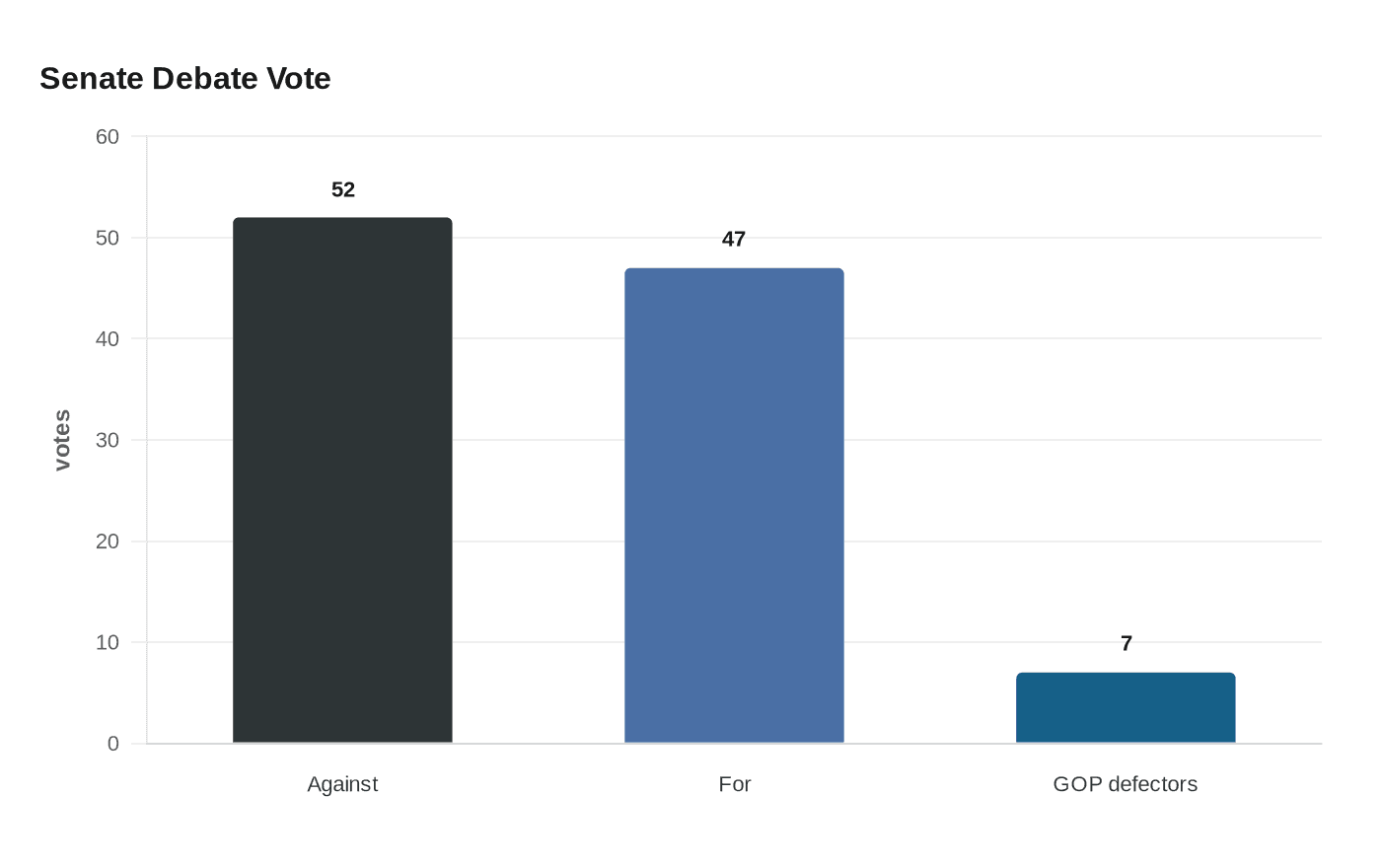
The Senate’s 47-52 vote left Section 702 on track to expire June 12, with seven Republicans joining Democrats and only John Fetterman backing debate.

With Section 702 set to expire on June 12, the Senate’s refusal to even begin debate put the country’s main foreign-surveillance authority on the brink of a lapse, just days after lawmakers had already bought time with two short-term patches. If the deadline passes without action, intelligence agencies would lose the legal basis for collecting foreign communications under Section 702, including messages swept up without individualized court orders when foreigners abroad are targeted, while the FBI, CIA and NSA would still retain other surveillance and intelligence tools.
The procedural vote failed 47-52, with seven Republicans joining Democrats to block debate. Only one Democrat, John Fetterman of Pennsylvania, voted to advance the measure. The result was a sharp setback for Senate GOP leaders, who control both chambers and had hoped to move a longer-term extension before the authority ran out. It also underscored a split inside the Republican coalition, where support for surveillance powers has collided with concerns about civil liberties, oversight and the political price of carrying a contested bill.
Section 702 sits at the center of U.S. intelligence operations. In a January 28 Judiciary Committee hearing, Chuck Grassley said it accounted for an estimated 60% of the President’s Daily Briefing and said the tool is used to combat hacking, drug threats and terror plots. That dependency has made the deadline politically dangerous: a lapse would not shut down American intelligence agencies, but it would cut off one of their most important foreign-collection authorities and force officials to rely more heavily on slower, narrower legal channels.
Senate Republicans had been drafting a three-year extension that would run through June 12, 2029, with new guardrails and penalties for intelligence abuses. But the proposal also carried a three-year ban on the Federal Reserve issuing a central bank digital currency, a provision that complicated support. Tom Cotton of Arkansas and Grassley of Iowa led the effort while consulting with Mark Warner of Virginia, the top Democrat on the Senate Intelligence Committee, in hopes of avoiding a filibuster. Donald Trump’s choice of Bill Pulte as acting director of national intelligence further hardened Democratic resistance.
The collapse came after lawmakers already resorted to stopgaps. The House and Senate passed a 45-day extension on April 30, after a 10-day patch on April 17. Reform pressure has been building as well. On March 12, Ron Wyden, Mike Lee, Warren Davidson and Zoe Lofgren introduced the Government Surveillance Reform Act, which would tighten protections for Americans’ communications and curb government purchases of data from brokers. In December, the Brennan Center for Justice and 26 civil society groups pressed Congress to close what they call the backdoor search loophole and the data broker loophole, arguing that Section 702 can incidentally sweep in Americans’ communications. The next decision is whether Congress can stitch together another temporary fix or let the surveillance authority lapse.
This article was produced by Prism’s automated news system from verified source data, official records, and press releases, then run through automated quality and moderation checks before publishing. The system is built and supervised by the people who set the standards it runs under. Read our full AI policy.
Did this article answer your question?