Senators warn USPS changes could disenfranchise mail-in voters
Sixteen senators warned USPS postmarking changes could cause timely ballots to show late postmarks, risking disenfranchisement in a pivotal election year.
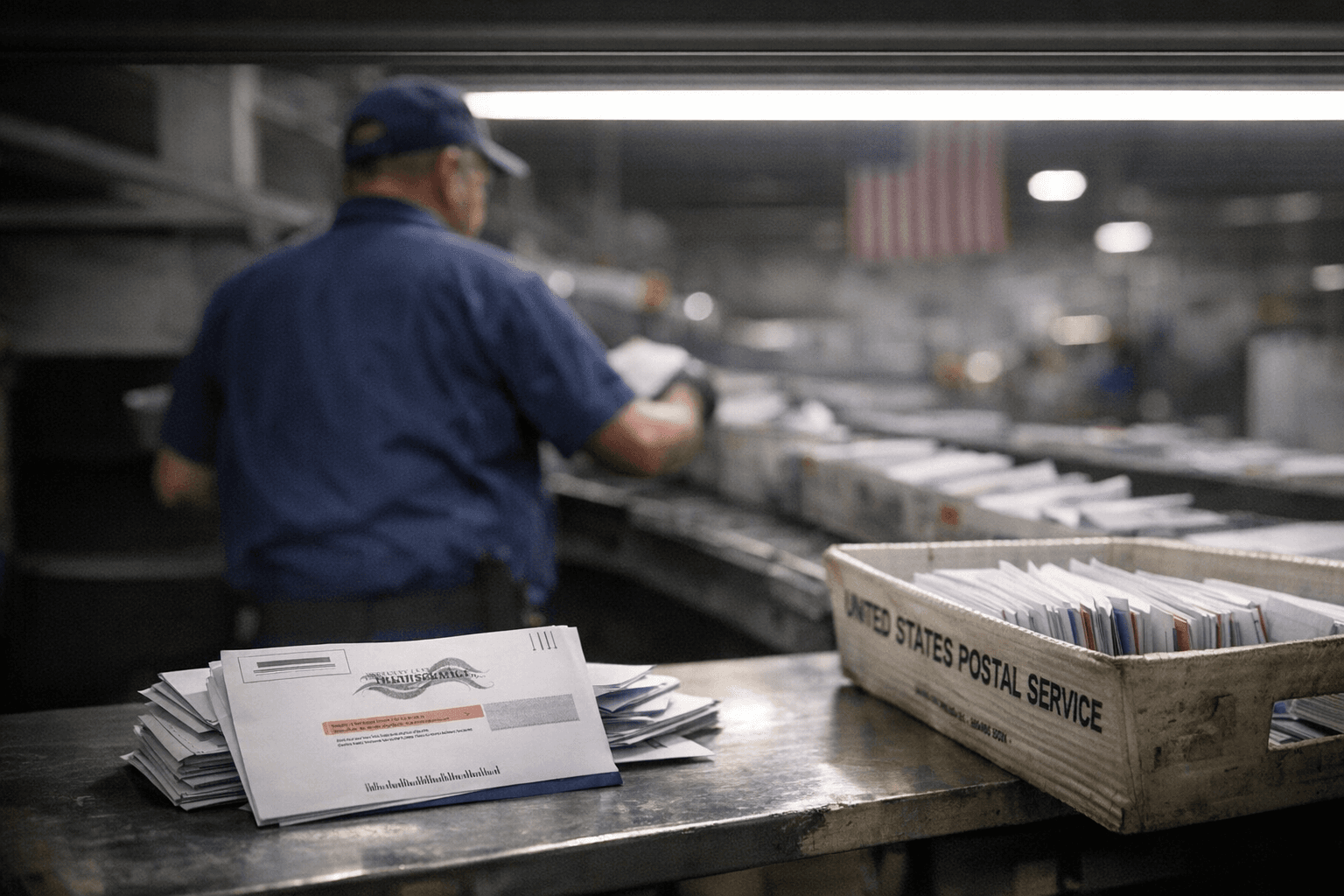
A group of 16 mostly Democratic senators has asked U.S. Postmaster General David Steiner to address what they say are changes in Postal Service processing and postmarking that could leave legally mailed ballots stamped with later dates, increasing the risk that timely votes will be rejected.
In a letter dated Jan. 15, 2026, the senators raised alarm that an updated USPS postmark policy could record the date a piece of mail was handled at a regional processing center rather than the date it was first accepted at a local post office. Because recent consolidations have shifted more sorting and postmarking to regional facilities farther from many communities, the senators warned ballots mailed on time could be recorded as arriving later. The letter said this change “will only increase the likelihood of voter disenfranchisement.”
Postmark timing matters because many states rely on the date shown on mailed ballots to determine whether they were returned on time. The senators wrote, “Postmark delays are especially problematic in states that vote entirely or largely by mail,” and cautioned that the changes would heighten the risk that legally cast ballots could be rejected. They noted the threat is particularly acute for rural voters, where mail must often travel greater distances to reach regional processing centers, and added, “In theory, a rural voter could submit their ballot in time according to their state law, but due to the changes you are implementing, their legally-cast ballot would not be counted as it sits in a local post office.”
The letter frames a concrete operational change as a potential civil rights issue. Voting by mail remains an essential access point for older adults, people with disabilities, rural residents, and communities with limited polling places, and delays in processing or postmarking can disproportionately impact those groups. The senators concluded, “As we enter a year with many local and federal elections, the risk of disrupting this vital democratic process demands your attention and action.”
The Postal Service acknowledged receipt of the letter. Martha Johnson, a USPS spokesperson, said the agency has received the correspondence and “will respond directly to those who sent it.” Beyond that pledge, officials have pointed the public to information on the Postal Service website; the agency has not announced immediate operational reversals or specific policy commitments in response to the senators’ concerns.
The Jan. 15 action follows earlier congressional scrutiny of USPS operational changes. In 2024 a bipartisan group of 27 senators, led by Sen. Gary Peters of Michigan, urged then-Postmaster General Louis DeJoy and the Postal Service Board of Governors to slow implementation of elements of the Delivering for America plan and asked the Postal Regulatory Commission for a comprehensive advisory opinion on service impacts. The latest letter narrows the focus to postmarking and ballot timing as the country approaches a year of consequential federal and local elections.
Election officials and voting rights advocates say the practical effects of the processing shift remain unquantified in public reporting: there is no widely available measure of how often postmarks have been delayed in practice, and the list of signers on the Jan. 15 letter has not been itemized publicly. For now, the senators' appeal underscores a broader concern about how operational decisions at a national mail carrier can ripple through communities and influence who is able to cast a counted vote.
This article was produced by Prism’s automated news system from verified source data, official records, and press releases, then run through automated quality and moderation checks before publishing. The system is built and supervised by the people who set the standards it runs under. Read our full AI policy.
Did this article answer your question?