Senegal Calls Guinea Bissau Takeover a Sham, Junta Appoints Prime Minister
Soldiers in Guinea Bissau seized power days after disputed presidential and legislative elections, installing new military leaders and naming a transitional prime minister, raising regional alarm. West African bodies and neighbouring Senegal have condemned the move, creating diplomatic pressure and uncertainty over the future of fragile democratic institutions.

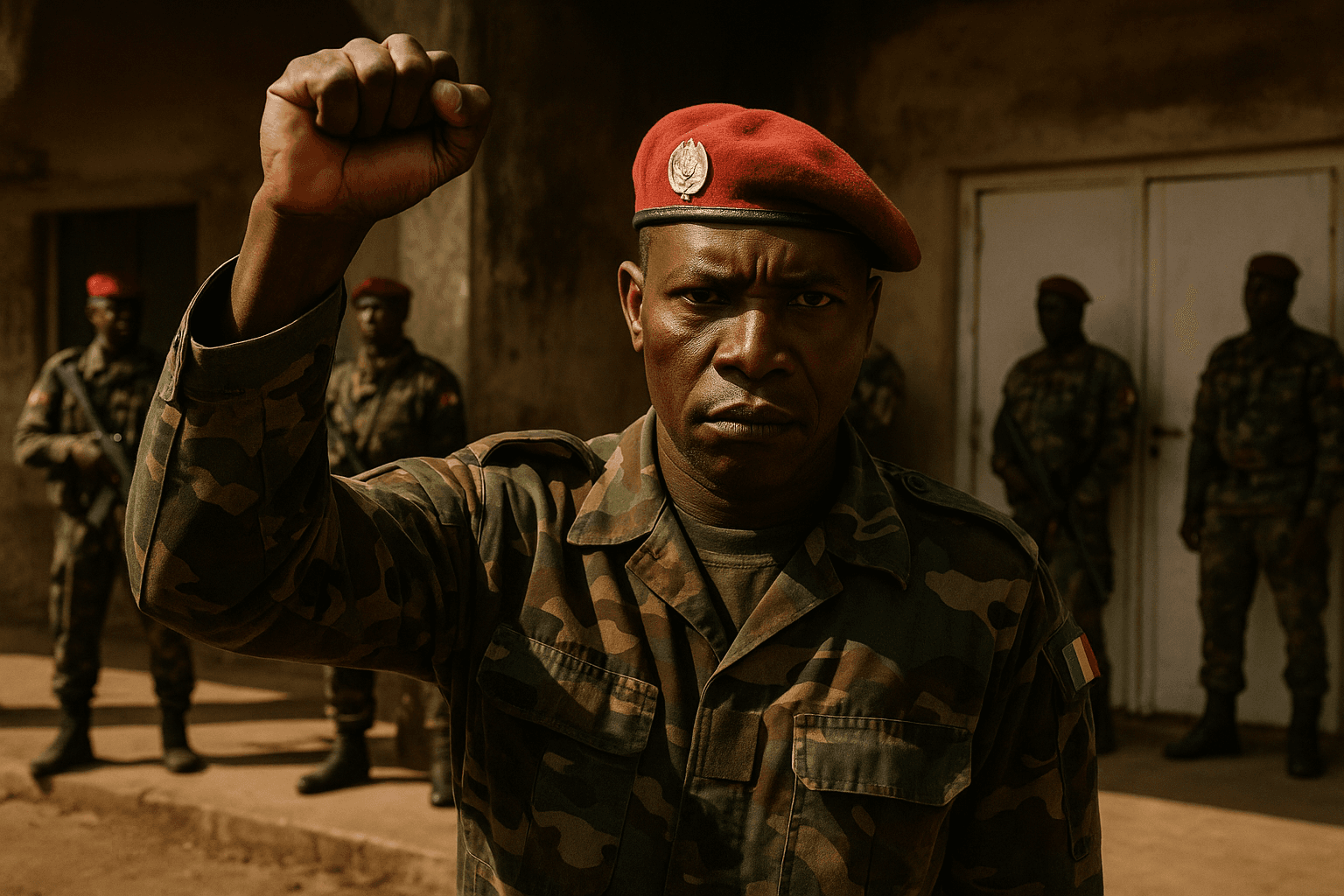
Soldiers in Guinea Bissau seized control of key state institutions days after a disputed presidential and legislative election cycle, and on November 28 the junta moved to consolidate power by naming a transitional prime minister. Army officers earlier installed Major General Horta Inta'a as transitional president and on Friday announced Ilídio Vieira Té, a close ally of deposed President Umaro Sissoco Embaló, as prime minister.
The military imposed border closures and nighttime curfews during the initial phase of the takeover, measures authorities said were necessary to restore order. By the time of reporting some restrictions had been eased, and normal activity was returning in parts of the capital, Bissau, although the situation remained tense and fluid across parts of the country.
Regional institutions reacted swiftly. The Economic Community of West African States and the African Union condemned the coup, suspended Guinea Bissau from regional decision making, and announced plans to dispatch high level mediators. Senegal, a key security partner in the region, publicly rejected the junta's actions. Senegal's prime minister described the takeover as a "sham" and demanded that electoral authorities be allowed to publish results from the recent vote. Embaló reportedly departed for Senegal amid the upheaval.
The developments underscore the persistent fragility of political life in Guinea Bissau where cycles of contested elections, fragile coalitions, and military interventions have become recurrent. For regional leaders the episode revives an acute dilemma. Reacting forcefully risks escalation and could entrench military rulers, while a restrained approach risks normalization of coups and the erosion of regional norms that prohibit unconstitutional changes of government.
International law and regional charters uphold a right to democratic governance and call for the peaceful resolution of electoral disputes. In practice, mediation and sanctions have been applied unevenly across the region, leaving leaders to weigh diplomatic pressure against the practical limits of influence over military juntas that retain coercive control on the ground.
The choice of Ilídio Vieira Té as prime minister carries political symbolism as well as tactical significance. Seen as close to the deposed president, his appointment may be aimed at projecting a veneer of continuity and political legitimacy while the military tightens its hold. For ordinary Bissauans the immediate questions are security and daily survival, as markets, schools, and public services adjust to the curfew changes and the uncertainty of governance.
Neighboring capitals are watching closely. Any prolonged paralysis in Guinea Bissau risks spillover effects in trade, migration, and security cooperation, and could complicate ongoing regional efforts to stabilize the broader Sahel and Gulf of Guinea zones. With ECOWAS and the African Union signalling condemnation and a readiness to engage diplomatically, the next days will test both the junta's willingness to negotiate and the bloc's capacity to uphold its stated principles without provoking wider confrontation.
As the situation evolves, the balance between restoring constitutional order and avoiding escalation will shape responses in capitals from Dakar to Abuja to Addis Ababa, and the outcome will be consequential for West African governance and regional stability.
This article was produced by Prism’s automated news system from verified source data, official records, and press releases, then run through automated quality and moderation checks before publishing. The system is built and supervised by the people who set the standards it runs under. Read our full AI policy.
Did this article answer your question?