Senegal Freezes Minister Travel as Soaring Oil Prices Strain National Budget
Senegal freezes ministerial travel after oil hits $115/barrel, nearly double its $62 budgeted price, as Iran's Hormuz closure threatens the nation's already-strained finances.
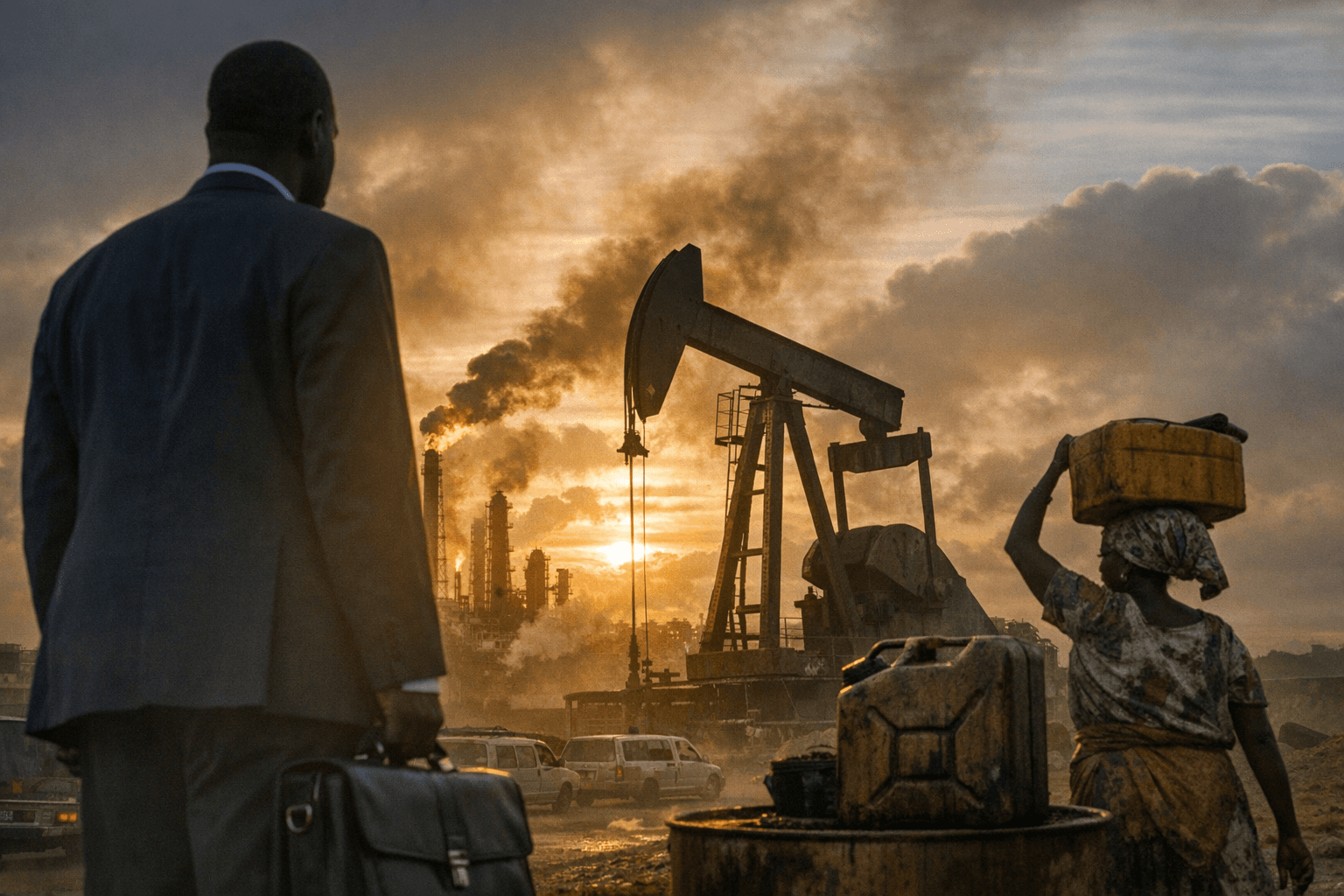
With crude oil sitting at roughly $115 a barrel, nearly twice the $62 per barrel Senegal's government had written into its national budget, Prime Minister Ousmane Sonko announced Friday night that all non-essential foreign travel by ministers and senior officials was immediately suspended. Speaking at a youth event in the coastal town of Mbour, Sonko warned of "extremely difficult" times ahead and cancelled his own planned overseas trips, instructing that no minister would travel abroad unless the mission was indispensable to official duties.
The arithmetic behind the ban is stark. Senegal's National Assembly approved a 7.4 trillion CFA franc (approximately $13.2 billion) national budget for 2026 assuming oil at $62 per barrel. At current prices, the fuel import bill has effectively doubled, blowing a hole through the spending framework that the Ministry of Finance, under Budget Minister Cheikh Diba, is now scrambling to contain. The Ministry of Energy, Petroleum and Mines had already seen its 2026 allocation cut 9 percent year-on-year to CFA 130 billion ($231 million) as the government tried to redirect expenditure toward productive sectors without adding to a public debt load that already stands at approximately 99.67 percent of GDP.
That debt burden carries its own complications. A Court of Auditors audit published in February 2025 confirmed that the previous administration had systematically understated budget deficit and debt figures, a finding that prompted the IMF to suspend its $1.8 billion lending programme, originally approved in 2023, leaving Senegal without the multilateral safety net it would normally draw on during an external shock of this magnitude.
The shock originated in the Middle East. Iran effectively closed the Strait of Hormuz following US-Israeli military strikes on Iranian territory, choking off a corridor through which an estimated 30 to 40 percent of global oil supplies transit. Brent crude prices have been spiking toward $120 per barrel as traffic through the strait stalls and war-risk insurance costs soar. The International Energy Agency's executive director described the combined impacts of the conflict as "the greatest threat to global energy security in history." Economists warn that if the Hormuz disruption persists for several months, net oil-importing countries like Senegal could see inflation jump by 1 to 3 percentage points and GDP growth slow measurably. The Washington-based Centre for Global Development identified Senegal as among the countries most exposed to the price shock.
The pressure lands hardest on households and transport workers. Senegal imports refined petroleum products to fuel its buses, fishing boats, and generators, meaning pump prices track global crude with relatively little buffer. Sonko, who chaired a special government meeting to assess the petroleum products sector and prioritise fuel supply security and the protection of vulnerable households, had already activated an inter-ministerial committee on March 3 to monitor markets and secure national supply. He has also flagged secondary risks: natural gas derivatives underpin fertiliser production globally, and a prolonged Hormuz closure could disrupt food supply chains, compounding the cost-of-living pressure on Senegalese households.
There is, however, a structural offset that most of Senegal's peers in the Global South cannot claim. The Sangomar offshore oil field, operated by Australia's Woodside Energy in partnership with state company Petrosen roughly 100 kilometres south of Dakar, began production in mid-2024 as Senegal's first offshore oil development. In its inaugural year, Sangomar produced 16.9 million barrels, well above the initial target of 11.7 million barrels, generating 595.5 billion FCFA in revenue. Combined output from Sangomar and the Greater Tortue Ahmeyim LNG project reached 58.9 million barrels as of February 2026. That production base, which helped drive 6.9 percent GDP growth in 2024, means that every dollar gain in crude prices simultaneously squeezes the import bill and inflates the value of export revenues, offering a partial fiscal cushion unavailable to landlocked, purely import-dependent neighbours.
Whether the cushion is large enough depends heavily on how long the Hormuz crisis lasts. The political calculus is equally consequential. Kenya's government attempted fuel subsidy cuts and tax hikes to shrink its deficit, triggering deadly street protests that forced a rapid policy reversal, a cautionary signal for any West African administration weighing the same tradeoffs. Sonko's PASTEF government, which came to power partly on promises of economic sovereignty and fiscal transparency, will need the Sangomar windfall to materialise quickly if austerity optics, starting with grounded ministers, are to translate into tangible relief for the households bearing the heaviest burden of this global energy crisis.
This article was produced by Prism’s automated news system from verified source data, official records, and press releases, then run through automated quality and moderation checks before publishing. The system is built and supervised by the people who set the standards it runs under. Read our full AI policy.
Know something we missed? Have a correction or additional information?
Submit a Tip