Seoul overpass collapses during demolition, six believed injured
A demolition crew's work on Seoul’s Seosomun Overpass turned into an emergency, with six injured and rescuers searching debris under a split deck.
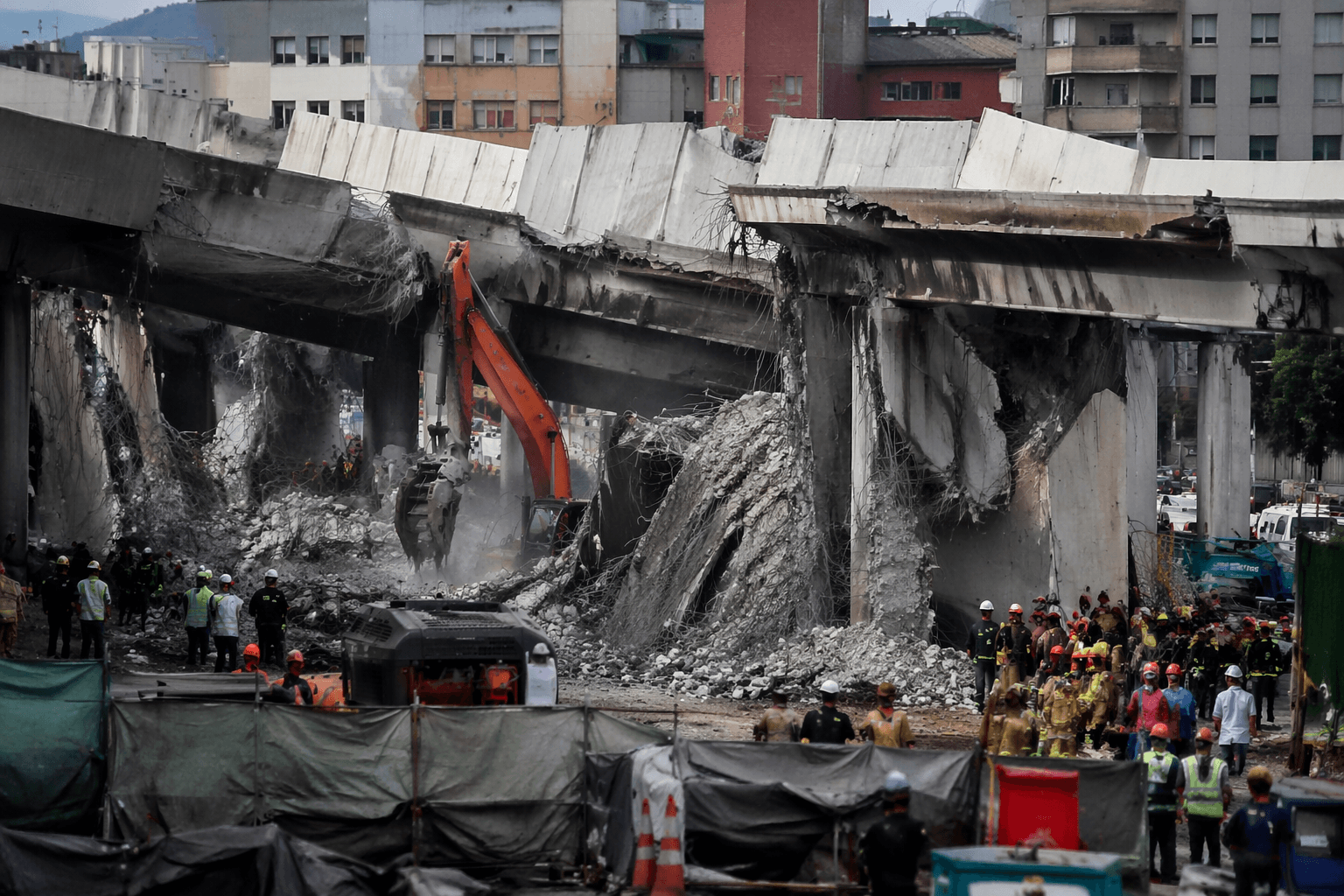
Part of the Seosomun Overpass in western Seoul collapsed at about 2:32 p.m. Tuesday while crews were tearing it down, injuring at least six people and sending fire authorities to search for two more who were believed to be under the debris. Officials in Seodaemun District, near Migeun-dong, were still checking whether anyone else had been caught in the collapse as the scene remained an active rescue site.
The failure immediately disrupted one of the city’s transport corridors. The Korea Railroad Corp. suspended rail operations between Seoul Station and Sinchon Station, and emergency crews worked around the wreckage as the upper deck gave way. Because the collapse happened during demolition, not normal use, the incident quickly raised concerns about whether debris removal, traffic control, engineering judgments or site supervision played a role in a part of Seoul that is dense with roads, transit links and nearby buildings.
The overpass itself had long been a concern. Built in 1966, the Seosomun Overpass is about 335 meters long and four lanes wide, connecting Chungjeongno and City Hall stations on Seoul subway Line 2. Seoul had said the span carried more than 40,000 vehicles a day before the demolition plan advanced. A concrete fragment had fallen in 2019, prompting a safety inspection that rated the structure Grade D, a sign of structural weakness. Additional incidents were reported in 2021 and 2024, involving falling or collapsing concrete and deck sections, and the city had installed nets and reinforced piers before concluding that maintenance alone was no longer enough.
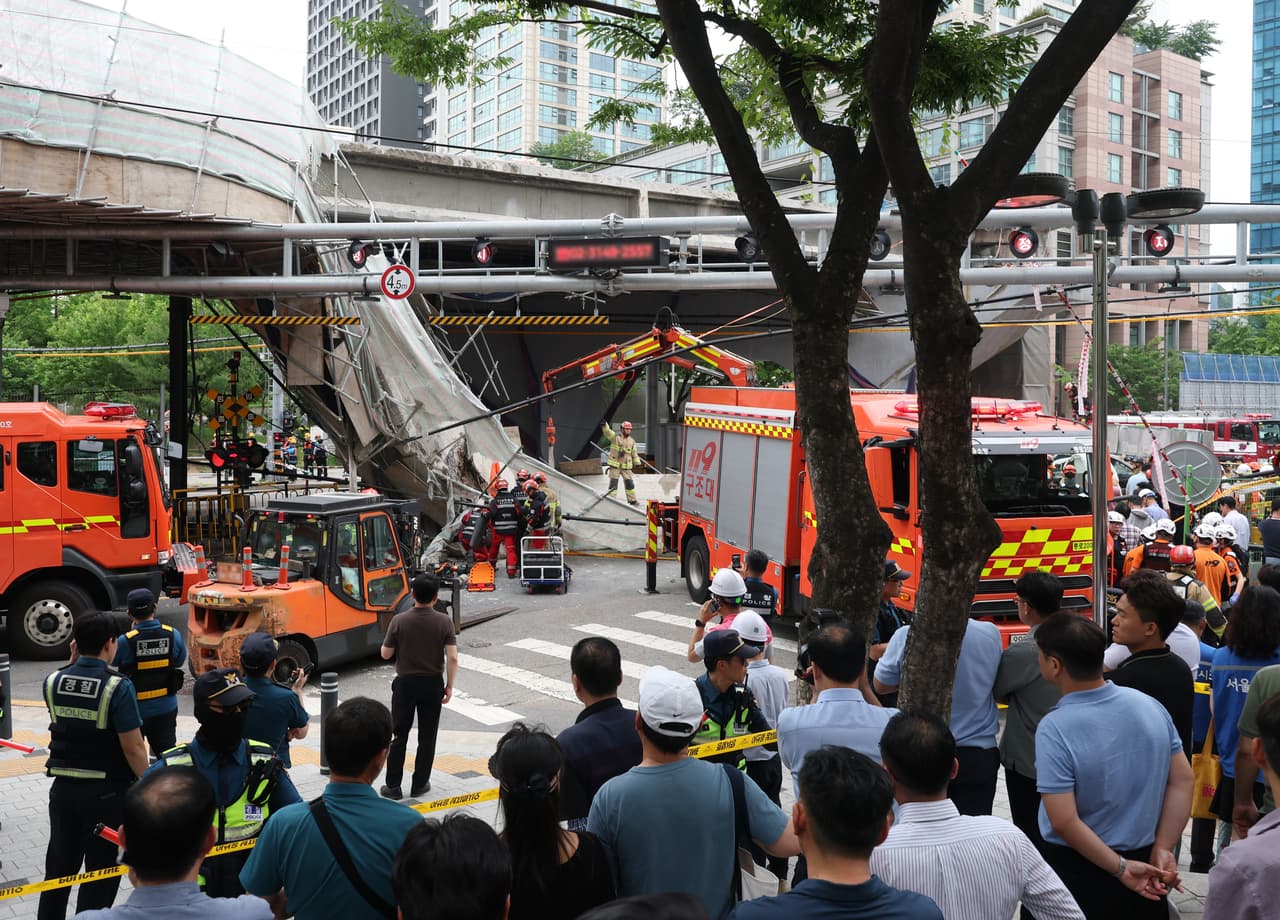
That history makes the collapse more than a single construction mishap. It points to the larger questions that follow aging infrastructure through demolition in a city where road structures sit close to homes, shops and transit stations. The immediate concern is the condition of the injured and anyone still under the debris, but the wider issue is whether South Korea’s oversight chain, from contractors to city regulators, can prevent a controlled teardown from turning into a public safety emergency. The collapse also recalls a fatal highway overpass failure in Cheonan in February 2025, when at least four construction workers died, underscoring how quickly work on old infrastructure can become deadly when safeguards fail.
Know something we missed? Have a correction or additional information?
Submit a Tip