Severe storms slam Midwest, thousands lose power across Illinois, Wisconsin, Michigan
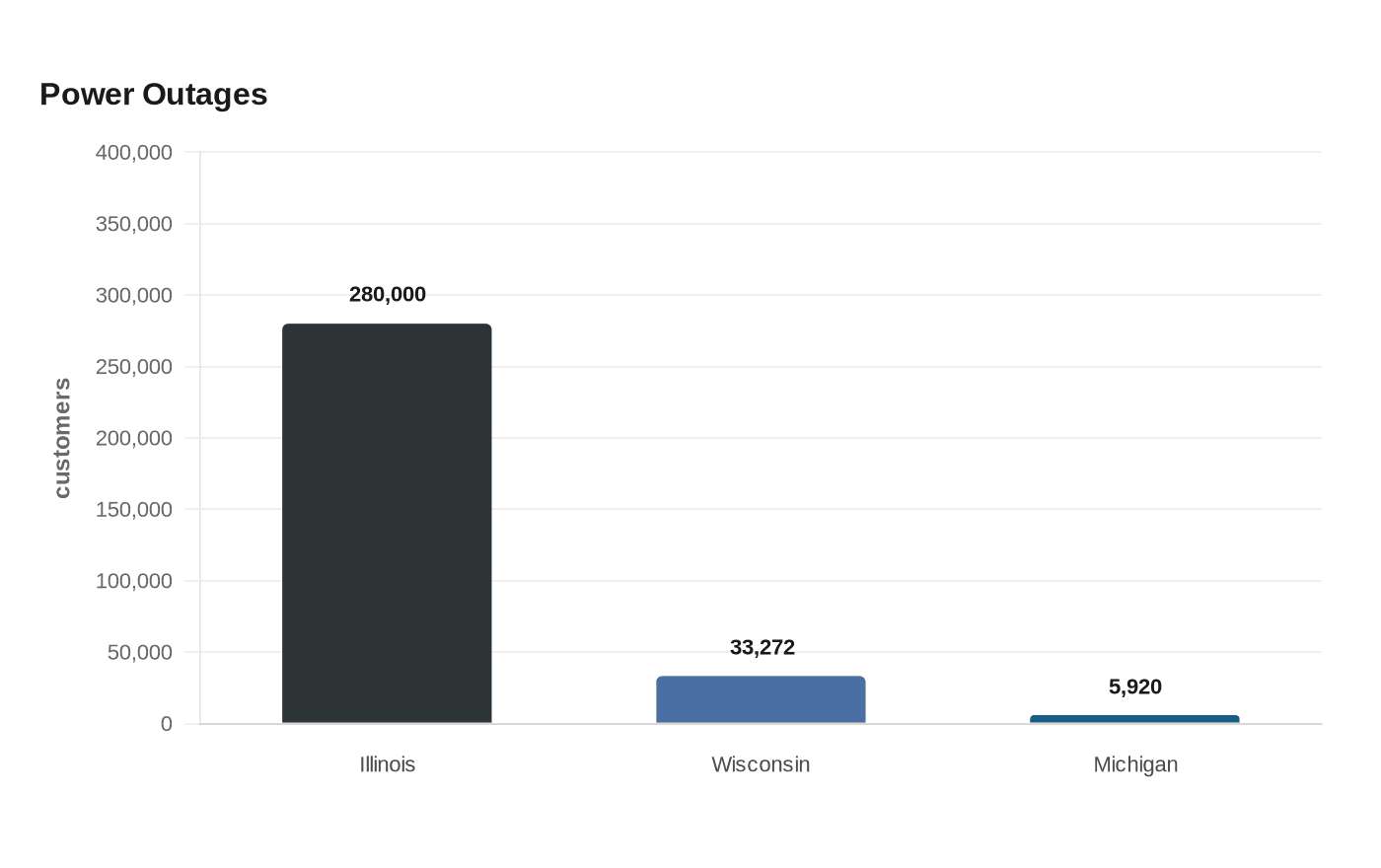
More than 280,000 ComEd customers lost power as storms swept Illinois, while Wisconsin and Michigan outages climbed and more severe weather loomed Thursday.

Severe storms that rolled across the Midwest on Wednesday did more than knock out lights. They tested how much strain the region’s power grid and emergency response systems can take when damaging wind, hail and flooding threats line up over densely populated communities.
By midafternoon, outage maps showed nearly 280,000 ComEd customers without power in Illinois, with Cook County among the hardest hit areas. In Wisconsin, We Energies reported 33,272 customers out at 3:49 p.m., and Consumers Energy said roughly 5,920 customers were without power in Michigan during the storm period.
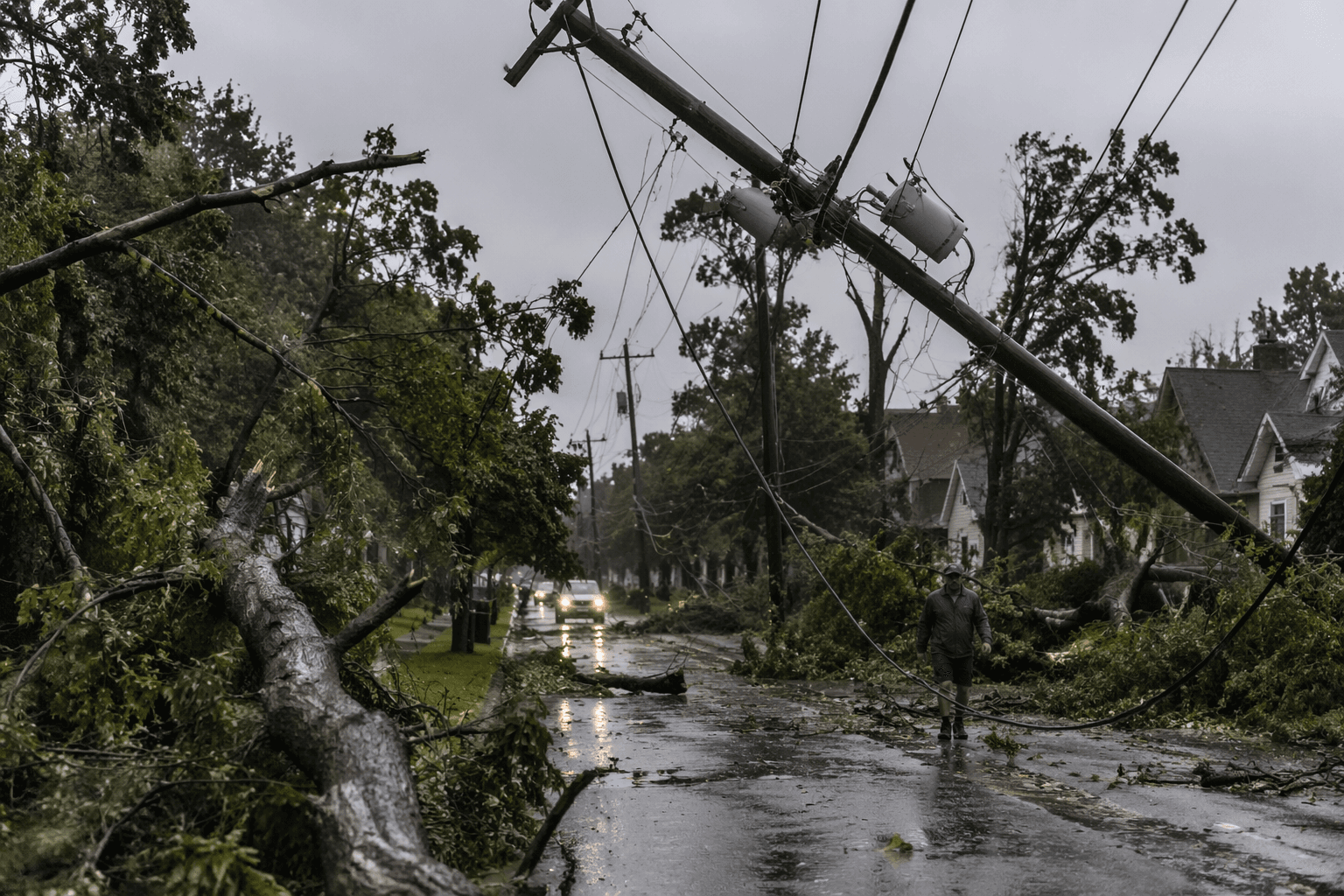
The National Weather Service said severe thunderstorms would continue into early evening with strong damaging winds as the main threat. In Chicago, forecasters said a line of thunderstorms was moving over northern Illinois and that additional storms were expected through the evening, keeping the region under repeated rounds of danger as crews and residents dealt with outages and fast-changing conditions.
The broader threat reached well beyond one storm line. Across parts of the Mid/Upper Mississippi Valley and Midwest, the weather service warned of wind gusts over 75 mph, large hail, a few strong tornadoes and localized flash flooding. The Chicago forecast office said Thursday carried an elevated flooding risk and a significant thunderstorm risk, a reminder that the worst impacts could stretch beyond the first round of storms.
The timing was especially troubling for a region already facing an unusually active severe-weather season. The weather service said the Chicago and northern Illinois area had seen an unusual number of severe-weather days in 2026 compared with typical years, adding pressure to communities that have already had to absorb repeated hits. As utilities updated outage maps and crews worked to restore service, the weather service urged residents to have multiple ways to receive warnings and said spotters were encouraged to relay severe-weather reports.
The storms underscored a larger pattern: as severe weather grows more disruptive, the question is no longer only where the next line of thunderstorms will form, but how long communities can keep recovering before the next one arrives.
This article was produced by Prism’s automated news system from verified source data, official records, and press releases, then run through automated quality and moderation checks before publishing. The system is built and supervised by the people who set the standards it runs under. Read our full AI policy.
Know something we missed? Have a correction or additional information?
Submit a Tip