Shame keeps younger adults from timely colorectal cancer screening
Embarrassment over bowel symptoms is helping colorectal cancer slip past younger adults, even as screening now starts at 45.

Shame is still keeping too many adults from saying the words that could speed a diagnosis: blood in the stool, persistent diarrhea, constipation, or a bowel habit that simply will not return to normal. Public-health advocates say that silence matters because colorectal cancer is often highly treatable when it is caught early, yet younger adults are still getting screened too rarely.
That gap is widening at the same time the disease is moving younger. The National Cancer Institute says colorectal cancer rates have been rising steadily among adults younger than 50 since the 1990s. A 2025 analysis from the National Institutes of Health and the National Cancer Institute found that incidence increased for 14 cancer types among people under 50 from 2010 through 2019, including colorectal cancer. The American College of Surgeons has said the disease is now the leading cause of cancer death for men under 50 and the second for women under 50.
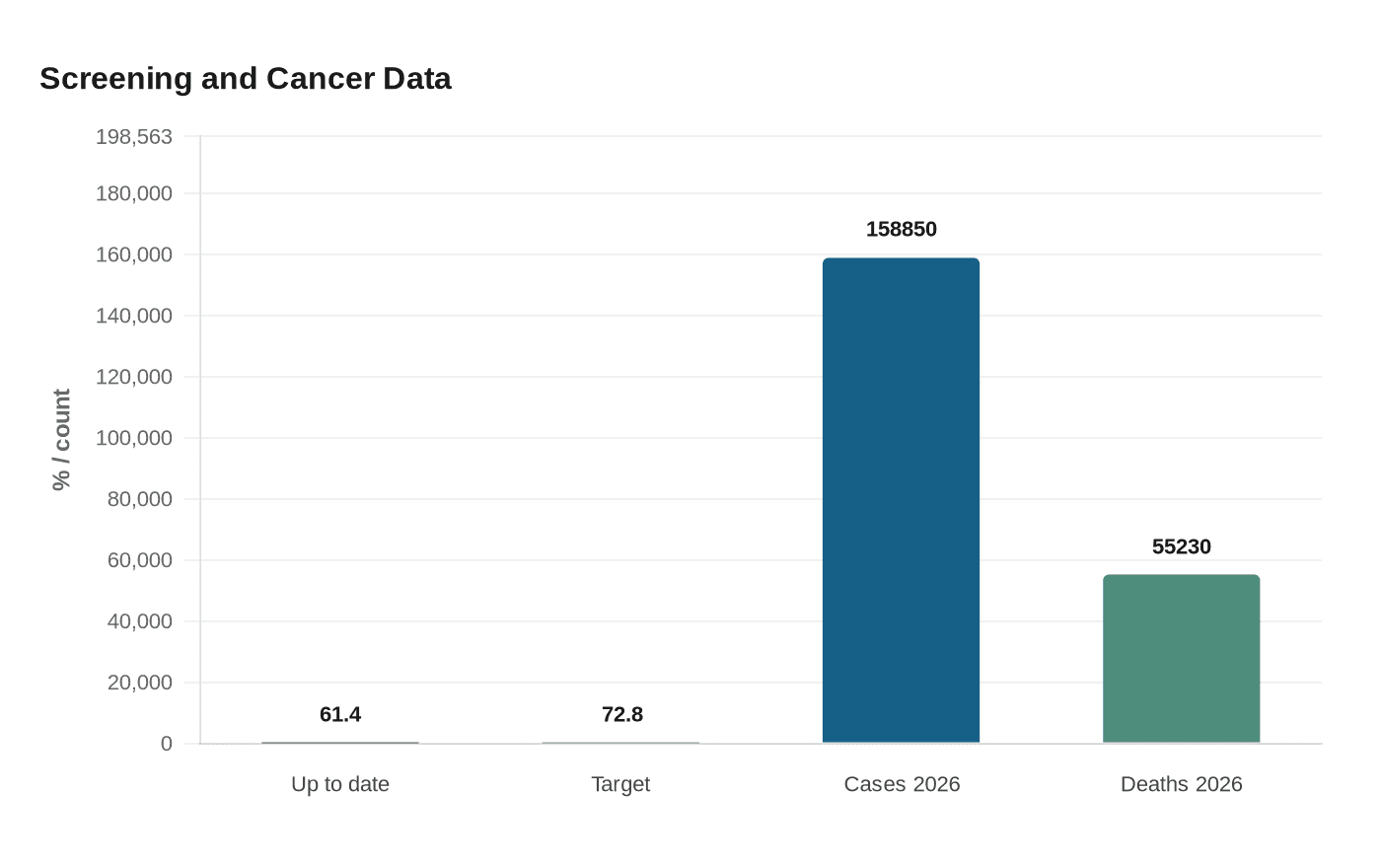
Screening guidance has already shifted downward in response. The American Cancer Society recommends that people at average risk begin regular colorectal cancer screening at age 45, the same age the U.S. Preventive Services Task Force adopted in May 2021 after lowering its prior 50-year benchmark. The American Cancer Society made its own change first, in 2018. But even with that broader eligibility, CDC analysis of 2022 data found that only 61.4% of adults ages 45 to 75 were up to date on screening, well below the Healthy People 2030 target of 72.8%.
The public-health message in the NPR report carried by WKAR was blunt: “Yet we're seeing this rise.” Advocates say insurance limitations and plain old lack of awareness can still keep people from being screened, especially younger adults who do not think colorectal cancer could be their problem. That is where stigma becomes more than discomfort. When patients avoid talking about stool changes, rectal bleeding or ongoing abdominal symptoms, clinicians lose one of the clearest chances to intervene before the disease advances.
The stakes are visible in the American Cancer Society’s 2026 reporting, released March 2, which found colorectal cancer rates declining among older adults but rising among people under 65, especially younger adults. The same report said rectal cancer now accounts for nearly one-third of colorectal cancer diagnoses, up from 27% in the mid-2000s, and estimates for 2026 put U.S. cases at roughly 108,860 to 158,850 and deaths around 55,230. About 1 in 5 patients are now under 55. For doctors, families and communities, the conclusion is the same: treating bowel health as a taboo can cost time, and time can cost lives.
This article was produced by Prism’s automated news system from verified source data, official records, and press releases, then run through automated quality and moderation checks before publishing. The system is built and supervised by the people who set the standards it runs under. Read our full AI policy.
Did this article answer your question?