Shell to buy ARC Resources in $16.4 billion Canadian deal
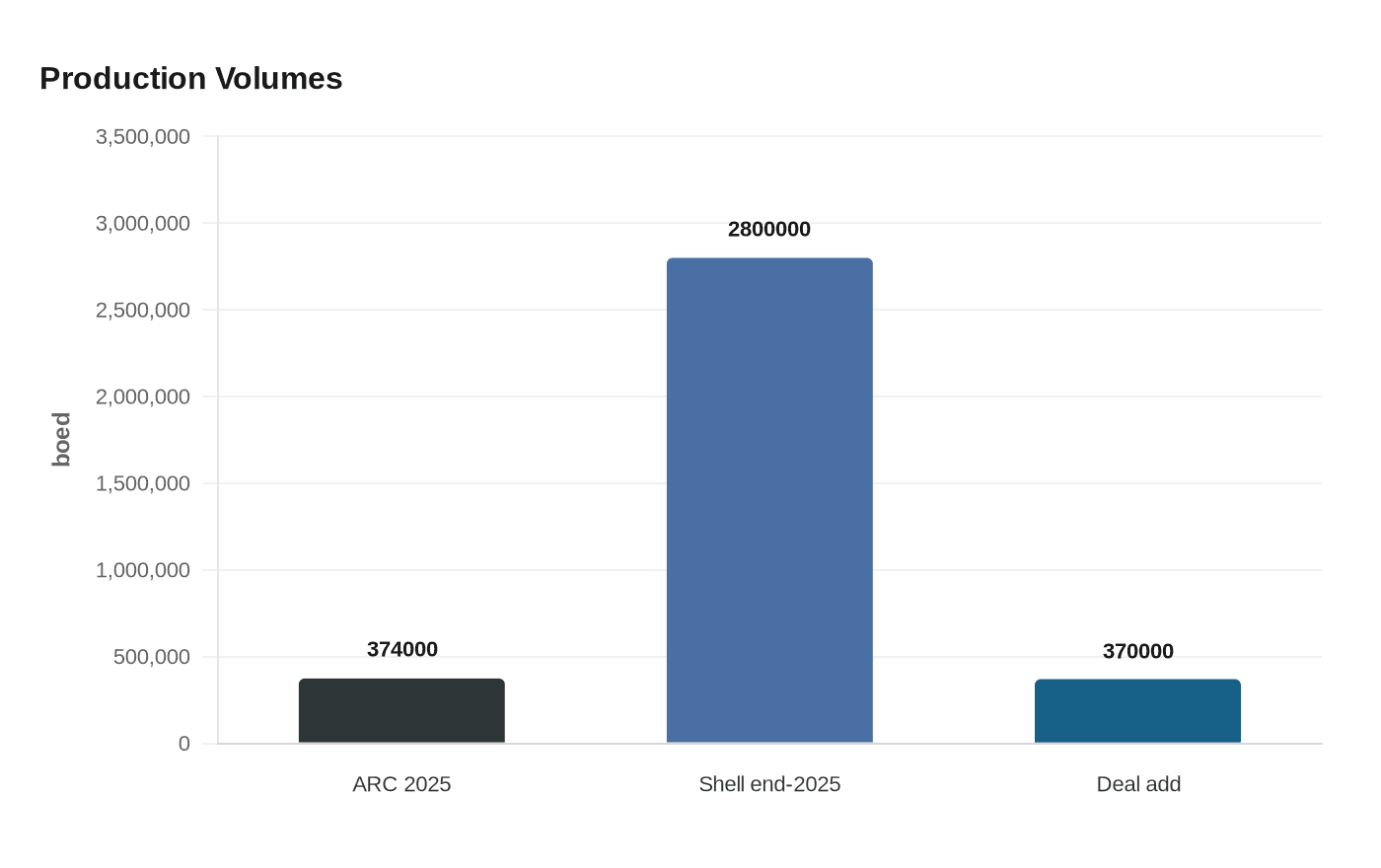
Shell agreed to buy ARC Resources for $16.4 billion, adding 370,000 barrels of oil equivalent a day and deepening its bet on North American gas and LNG.
Shell agreed to buy Canadian producer ARC Resources in a $16.4 billion deal that will add 370,000 barrels of oil equivalent a day to the British major’s portfolio and reinforce its long-running push into liquefied natural gas. The acquisition, Shell’s biggest since its purchase of BG in 2016, marked one of the company’s most consequential strategic moves in years.
The deal has an industrial logic that goes beyond sheer size. ARC’s fields sit close to Shell’s existing Canadian operations and feed into LNG Canada, the export project in which Shell holds a 40% stake. That connection gives Shell more control over supply feeding a plant that can send cargoes to Asian buyers faster than most North American export routes, strengthening its position in a market that remains central to global gas trade.
Shell said it would pay ARC shareholders C$8.20 in cash and 0.40247 Shell shares for each ARC share, a mix that works out to roughly 25% cash and 75% shares. The offer represented a 20% premium to ARC’s 30-day average share price, giving shareholders an immediate lift while preserving much of the deal’s value in Shell stock. The transaction also underscored how majors are still using acquisitions to grow output even as they try to keep spending disciplined.
ARC entered the deal from a position of strength. The company said it produced a record average of 374,000 boed in 2025, with 59% gas and 41% crude oil and liquids. Shell, meanwhile, said its own oil and gas production stood at 2.8 million boed at the end of 2025. Adding ARC’s barrels and gas volumes gives Shell more scale in North America at a time when mature fields elsewhere are putting pressure on growth.
The purchase also sharpened the tension between energy security and climate politics. Shell has spent years talking up the energy transition, yet this deal showed that large integrated producers still see durable hydrocarbon demand, especially for gas tied to LNG exports, as a core part of their long game. For shareholders, the attraction is clearer cash flow and stronger operating leverage. For climate advocates, it is another sign that the oil majors are not stepping away from fossil fuels so much as reshuffling their bets toward assets that can keep producing for years.
This article was produced by Prism’s automated news system from verified source data, official records, and press releases, then run through automated quality and moderation checks before publishing. The system is built and supervised by the people who set the standards it runs under. Read our full AI policy.
Did this article answer your question?

