Shi'ite bloc taps Nouri al‑Maliki to lead government formation
Iraq’s largest Shi'ite Coordination Framework nominated former prime minister Nouri al‑Maliki to form the next government, raising stakes for coalition talks and economic policy.
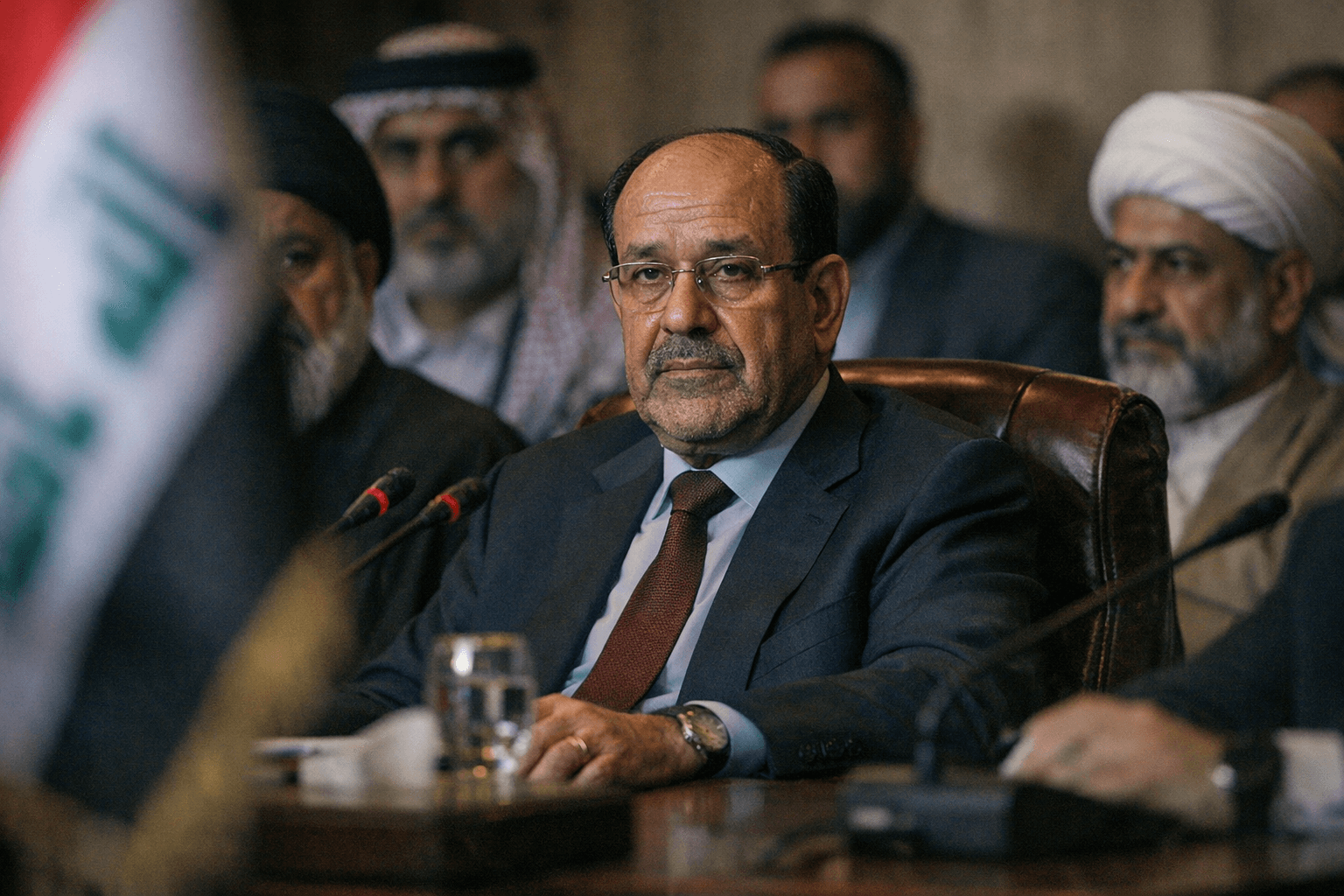
The Shi'ite Coordination Framework nominated former prime minister Nouri al‑Maliki as its candidate to form Iraq’s next government, a move that immediately focused attention on coalition arithmetic, economic policy priorities and regional alignments. The bloc, the largest Shi'ite political grouping in the new parliament, cited Maliki’s political and administrative experience and said the nomination will trigger the next stage of negotiations to assemble a majority.
Maliki’s selection revives a familiar political actor at a delicate moment for Iraq. He led the government from 2006 to 2014 and is viewed by many inside and outside Iraq as a manager with a record of centralizing authority. His nomination signals the Coordination Framework’s preference for a tested hand over a compromise technocrat, and it sets up potentially protracted bargaining with Sunni, Kurdish and independent blocs whose support is required to secure parliamentary approval.
The political stakes are tightly linked to economic realities. Iraq remains heavily dependent on oil, which accounts for roughly 90 percent of government revenue and around 40 percent of gross domestic product. Market-sensitive decisions, on oil exports, production targets, subsidy reform and public payrolls, will depend on the composition and stability of the next cabinet. International creditors, foreign oil partners and investors are likely to pause on major new commitments until coalition lines appear clearer.
A Maliki-led coalition would face immediate fiscal tests. The government must finalize the 2026 budget, manage subsidy and wage pressures, and negotiate terms with international lenders and oil companies amid volatile energy prices. Confidence indicators, foreign direct investment, sovereign bond access and banking sector liquidity, tend to respond to perceived political stability. Even without immediate market moves, portfolio managers will be watching parliamentary negotiations as a signal for medium-term sovereign credit and reform prospects.
The nomination also carries wider policy implications. Maliki’s prior tenure is associated with strengthening central institutions and asserting federal prerogatives, a posture that could complicate relations with the autonomous Kurdish region and amplify tensions over revenue sharing and oil exports from disputed areas. Regional diplomacy is another vector: an administration perceived as closer to Tehran could recalibrate Baghdad’s balancing act between Iran, Gulf states and Western partners, with consequences for trade, security assistance and reconstruction financing.
Formally, the nomination launches consultations that under Iraq’s political procedures aim to identify a prime minister-designate who can muster a parliamentary majority and present a cabinet for a confidence vote. That process has in past cycles taken weeks to months, producing governments with varying degrees of coherence and longevity. Political fragmentation and the presence of influential nonstate armed groups complicate calculations about how authority will be exercised once a government is formed.
For markets and policymakers, the near-term question is whether coalition partners will prioritize stability and pragmatic economic reforms or pursue a partisan agenda that stalls fiscal consolidation. The outcome will shape Iraq’s ability to attract investment needed for diversification beyond oil, to meet pressing public-service needs, and to navigate the regional rivalries that affect both security and economic ties.
This article was produced by Prism’s automated news system from verified source data, official records, and press releases, then run through automated quality and moderation checks before publishing. The system is built and supervised by the people who set the standards it runs under. Read our full AI policy.
Did this article answer your question?