Shivaji statues rise as Maharashtra turns heritage into politics
A fallen 35-foot Shivaji statue became a statewide flashpoint, then returned as a 91-foot bronze monument as Maharashtra turned memory into power.

Shivaji is rising again, but not only in bronze. Across Maharashtra, the 17th-century ruler is being lifted from regional memory into a charged national symbol, and the struggle over his image now reaches from fort walls to street protests and police alerts.
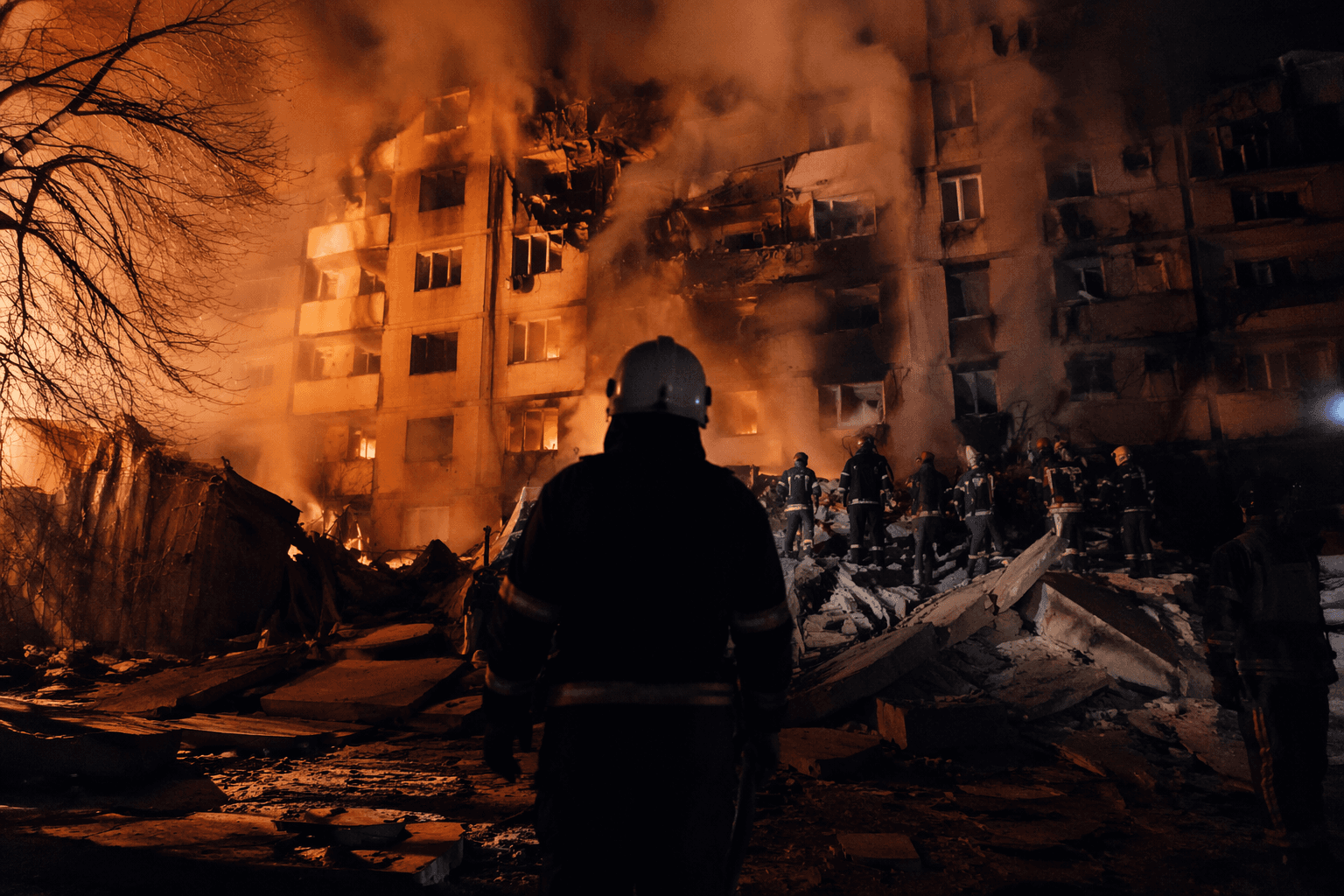
That fight sharpened at Rajkot Fort in Sindhudurg district, where a 35-foot statue of Chhatrapati Shivaji Maharaj was unveiled by Prime Minister Narendra Modi on December 4, 2023 during Navy Day celebrations, then collapsed on August 26, 2024 after less than eight months. The fall triggered an opposition uproar, public humiliation for the state, and a rare apology from Modi on August 30, 2024. In Mumbai, the Maha Vikas Aghadi turned the episode into a protest issue, with a march planned from Hutatma Chowk to Gateway of India on September 1, 2024.
The political damage outlasted the broken statue. The Maharashtra government later installed a new 91-foot bronze replacement at the same site on May 11, 2025, a larger monument meant to stand up to extreme weather and to the symbolism of the collapse itself. Devendra Fadnavis and state leaders framed the new statue as restoration, but the scale of the replacement also showed how quickly heritage had been absorbed into electoral language, with Shivaji cast not as a historical figure alone but as a live marker of power, pride, and grievance.
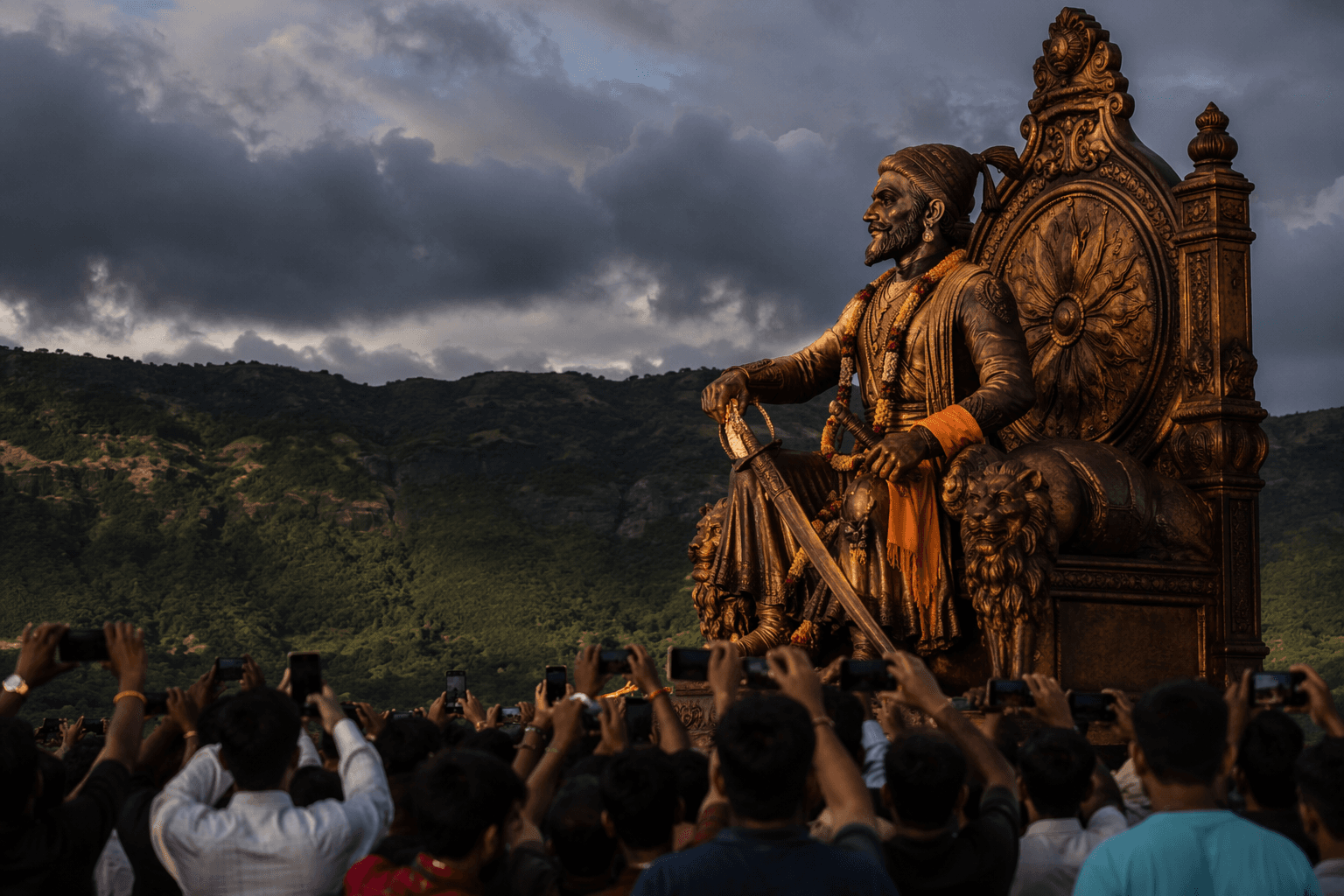
The historical Shivaji was born around February 19, 1630, died on April 3, 1680, and was formally crowned at Raigad Fort in 1674. Britannica identifies him as the founder of the Maratha kingdom and notes his opposition to the Mughal dynasty, a record that is more complex than the image now pushed by Hindu-nationalist politics. Some scholars argue that Shivaji’s modern presentation as a Hindu warrior king is a distortion of that history, and Ram Puniyani has said the image is very far from the truth.
That contest over memory did not end with the new statue. In April 2026, more than three dozen unauthorized statues of Shivaji and his son Sambhaji were reported across several districts of Marathwada, with police suspecting a political motive. The pattern points to what is gained when Shivaji is recast as a civilizational icon, and what is erased: the less convenient record of a ruler whose legacy was built through coalition, statecraft, and a wider political world than today’s slogans allow.
This article was produced by Prism’s automated news system from verified source data, official records, and press releases, then run through automated quality and moderation checks before publishing. The system is built and supervised by the people who set the standards it runs under. Read our full AI policy.
Know something we missed? Have a correction or additional information?
Submit a Tip