Shots fired near White House as 44,000 evacuate California chemical leak zone
Gunfire near the White House sent reporters inside, while a leaking tank in Orange County forced more than 44,000 evacuations across six Southern California cities.
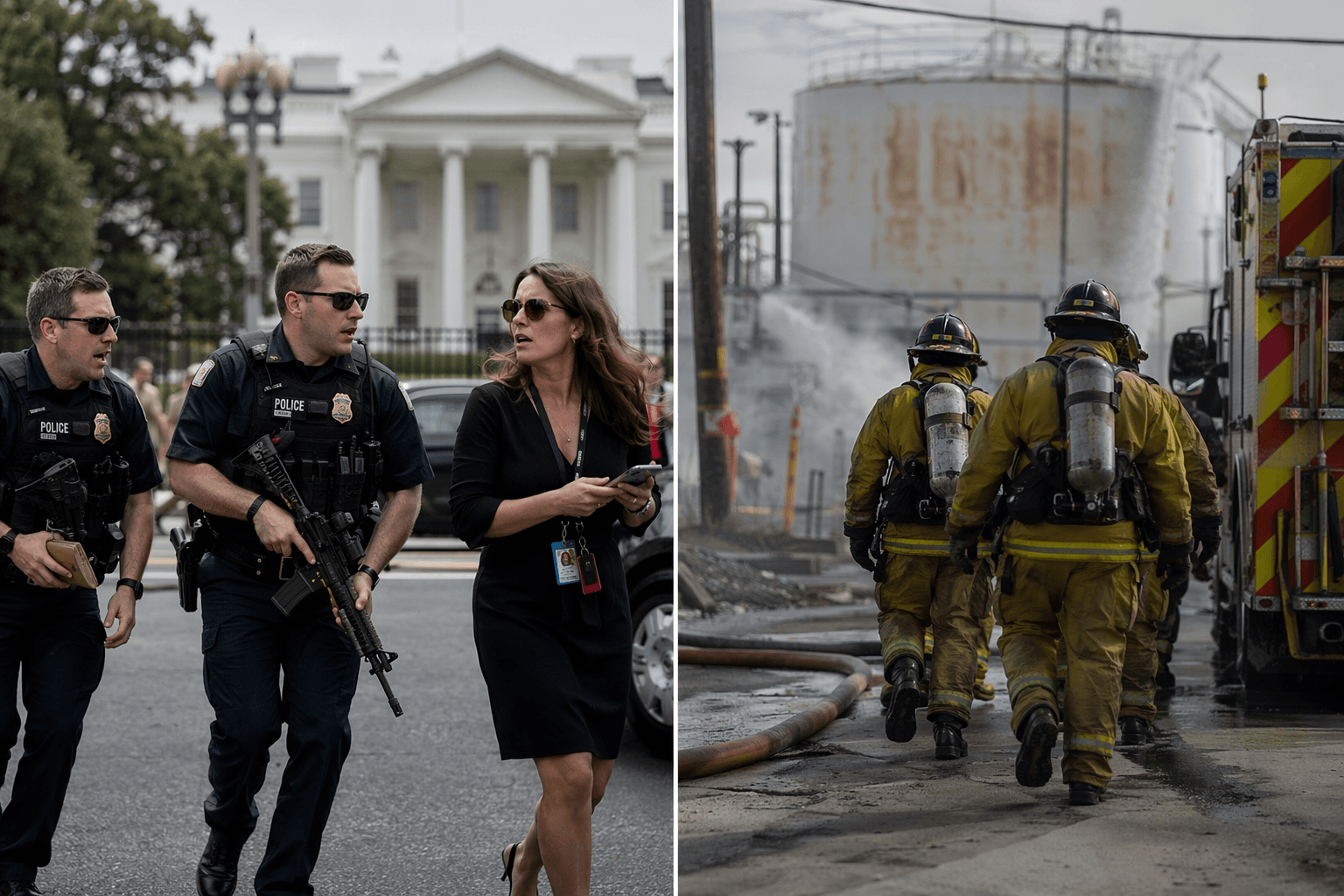
A burst of gunfire near the White House and a sprawling chemical emergency in Orange County exposed two very different pressure tests for public safety: a fast federal security response in Washington and a widening local evacuation order in California.
On the North Lawn, multiple reporters heard what sounded like gunshots around 6 p.m. ET and were quickly ushered inside by the Secret Service. The lockdown at the White House was lifted just before 7 p.m. ET, but the episode again underscored how quickly an apparently contained threat can trigger a federal security sweep at the nation’s most protected address. Officials later identified the suspect as a 21-year-old man who shot at officers at a security checkpoint and had a history of mental health concerns.
The Washington scare came after a separate overnight gunfire incident near the White House last month that did not leave anyone injured but still drew a Secret Service investigation. Together, the episodes have sharpened attention on the resilience of security protocols around the executive mansion, where response time and clear command lines can mean the difference between reassurance and confusion.
In Southern California, the challenge was not a single suspect but a volatile industrial leak with no easy endpoint. More than 44,000 people were evacuated in Orange County after officials warned that a toxic chemical tank at a GKN Aerospace facility in Garden Grove was “actively in crisis.” The tank held an estimated 7,000 gallons of methyl methacrylate, and evacuation orders spread across parts of Garden Grove, Cypress, Stanton, Anaheim, Buena Park and Westminster.
Orange County Fire Authority Chief Craig Covey said the tank was in danger of failing and potentially exploding, a stark warning that captured the urgency of the operation. Gavin Newsom declared a state of emergency in Orange County on Saturday as officials worked to prevent the leak from turning into a larger disaster. There was no clear timetable for when evacuation orders would be lifted.
The California response echoed earlier hazmat crises in the state, including the 2015 Aliso Canyon gas leak, which forced thousands from their homes and became the largest known release of climate-changing methane in U.S. history. In both Washington and Orange County, the day’s emergencies showed how public confidence depends not only on the scale of the threat, but on whether officials can communicate fast enough to keep people moving in the right direction.
This article was produced by Prism’s automated news system from verified source data, official records, and press releases, then run through automated quality and moderation checks before publishing. The system is built and supervised by the people who set the standards it runs under. Read our full AI policy.
Did this article answer your question?

