SK Hynix’s 14-year bet on AI memory pays off
SK Hynix turned a once-dismissed HBM gamble into a market-value victory, overtaking Samsung after 14 years of patient investment. The AI boom rewarded the long bet, not the biggest balance sheet.

SK Hynix’s climb past Samsung Electronics was not a sudden market mania. It was the payoff from a 14-year decision to keep backing high-bandwidth memory, or HBM, even when the strategy looked like a mistake, the business was under pressure, and its larger rival still dominated the memory market.
The bet that looked reckless in 2012
SK Group’s 2012 acquisition of Hynix Semiconductor was widely viewed as financially irresponsible at the time. Samsung was then more than 10 times more valuable, and it already held the lead in DRAM, the commodity memory used across laptops and smartphones. That gap made the challenge look structural, not temporary, and it left SK Hynix little room to fight Samsung on Samsung’s own terms.
Hyun Sun-yeop, a former SK Hynix HR executive, described the company’s mindset in blunt terms: it believed it would be impossible to beat Samsung in commodity DRAM products. That underdog status shaped the company’s strategy. Instead of trying to mirror Samsung’s scale play, SK Hynix pushed into a narrower, harder lane where speed, packaging and engineering depth mattered more than brute market size.
Why HBM became the decisive technology
HBM is designed to feed data extremely quickly, which is exactly why it later became central to AI accelerators. SK Hynix and AMD jointly launched the world’s first HBM product in 2014, a milestone that gave the company an early claim on what would become one of the most important memory categories in advanced computing.
The early lead did not hold smoothly. SK Hynix stumbled on the second generation and fell behind Samsung in the late 2010s, a setback that sparked internal debate over whether to abandon HBM altogether. Two former executives cited by Reuters said the company seriously weighed that possibility. Instead, SK Hynix doubled down and kept spending.
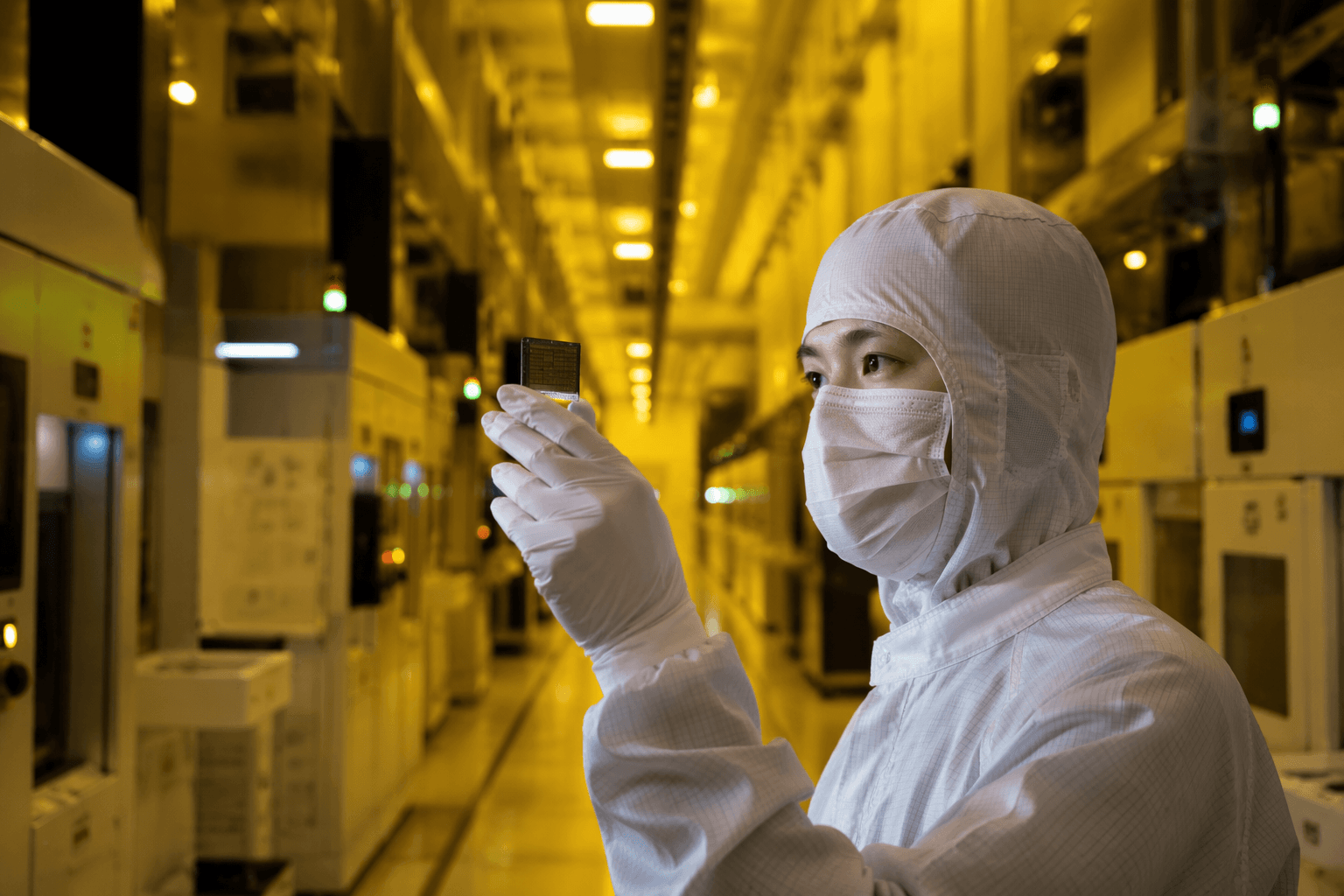
That commitment included a packaging facility in Icheon, a bet that looked poor when demand from Nvidia and cryptocurrency miners later weakened and left parts of the operation underused in 2019. One former executive called that period a “headache” and described the facility as “obsolete” at the time. The economics looked wrong for a while, but the company was building capacity for a demand cycle that had not yet arrived.
How the AI boom changed the math
ChatGPT’s release in 2022 helped ignite the AI boom, and that boom transformed HBM from a specialized memory product into a bottleneck component for AI chips. Nvidia’s accelerators needed far more high-speed memory, and SK Hynix’s early work suddenly looked prescient rather than risky.
Reuters said SK Hynix is now Nvidia’s main HBM supplier. In early June 2026, Jensen Huang publicly urged SK Hynix to produce more HBM chips, a visible sign of how tight supply remains. That kind of request matters because it shows the market is no longer deciding whether HBM is important. It is deciding who can make enough of it, fast enough, at scale.
SK Hynix’s own technology partnership with Nvidia in June 2026 underscored the same point. The memory maker is no longer a supplier on the margins of the AI build-out. It sits inside the supply chain for the next wave of accelerators, where memory can be as strategically important as the compute chip itself.
The market’s verdict on June 22, 2026
The clearest proof came on June 22, 2026, when SK Hynix overtook Samsung Electronics in market capitalization. SK Hynix reached about 2,082.5 trillion won, while Samsung stood at about 2,081.3 trillion won, excluding preferred shares. SK Hynix shares rose 5.7 percent in the session that pushed it over the top.
The move capped an extraordinary run for the stock. Reuters-linked reporting said SK Hynix had gained more than 340 percent in 2026. That kind of move is not just a trading story. It reflects a full revaluation of the company’s place in the semiconductor hierarchy, from follower to leader in the most coveted memory niche in AI hardware.
The numbers also show how concentrated the HBM business has become. Reuters-linked reporting placed SK Hynix’s share of the global HBM market at about 61 percent in 2025, with Micron at 21 percent and Samsung at 17 percent. That is a market structure built around specialization, not generic scale. In other words, the company that once looked too small to challenge Samsung in DRAM became the dominant player in the memory format most closely tied to AI growth.
What this means for the new semiconductor power map
The rivalry between SK Hynix and Samsung is now a case study in industrial patience. Samsung remains a giant, but the HBM race shows that the most valuable position in semiconductors is not always held by the biggest incumbent. It can go to the firm that commits early, survives a long stretch of weak economics, and keeps capacity in place until the demand curve finally turns.
Nvidia’s decision to name SK Hynix, Samsung and Micron as HBM4 suppliers for its Vera Rubin platform in 2026 reinforces the broader lesson. Advanced-memory supply has become central to the next generation of AI hardware, and the companies that can deliver it will shape the pace of deployment. The bottleneck is no longer only in the graphics processor. It is in the memory stack feeding it.
SK Hynix’s rise shows how the semiconductor power map has shifted. Scale still matters, but long-horizon bets now decide more of the outcome. The companies that win the AI race will be the ones willing to invest through years of doubt, carry capacity before demand arrives, and hold their nerve long enough for the market to catch up.
This article was produced by Prism’s automated news system from verified source data, official records, and press releases, then run through automated quality and moderation checks before publishing. The system is built and supervised by the people who set the standards it runs under. Read our full AI policy.
Know something we missed? Have a correction or additional information?
Submit a Tip