Slowing Wage Growth and Surging Gas Prices Squeeze American Workers' Buying Power
Wage growth for U.S. workers hit its slowest pace since 2021 as gas prices surged past $4 a gallon, leaving real buying power nearly flat.
The numbers are unambiguous: after two years of workers clawing back ground lost to post-pandemic inflation, the math is turning against them again. Non-supervisory workers, who make up roughly four out of every five non-farm employees, received average hourly wage increases of just 3.4% over the past year, the slowest pace since 2021 and a step down from the near-4% gains of the prior two years, according to new Bureau of Labor Statistics data released Friday.
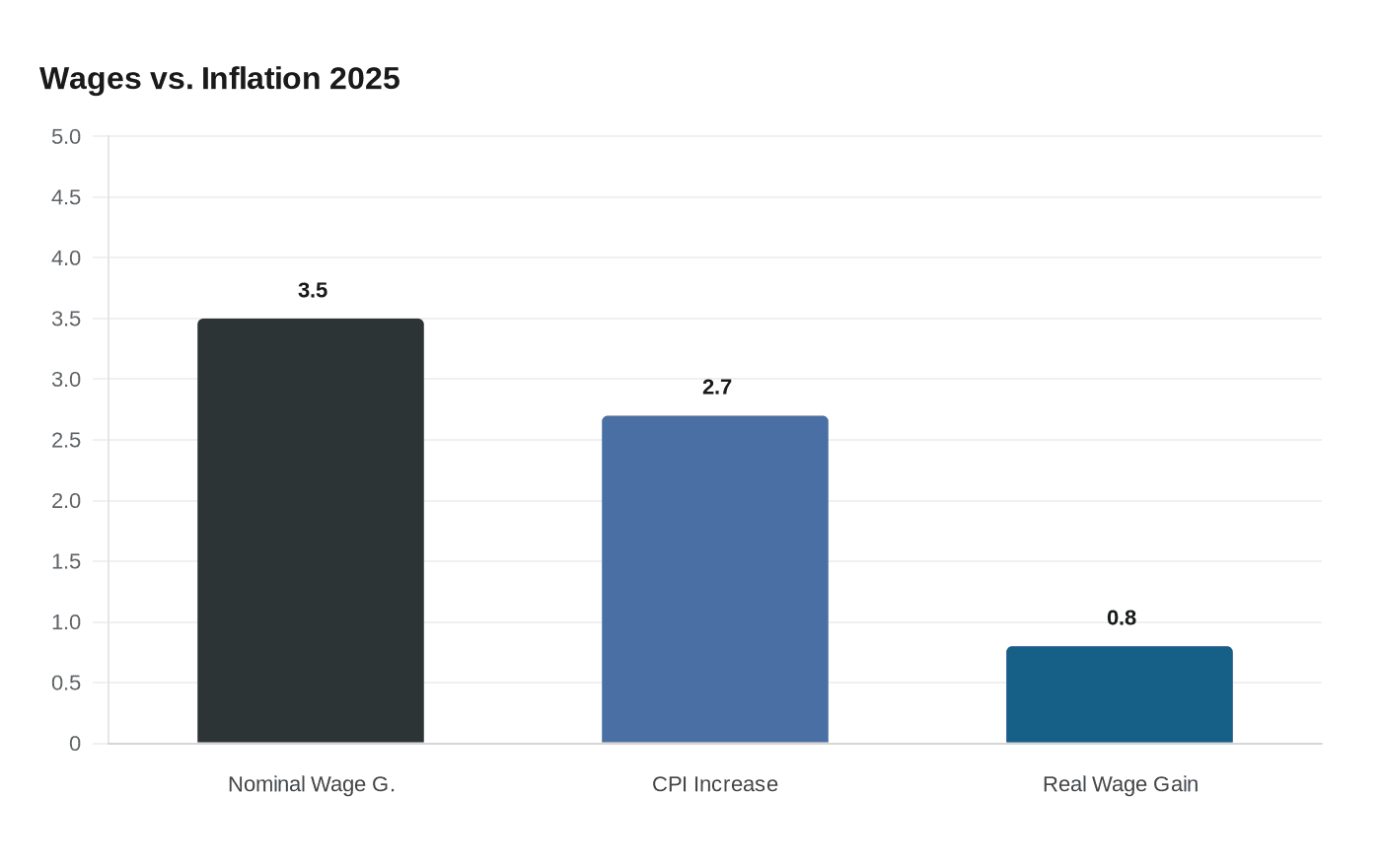
Those nominal gains are being eroded by rising prices. Real average hourly earnings for all employees climbed just 0.8% from November 2024 to November 2025, as a 3.5% nominal wage gain was nearly swallowed by a 2.7% rise in the Consumer Price Index for All Urban Consumers. Real average weekly earnings showed identical growth, with no change in average workweek hours to provide any additional cushion.
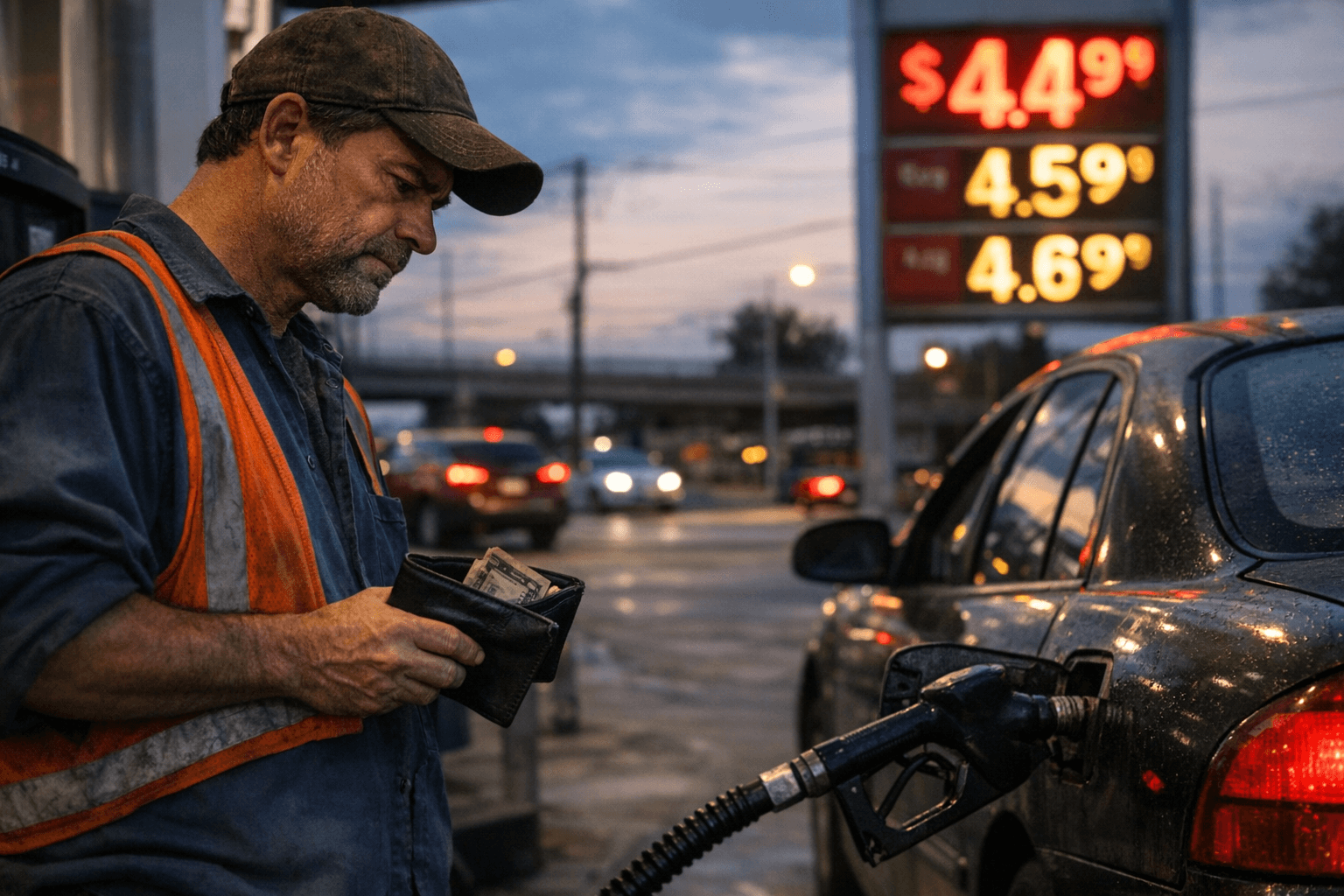
The squeeze is tightest at the gas pump. The national average hit $4.09 per gallon, a jump of more than $1 in a single month, driven in part by the Iran conflict disrupting oil tanker traffic. Navy Federal Credit Union Chief Economist Heather Long warned that headline inflation could reach 4% this month. "Four percent is above that 3.5 percent annual wage gain, and that's where you see a lot of squeeze on workers, particularly middle-class and moderate-income workers," Long said. Wage gains for non-supervisory employees had been outpacing price increases since March 2023, when post-pandemic inflation began to cool, but economists warn that streak is now in jeopardy.
Tariffs are amplifying the pressure. The Trump administration has applied an import tax of at least 10% on nearly all U.S. imports, a policy Federal Reserve Governor Adriana Kugler has warned could reverse the inflation progress made over the past two years. Energy costs compound the problem: the typical household spent roughly $123 more on electricity in 2025, a 6.3% increase, while natural gas prices surged 9.8%, more than twice the overall inflation rate. New Jersey households faced the steepest electricity cost increases at 18.4%, followed by Pennsylvania at 14.4% and New Hampshire at 11%.
The labor market is offering little relief. The Federal Reserve Bank of Kansas City found that employment growth dropped from an average of 170,000 jobs per month in 2024 to just 75,000 per month through August 2025, with sectors carrying higher import exposure experiencing steeper hiring declines. ADP Research data show the pay premium for switching jobs has shrunk to its smallest level since records began in 2020; pay growth for job-changers slowed to 6.4% annualized in January, the weakest reading since February 2021.
The damage is falling hardest at the bottom of the income distribution. The Economic Policy Institute noted that 2025 marks a sharp reversal from the post-2019 pattern in which low-wage workers consistently outpaced higher earners in real wage gains. That earlier run of historically fast gains had been driven by pandemic-era labor shortages; a softening labor market has now ended it.
Zillow senior economist Orphe Divounguy cautioned that "with choppy job growth, weaker labor-force attachment and rising uncertainty, many households, especially renters and first-time buyers, could become more cautious as weaker inflation-adjusted wages erode recent affordability improvements." The 30-year fixed mortgage rate climbed from 5.99% at the start of the Iran conflict to 6.45% as of April 3. At a December 2025 press conference, Federal Reserve Chair Jerome Powell framed the challenge directly: "The best thing we can do is restore inflation to its 2 percent goal... but also have a strong economy where real wages are going up." On the current trajectory, both objectives remain out of reach.
This article was produced by Prism’s automated news system from verified source data, official records, and press releases, then run through automated quality and moderation checks before publishing. The system is built and supervised by the people who set the standards it runs under. Read our full AI policy.
Did this article answer your question?