São Paulo Adds 1,500 Coffee Plants to World's Largest Urban Farm
São Paulo's Biological Institute planted 1,500 coffee plants at its urban farm to trial pest- and climate-resilient varieties for future coffee cultivation.
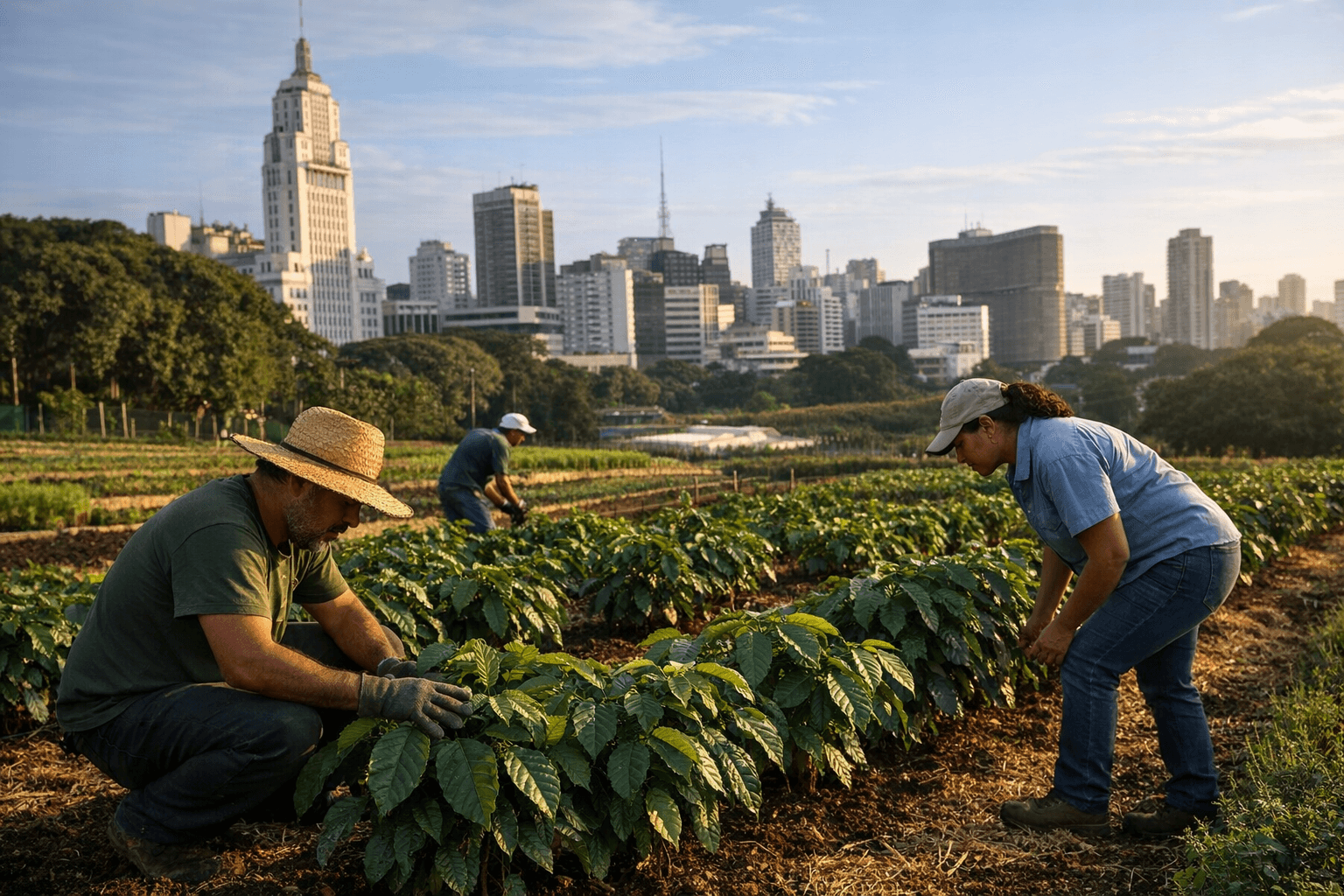
The Biological Institute of São Paulo planted some 1,500 new coffee plants this week at its urban coffee plantation in the sprawling city of São Paulo, launching trials to test the trees' capacity to resist climate change and pests. The site is described in reporting as the world's largest urban coffee plantation, and researchers at the institute intend to monitor the cohort for traits that could be scaled to wider cultivation.
The institute, established in 1927, was founded to tackle pest crises that once threatened Brazil's coffee belt. Institute researcher and agricultural engineer Harumi Hojo summarized that history plainly: "The Biological Institute was created to control the coffee berry-borer (which) was controlled using parasitoids, a biological control method." The coffee berry-borer is singled out in the institute's work because the beetle can devour the beans hidden inside coffee cherries, hollowing fruit from within.
Researchers plan to use the 1,500-plant block to evaluate both pest resistance and climate resilience. The trials will include testing resilient arabica varieties and drought-tolerant strains designed to cope with water scarcity and rely on rainwater where possible, with the goal of identifying plants that endure intensified weather extremes and persistent pest pressure. The institute frames this as practical breeding and selection work to advance future coffee cultivation under changing conditions.
Field visuals from the site underline the hands-on nature of the program. A drone photograph taken March 5, 2026 by Lais Morais shows the urban plantation and the new rows of 1,500 plants across the institute grounds. On-site reporting noted Hojo holding two coffee cherries to demonstrate damage, one a healthy fruit with smooth white coffee beans, the other rotten inside after being devoured by a beetle, and a separate image shows a worker carrying a bucket near the young plants.
The move blends a century-old pest-control mission with modern climate concerns. By expanding the urban plot and running controlled trials inside a city setting, the Biological Institute is positioning its urban farm as a testing ground for varieties that combine resistance to pests and diseases with tolerance for drought. If the trials identify successful lines, those plants and the institute's experience with biological controls such as parasitoids could feed breeding programs and pest-management strategies elsewhere.
Researchers will follow the planted trees through the coming seasons to measure pest damage, drought performance, and yield characteristics. The institute's planted trial of 1,500 trees is an explicit, hands-on effort to turn historical expertise on the coffee berry-borer into practical, climate-ready varieties for the next generation of coffee production.
Know something we missed? Have a correction or additional information?
Submit a Tip