Soldiers raid Bobi Wine home in Kampala, wife hospitalised after assault
Soldiers forcibly entered the Magere home of opposition leader Bobi Wine; his wife was reportedly assaulted and taken to hospital.
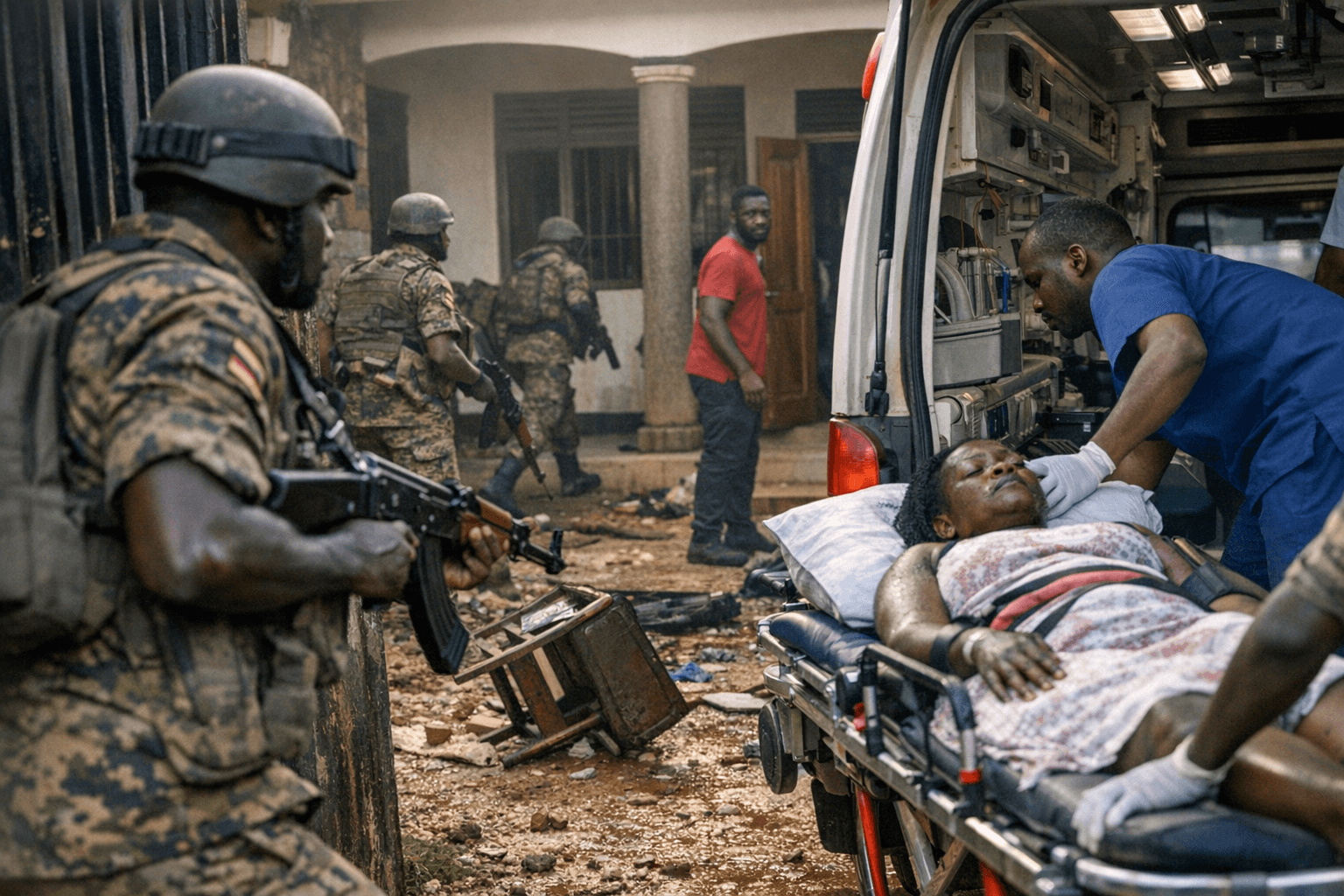
Soldiers forcibly entered the suburban Magere residence of Uganda opposition leader Robert Kyagulanyi, known as Bobi Wine, late on January 24, ransacked the family home and assaulted staff, Kyagulanyi said. His wife, Barbara Kyagulanyi, was reportedly partially undressed, choked and taken to hospital, according to his account, intensifying fears of a renewed clampdown on dissidents.
The raid, which Kyagulanyi described as carried out by uniformed soldiers, came amid an already tense relationship between the ruling government and its most visible opposition figure. Kyagulanyi, a former pop star turned politician and leader of the National Unity Platform, has repeatedly accused state security forces of harassment and arbitrary detention since emerging as a prominent challenger to long-standing power structures in Kampala.
Medical personnel at the Kampala hospital where Barbara Kyagulanyi was treated confirmed a patient matching her description was admitted on January 24 for treatment related to assault, but provided only limited information citing patient privacy. There was visible concern among neighbours in Magere, where residents described a heavy security presence in the hours after the incident. Calls to security agencies for an official account were not immediately answered.
The apparent targeting of a political family at their home underscores growing anxieties about impunity and the use of security forces in domestic politics. Under both Ugandan law and international human rights norms to which Uganda is a party, the forcible entry of private dwellings, ill-treatment of civilians and violence against family members raise serious legal and constitutional questions. Human rights lawyers say such actions, if proven, could constitute unlawful search and seizure and may meet thresholds for criminal investigation.
The assault on Barbara Kyagulanyi, a public figure in her own right through her activism and charity work, has a particular resonance in a society where gendered violence remains a sensitive issue. Reports that she was partially undressed before being choked add an additional layer of alarm, potentially implicating violations that international observers and gender rights advocates often cite as warranting prompt independent inquiry.
The incident also carries diplomatic implications. Uganda has cultivated relationships with regional and Western partners who repeatedly urge adherence to democratic norms and the protection of civil liberties. High-profile attacks on opposition figures could prompt renewed scrutiny from foreign governments and international organisations that monitor governance and human rights across East Africa.
For Ugandans already anxious about political space, the raid signals possible escalation. Kyagulanyi has mobilised large urban constituencies and retains a symbolic appeal that stretches beyond electoral politics. Any erosion of the rule of law or perceived normalization of violence against political opponents risks deepening divisions and undermining fragile civic trust.
As investigators and citizens await a fuller account, the immediate questions concern the perpetrators, their chain of command and whether independent, transparent mechanisms will be allowed to examine the facts. The episode marks a consequential moment for Uganda’s political trajectory and for the safety of those who challenge its power structures.
This article was produced by Prism’s automated news system from verified source data, official records, and press releases, then run through automated quality and moderation checks before publishing. The system is built and supervised by the people who set the standards it runs under. Read our full AI policy.
Did this article answer your question?


