South African police seize 150 live venomous scorpions at airport
Police found 150 live venomous scorpions hidden among clothing at Cape Town International Airport, a seizure that exposed a trafficking case with biosecurity and public-safety risks.
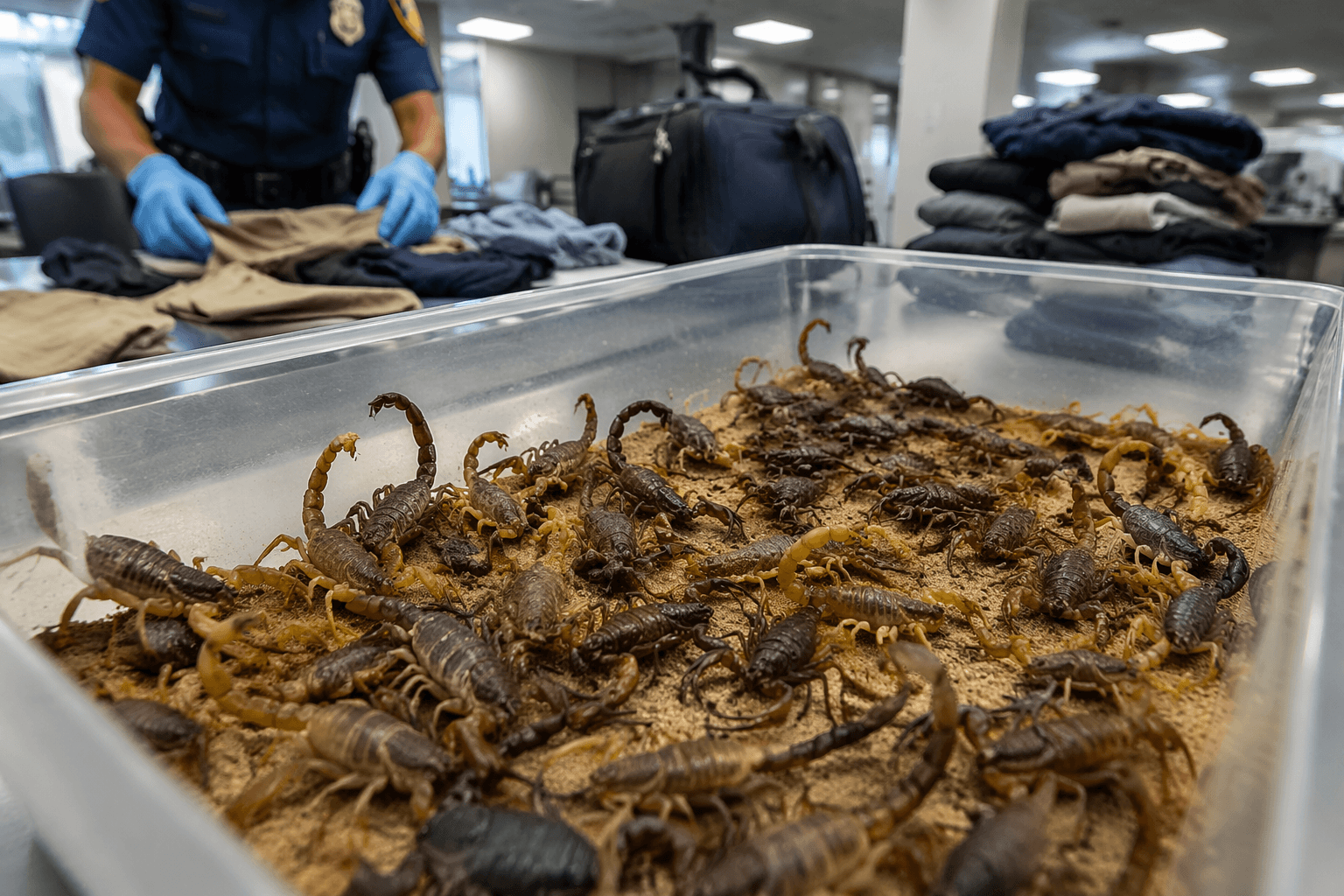
South African police seized 150 live venomous scorpions hidden in a man’s luggage at Cape Town International Airport, a case investigators say fits a wider pattern of wildlife trafficking moving protected and exotic animals through airports. The scorpions were packed among clothing, and a police image showed them appearing individually wrapped in plastic.
A 28-year-old man was arrested on Friday, 12 June 2026, after an intelligence-driven operation led officers to his bags. Authorities said the arrest involved the SAPS Kuils River Stock Theft and Endangered Species Unit working with CapeNature, while other reporting said the Cape of Good Hope SPCA also took part. The suspect was expected to appear in Bellville Magistrate’s Court on Monday, 15 June 2026.
Police have not identified the scorpion species or disclosed where the man was headed, leaving key questions about the intended destination and the route the shipment would have taken. Officials also said the animals were handed to a wildlife facility for safekeeping while their market value is assessed, an indication that investigators believe the shipment was being moved illegally as part of a trade with real financial stakes.
The seizure highlights how wildlife trafficking reaches into everyday transport hubs and turns airports into pressure points for customs enforcement and biosecurity. Live venomous scorpions can threaten handlers, transport workers and the public if containers are opened or animals escape, and illegal movement of exotic species can also endanger local ecosystems if any survive beyond the supply chain. In cases like this, the concealment is part of the crime: hiding animals between clothing and sealing them in plastic suggests a deliberate attempt to move living wildlife past inspection.
Authorities have not said what charges the man will face, though reports indicated he may be charged under South Africa’s Nature and Environmental Ordinance Act. For police and conservation officials, the arrest underscores how the trade in exotic wildlife is policed not only as an environmental crime, but also as a public safety risk tied to organized smuggling networks and the growing pressure they place on border controls.
This article was produced by Prism’s automated news system from verified source data, official records, and press releases, then run through automated quality and moderation checks before publishing. The system is built and supervised by the people who set the standards it runs under. Read our full AI policy.
Know something we missed? Have a correction or additional information?
Submit a Tip