South Korea rolls out AI subtitle glasses to globalize performances
Seoul theaters are testing subtitle glasses that put captions in viewers’ sightlines, betting translation can turn Korean live performance into an export business.
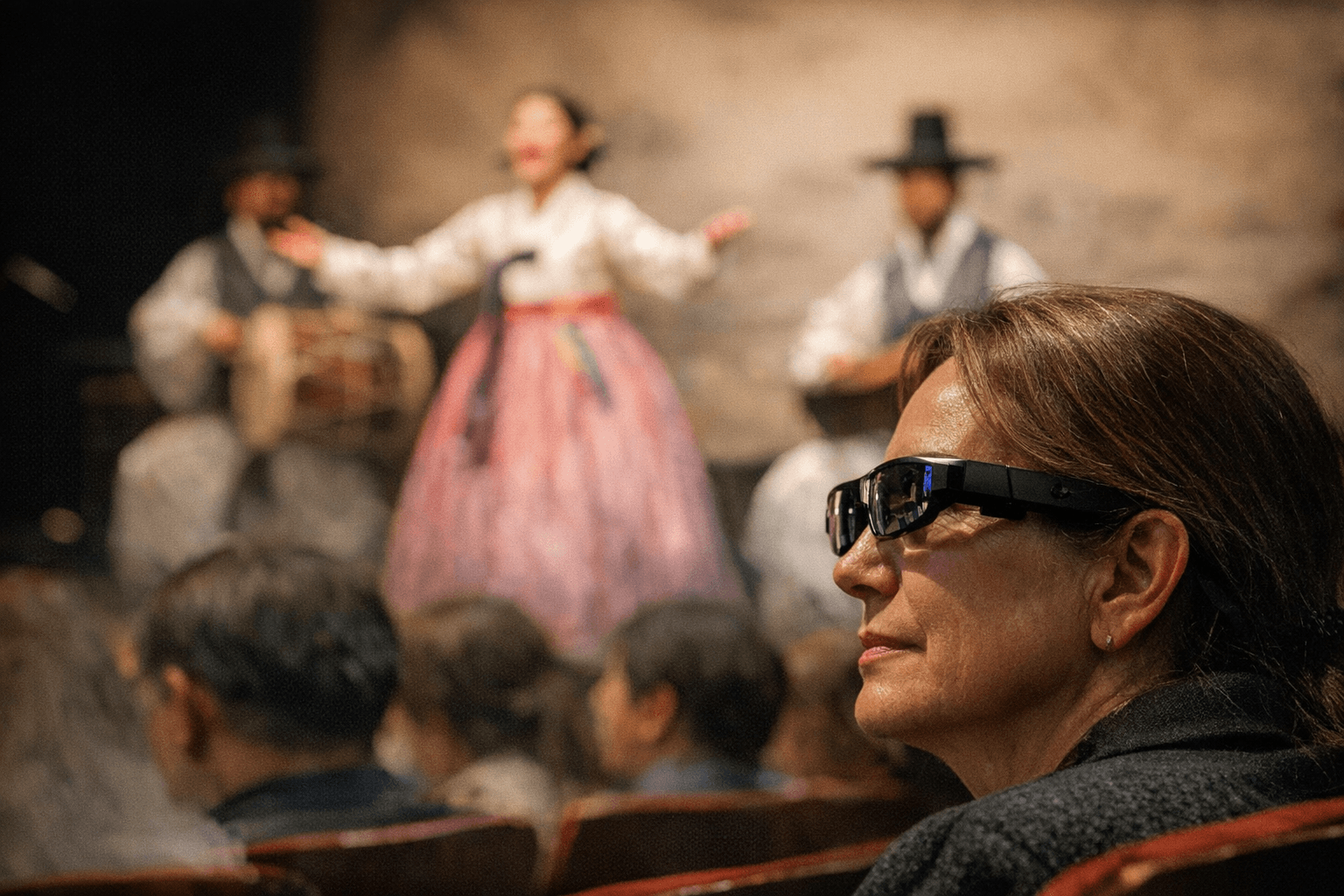
AI subtitle glasses are moving from novelty to infrastructure in Seoul’s theaters, with Charlotte Theater and EMK Musical Company beginning to offer them as a standard service in late 2025. The glasses project real-time captions into the viewer’s field of vision, letting audiences follow dialogue without looking away from the stage, a shift that promoters say can help non-Korean speakers and widen access for people who struggle with conventional subtitles.
The technology is being framed as more than a convenience. Cultural producers and officials see it as a test of whether South Korea can turn a strong domestic performance industry into something that travels. Musicals have drawn international visitors, but language has remained a hard ceiling on ticket sales. By putting translation in the line of sight, the new glasses are meant to make Korean shows understandable without forcing audiences to choose between actors’ faces and a side screen. That matters for equity as much as for business: barrier-free design can bring in patrons who would otherwise be shut out by language, seating position, or visual strain.
The push has already reached public culture programming. The National Museum of Korea used a Smart Theater system with AI subtitle glasses across October 2025 presentations that included Imsil Pilbong Nongak, 1457, The Boy at Rest, and Gangneung Gwanno Gamyeongeuk. In that setting, the glasses were presented as a way for foreign tourists to experience performances in their native languages while preserving the live, shared feel of the event.
ExpertINC developed the Owl subtitle glasses, and one report described the latest wireless model as weighing about 61 grams, light enough for a full performance. The company introduced the system during a National Theater Company of Korea performance in 2024 and is now exploring overseas markets, including London’s West End. That puts Korean stage technology in a broader export lane, where the real question is not whether the gear works, but whether it can be replicated at scale and priced in a way theaters abroad will buy.
The commercial logic is spreading beyond theater. Galaxy Corp. said in April 2026 that it hoped to launch what it called the first K-pop-dedicated AI glasses by the end of 2026, alongside a robot-based concert venue in Seoul. Together, the moves suggest that Korean entertainment companies are treating translation wearables as part of a larger live-event strategy, one that could reshape how culture is sold, who gets included, and how far a domestic success can travel.
This article was produced by Prism’s automated news system from verified source data, official records, and press releases, then run through automated quality and moderation checks before publishing. The system is built and supervised by the people who set the standards it runs under. Read our full AI policy.
Did this article answer your question?