SpaceX Files Confidential IPO Paperwork, Targeting Historic $1.75 Trillion Valuation
SpaceX filed confidential IPO paperwork targeting a $1.75 trillion valuation and $75 billion raise that would shatter every equity issuance record in modern history.
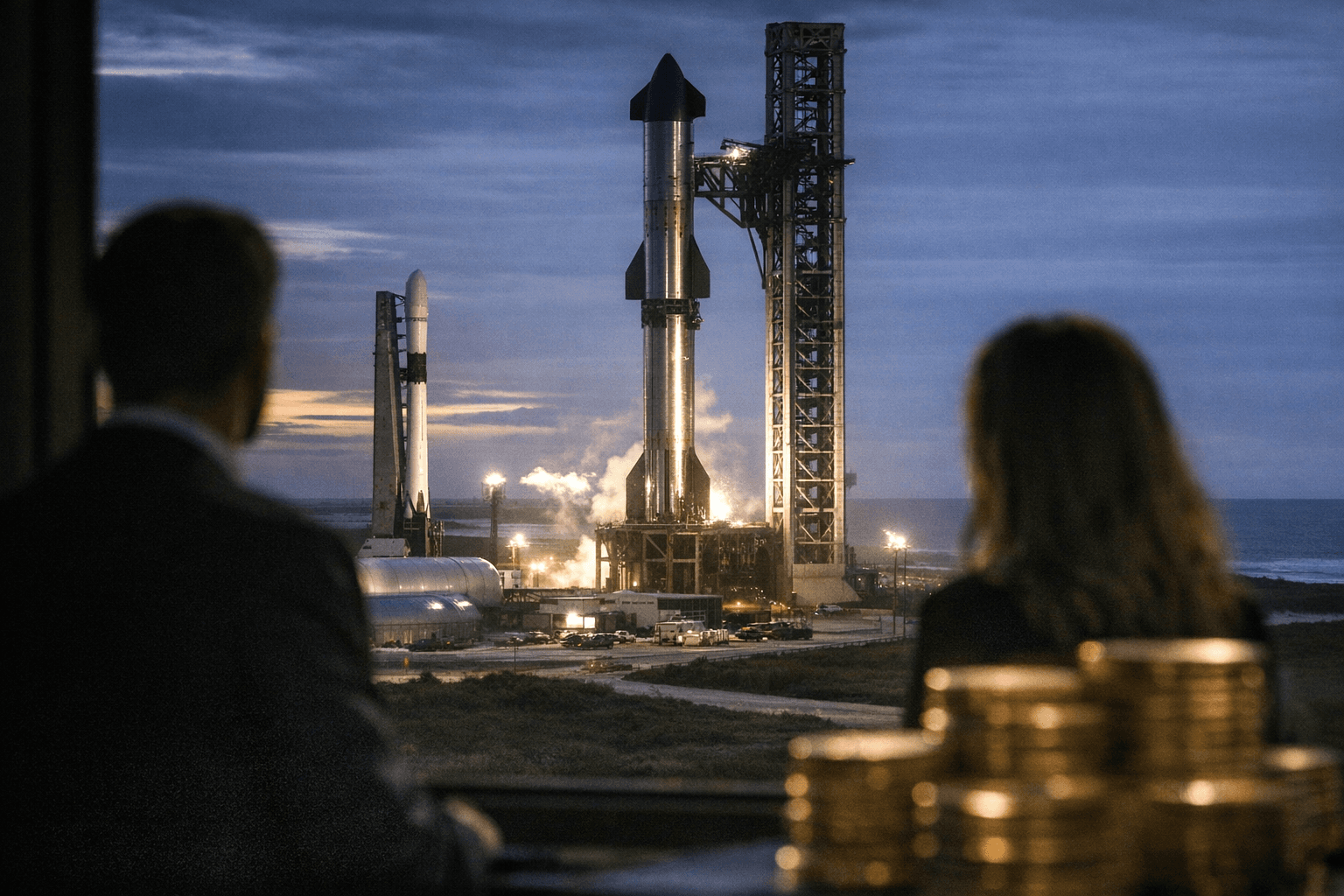
SpaceX submitted confidential IPO registration paperwork to the U.S. Securities and Exchange Commission, setting the stage for what advisers have internally codenamed "Project Apex" and what capital markets analysts are watching as a potentially record-breaking equity event. The company is eyeing a valuation of more than $1.75 trillion and a public listing as early as June.
The company enlisted 21 banks to manage the mega IPO, with Morgan Stanley, Goldman Sachs, JPMorgan, Bank of America and Citigroup in senior roles. Investor briefings are being prepared for April, with SEC rules requiring a public prospectus at least 15 days before any road show begins.
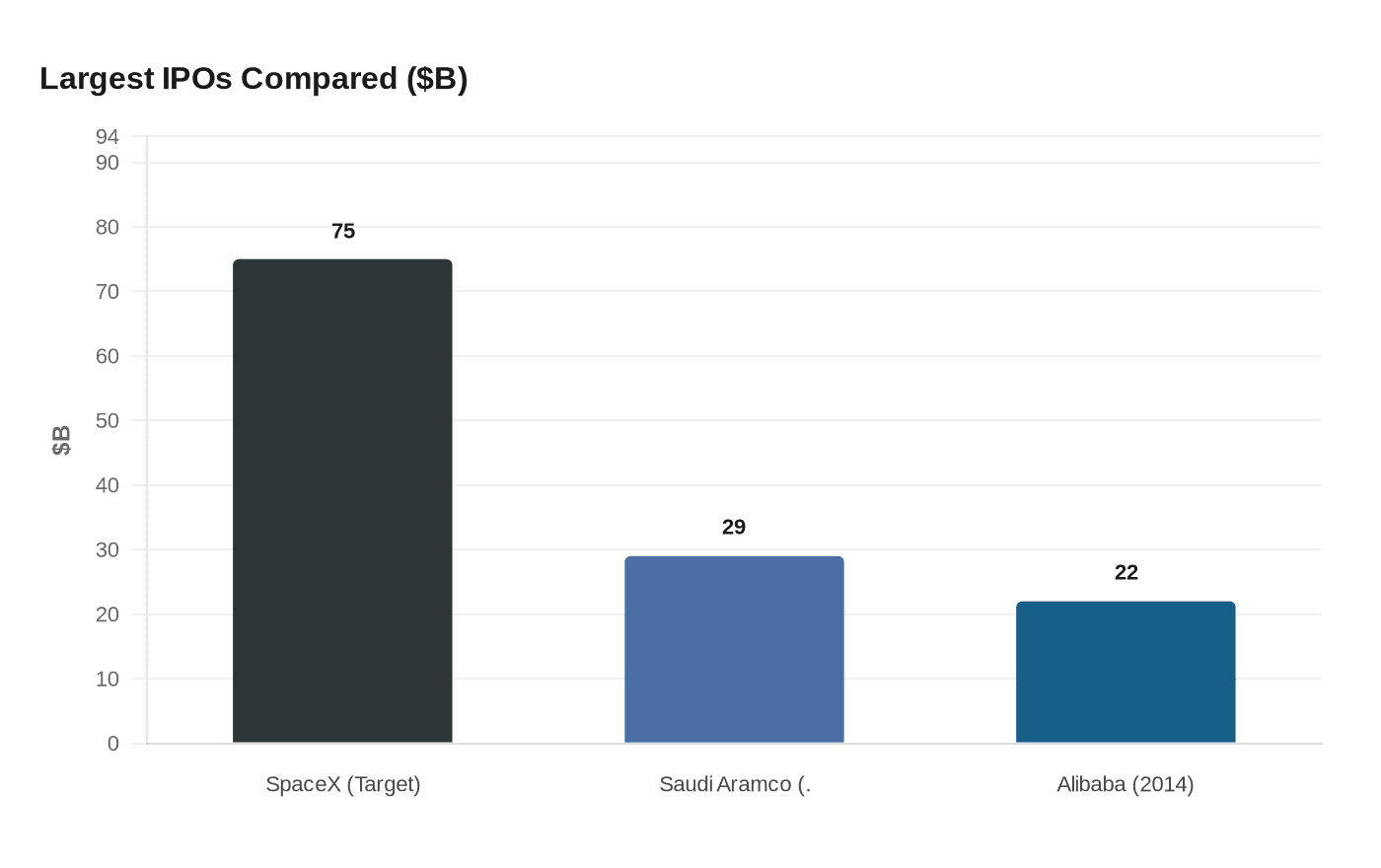
The company expects to raise approximately $75 billion, which would make it the largest IPO in history, far beyond Saudi Aramco's $29 billion listing in 2019. For U.S. context, Alibaba's $22 billion offering in 2014 stands as the biggest domestic listing on record, meaning SpaceX's targeted raise would be more than triple that figure.
At the center of the valuation case are three interlocking businesses built over two decades. SpaceX has received over $24.4 billion from its work with the federal government since 2008, including contracts from NASA, the Air Force and the Space Force. Over the course of 2025, SpaceX conducted 165 orbital flights, along with additional test flights of its Starship Super Heavy launch vehicle. Its Starlink satellite broadband network, running on a constellation of around 10,000 satellites in low-Earth orbit, provides recurring subscription revenue that institutional investors are expected to price separately from the launch and government contracting businesses.
The corporate structure grew significantly more complex earlier this year. In February, SpaceX acquired Musk's xAI in a deal that valued the entity at $1.25 trillion. The conglomerate now includes xAI, Musk's frontier generative AI laboratory, and X, the social network formerly known as Twitter. That consolidation has bolstered investor interest in the combined business's AI and satellite-software capabilities while adding layers of complexity to revenue recognition and corporate governance disclosures.
Governance details will be scrutinized closely once a public prospectus is filed. Deal architects are widely expected to propose a dual-class share structure designed to preserve Musk's founder control. Regulators and analysts will also need to weigh how SpaceX discloses the interplay between classified government contracts and the obligations of a publicly traded company, a tension that has no clean precedent in the aerospace sector.
Market timing is not guaranteed. Georgetown finance professor and IPO specialist Reena Aggarwal noted that even a company with strong fundamentals can see an offering falter in volatile conditions, pointing to the Nasdaq's recent steep weekly drop driven by U.S.-Iran war tensions and spiking oil prices. June provides a window for conditions to stabilize, but uncertainty remains a variable no syndicate of 21 banks can fully price out.
The stakes extend well beyond SpaceX itself. How the market values a vertically integrated space-technology firm with government contract revenue, Starlink recurring income and frontier AI exposure will set a pricing template for a generation of large private technology companies weighing their own public listings. If Project Apex prices at or near $1.75 trillion, SpaceX would rank among the most valuable publicly traded companies on earth from its first day of trading, and the benchmark it sets will reverberate across aerospace, AI infrastructure and capital markets for years.
Sources:
Know something we missed? Have a correction or additional information?
Submit a Tip

