SpaceX launches biggest Starship yet in key Mars test flight
Starship’s 12th test flight flew from Starbase with a new V3 rocket, deployed mock satellites and ended in a controlled splashdown after the booster failed.
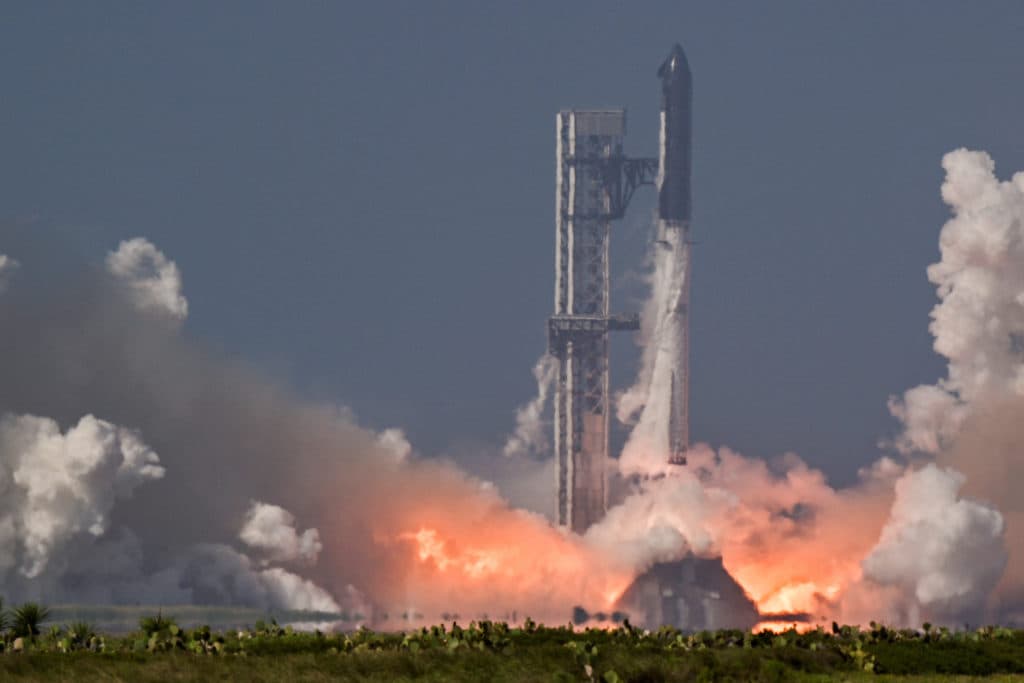
SpaceX’s biggest Starship yet lifted off from Starbase, Texas, with a job that was narrower than Elon Musk’s Mars pitch and more urgent than the spectacle around it: prove the next generation of hardware can survive a full test flight and move the program closer to reuse. The company launched Starship Flight 12 at 5:30 p.m. CT on Friday, May 22, from the southern tip of Texas, after pad issues pushed back an earlier attempt the night before.
The flight marked a long list of firsts for the program. SpaceX said it was the first flight of Starship and Super Heavy V3, the first use of Raptor 3 engines, the first launch from Pad 2 at Starbase and the first Starship mission to deploy modified Starlink satellites to image the vehicle in space. The company has described V3 as its most powerful version yet, and the rocket stands about 407 feet tall, with upgraded grid fins, a larger fuel transfer line, more cameras and more navigation and computer power.

On the engineering side, the test delivered mixed but meaningful results. Reuters reported that SpaceX completed a largely successful flight, with mock satellites deployed and the Ship upper stage making a controlled splashdown in the Indian Ocean. The booster, however, spun out of control and broke apart over the Gulf of Mexico, a reminder that the system is still being pushed through experimental territory even as the hardware grows more ambitious.
What SpaceX did not attempt mattered as much as what it did. The company has talked about future missions using mechanical arms to catch rocket stages, but Flight 12 did not try to recover the booster or the upper stage. Instead, the planned end states were a booster splashdown in the Gulf and a ship splashdown in the Indian Ocean, underscoring that the program remains in development, not routine operation.
The stakes extend well beyond SpaceX’s own test range. NASA awarded SpaceX a $2.89 billion contract in April 2021 to develop the human lunar lander for Artemis, and the agency’s May 2026 planning for Artemis III calls for an Earth-orbit mission to test rendezvous and docking between Orion and commercial landers from SpaceX and Blue Origin. That makes each Starship milestone relevant not only to Musk’s Mars ambitions but also to the timetable for landing astronauts on the Moon.
The flight also landed in a more commercial moment for SpaceX. CNBC reported that the company had disclosed its IPO prospectus earlier in the week and was expected to raise around $75 billion in a public offering next month after being valued at $1.25 trillion in February, when it merged with xAI. For SpaceX, Starship is now a technical test, a lunar contract vehicle and a business signal all at once.
This article was produced by Prism’s automated news system from verified source data, official records, and press releases, then run through automated quality and moderation checks before publishing. The system is built and supervised by the people who set the standards it runs under. Read our full AI policy.
Did this article answer your question?